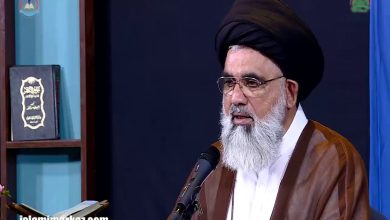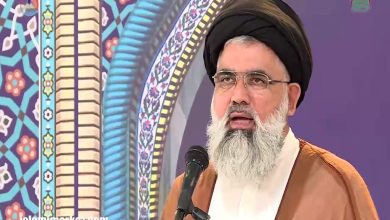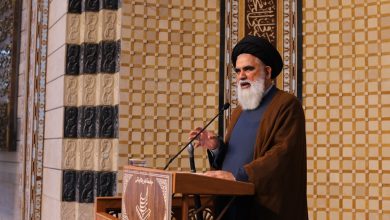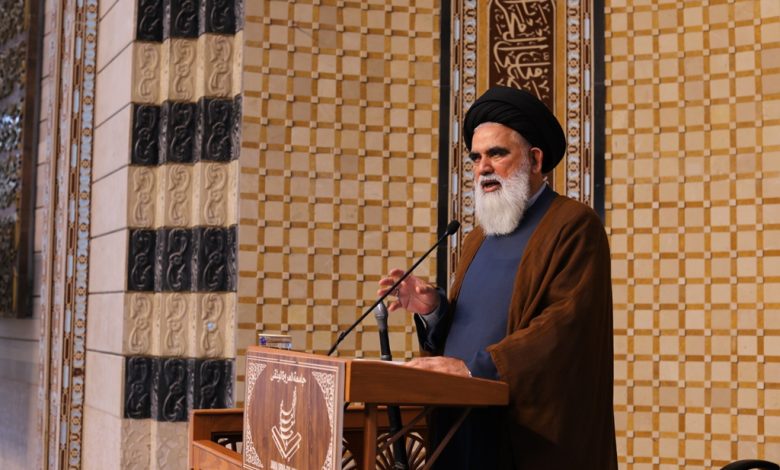
Hujjatul Islam Ustad Syed Jawad Naqvi
(Principal Jamia Orwatul Wuthqa – Lahore)
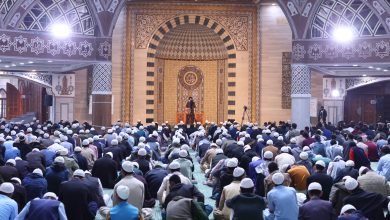
Delivered at: Masjid Baitul ul Ateeq
Lahore – Pakistan
Friday Sermon 27th June – 2025
Sermon 1: With the Truthful – Quranic foundations of a protected Society
Sermon 2: Reviving Dead Humanity: The Spirit of Hussain (a.s.) in the Age of Oppression”
1. Importance of Taqwa in Social Life
Taqwa, or God-consciousness, plays a fundamental role in human social life. Whether one considers social interaction to be an inherent human nature or merely a result of dependence on others to fulfill needs, the Qur’an affirms that human life is inevitably social. It addresses social living from multiple angles, including the need for companionship, divine guidance, and protective boundaries. The Qur’an refers to this aspect of life using the term “Ma’a” or “Mai’yat,” which signifies being with others or living in companionship. This togetherness is necessary for human life and manifests in various forms—within families, among neighbors, and in business environments. Just as these interactions are unavoidable, the guidance of Taqwa is essential to ensure that such social companionship becomes a secure and spiritually grounded foundation for life.
2. Neglect of Social Dimensions in Islamic Jurisprudence
Although the Qur’an highlights human social life, Islamic scholarship has historically given minimal attention to this aspect. Jurisprudence has largely focused on individual religious duties and personal conduct, sidelining the Qur’an’s emphasis on collective and social guidance. Consequently, significant terms and concepts like “Mai’yat” have not been thoroughly examined. The depth of meaning that the Qur’an attaches to social interactions and communal life has thus been underrepresented in classical commentaries, resulting in a lack of understanding about the religious responsibility embedded in human companionship.
3. Companionship as Defined by the Qur’an
The Qur’an not only confirms the necessity of human social interaction but also categorizes companionship in profound ways. There is the companionship of human beings with one another—such as in the home, neighborhood, or workplace—and there is the companionship between man and Allah, as illustrated in verses where Allah declares that He is with the patient and the grateful. These relationships demand a protective framework rooted in Taqwa. If the principles of Taqwa are embedded in social life, they establish a strong, protective foundation. Without them, life remains vulnerable and prone to collapse, much like a building constructed on unstable ground. The failure of marriages and the quick breakdown of relationships are signs of foundations that lack spiritual integrity.
4. The Qur’anic Command: Be With the Truthful
In Surah Taubah, verse 119, the Qur’an gives two definitive commands: to attain Taqwa and to associate with the truthful. The verse reads:
يَا أَيُّهَا الَّذِينَ آمَنُوا اتَّقُوا اللَّهَ وَكُونُوا مَعَ الصَّادِقِينَ
“O you who believe! Be conscious of Allah and be with the truthful.”
These are not mere suggestions but mandatory obligations. The verse addresses a believing community and calls for both the personal protection that comes from Taqwa and the social protection that comes from truthful companionship. Choosing whom to associate with is not left to personal discretion; being with the truthful is an obligation, not a choice.
5. Misinterpretations by Gnostics and Commentators
Mystical scholars have often interpreted this verse in the context of divine companionship, referring to the idea of being “with Allah.” Some have also associated this command with following the company of spiritual sages or saints. However, these interpretations limit the verse’s broad social scope. The command to be with the truthful applies not only to a spiritual elite but to all sincere, honest individuals in society. It is about forming social bonds rooted in truth, sincerity, and divine consciousness, not just seeking mystical union with spiritual leaders.
6. Separating from Liars in All Social Spaces
Human society consists of many categories of people, including the truthful and the dishonest. The Qur’an commands believers to align only with the truthful. Even if one’s family includes liars or corrupt individuals, believers are instructed to disassociate from them and seek Allah’s curse (Laanat) upon those who consistently lie. This curse signifies divine withdrawal of mercy. In modern settings—such as WhatsApp groups—believers must observe who among them is truthful and who is not. Spreading unverified information is itself a form of lying. The Qur’an does not allow believers to live comfortably with falsehood or to build community life with both truthful and corrupt individuals.
7. Personal vs Public Life: A False Separation
Modern rationalizations often claim that a person’s private actions should not affect their public responsibilities. For example, when political leaders are caught in moral corruption, some argue that this is a personal matter unrelated to their ability to govern. However, the Qur’an rejects this dichotomy. It sees personal life as the foundation upon which public responsibilities are built. If someone’s private character is flawed, the Qur’an does not consider them fit for leadership, prayer leadership, or offering counsel. By contrast, someone who maintains integrity in private is qualified to lead in public roles.
8. Infallibility and Shi’a Understanding of Leadership
In Shi’a theology, this connection between private character and public trust is exemplified in the belief in infallible Imams. The doctrine of infallibility (Ismah) guarantees that these leaders will not commit moral errors in their personal lives, making them eligible for the highest social responsibilities. The purity of their personal life is what qualifies them for communal leadership.
9. Choosing Residential Societies Based on Morality
People commonly decide where to live based on financial capability, choosing elite or middle-class societies like Bahria Town or Model Town. However, the Qur’an offers a different criterion: the presence of truthful individuals in a community should be the primary factor in choosing where to live. While people often prioritize material comforts and social status, a believer must prioritize spiritual integrity and the companionship of the truthful. Living among the morally upright is a religious obligation, not a lifestyle preference.
10. Historical Context of the Verse on Truthful Companionship
The command to be with the truthful was revealed in a historical context where the Prophet had called upon all believers to join a military expedition. Some failed to comply, but three individuals deeply regretted their absence. In verse 118 of Surah Taubah, the Qur’an mentions their intense remorse, feelings of suffocation, and eventual repentance, which Allah accepted. It was after this event that verse 119 was revealed, commanding the community to adopt Taqwa and seek truthful companionship. This verse thus serves as both a warning and guidance for future behavior.
11. The Hardships and Rewards of Truthful Companionship
Being with the truthful does not guarantee ease. Rather, it involves enduring hardships—battles, hunger, thirst, suffering, and the threat of enemies. Today’s realities, such as bombings and military oppression, mirror these difficulties. However, the Qur’an promises that every hardship borne in the path of truth is recorded and rewarded. It also criticizes those who prioritize comfort by staying home and avoiding struggle. The Qur’an contrasts this with nations like Pakistan, where leaders try to please all sides—America, Iran, and even enemies of Islam—at the cost of moral clarity. This hypocritical approach, which aims to avoid conflict by aligning with everyone, contradicts the Qur’anic path.
12. Divine Record of Every Righteous Struggle
According to verse 120, the trials and losses faced while staying with the truthful are not in vain. Each sacrifice is counted as a righteous deed. Allah assures believers that none of their efforts will be wasted. The path of truth is difficult, but it leads to divine reward both in this life and the Hereafter.
13. The Consequence of Dual Allegiances
Those who try to maintain relationships with both the truthful and the corrupt will ultimately share the fate of the corrupt. In every circumstance—whether social, political, or religious—believers must choose the side of truth. Compromising on this principle by associating with transgressors and morally degraded individuals is a violation of Qur’anic guidance. The moral walls Allah established to separate the righteous from the corrupt have been dismantled by us in the name of modernity and democracy.
14. Political Hypocrisy and the Breakdown of Moral Boundaries
Societies today have created systems, such as democracy, where moral and immoral individuals hold equal power through voting. This equality violates divine boundaries. In countries like Pakistan, those who have destroyed the nation’s economy are paradoxically celebrated as patriots. This inversion of values is not acceptable in Qur’anic terms. Believers are called to draw lines and uphold distinctions based on truth and integrity, not public opinion or political convenience.
15. Becoming Truthful Before Seeking the Truthful
Lastly, before one can seek the companionship of the truthful, one must strive to become truthful themselves. This truthfulness must extend to all areas of life—personal, social, financial, and moral. Once on the path of truth, hardships are inevitable, but none will be wasted. Allah has promised reward and protection to those who stand firm with the truthful.
SERMON 2
1. The Crisis of Humanity in Our Time
In today’s world, we can clearly witness a disturbing erosion of human values. Those who openly take pride in killing innocent children—like Zionist generals claiming it’s a “hobby” to hunt Gazan children, or figures such as Trump and Netanyahu who support or remain silent on such atrocities—can no longer be called human in the true sense. As Maulana Rumi beautifully puts it, a man once walked during daylight with a lantern, seeking a human being and declaring he was tired of beasts. Likewise, we are surrounded by beings in human form, but real humanity is missing. The true essence of being human has become scarce, and what we see now are beasts in disguise.
Oppressors, as well as those who remain silent in the face of oppression or simply make selfies without any concern for what’s happening, cannot be called humans. When humanity dies within a society, what can revive it? Allah has made special arrangements to breathe life back into such lifeless societies. Just as Prophet Isa (a.s.) revived dead bodies, the son of Zahra, Imam Hussain (a.s.), was sent to resurrect dead hearts and awaken sleeping consciences.
2. The Revival Mission of Imam Hussain (a.s.)
The uprising of Imam Hussain (a.s.) was not simply a reaction to political tyranny. It was a divine intervention to awaken a senseless Ummah. Although he was fully aware of the untrustworthiness of the people of Kufa and the cruelty of the Syrian army, he chose to rise—knowing the enemy would show no mercy—because the goal was not worldly victory but the reformation of the Ummah.
For five months, Imam Hussain (a.s.) invited people to support his mission, but very few responded. Many advised him to abandon his path. Even the people of Hejaz eventually paid with their lives after his martyrdom. Imam Khomeini (r.a.) often remarked that Muharram is not just the month of mourning but of confronting Kufis and reviving humanity.
3. The Misuse and Sanctity of Muharram
Over time, Muharram has been misused by traders and those seeking material gain. Instead of preserving its sanctity, many speakers now sell their services for large sums, turning mourning into a business. Governments, using the pretext of security concerns created by Nasibis and Ghalis, have gradually placed restrictions on Azadari. Before the 1980s, Muharram united all sects in Pakistan. Cinemas would shut down, music would stop, and Muslims of all schools would distribute water and food in the name of Imam Hussain (a.s.). The sanctity of the month was universally respected—until certain elements sought to destroy this reverence.
It is now the duty of scholars and orators who truly carry the pain of Imam Hussain (a.s.) in their hearts—not those who trade the message—to reclaim Muharram and reestablish its real essence: reviving dead humanity. It is not a month for division or business; it is a sacred opportunity to ignite the spirit of resistance, truth, and sacrifice.
4. Silence in the Face of Tyranny: A National Shame
Our silence today has emboldened tyrants. When Netanyahu attacked Gaza and Trump assaulted Iran, the Muslim world, especially Pakistan, remained largely silent. Even worse, Pakistanis went so far as to nominate Trump for the Nobel Peace Prize—a move that marks one of the darkest stains in the nation’s history. If Zionists had done it, it would at least be consistent with their agenda. But for a Muslim nation to praise a man who attacked Islamic lands under the pretense of peace is an insult to the spirit of Hussain (a.s.).
Trump was not seeking peace; he initiated war to save Israel. And when Iran resisted by striking back, including targeting the U.S. airbase in Qatar, Trump was forced to ask for a ceasefire. The people of Iran, following the Hussaini path, showed no fear, despite the loss of generals and scientists. Their leadership even declared readiness for martyrdom, confident that others would carry the flag forward. This is the legacy of Imam Hussain (a.s.): standing firm against oppression until the last breath. The world—and especially Pakistan—needs this spirit of Hussainiyat.
5. Reclaiming Muharram: From Sectarianism to Resistance
Muharram must not be allowed to become a battleground for sectarianism or a marketplace for fame and fortune. It should be a platform for resistance, awakening, and spiritual revival. Imam Khomeini (r.a.) proved this by overthrowing the Taghoot of his time and establishing an Islamic government through lessons drawn from Karbala. Iqbal once lamented that there is no Hussain in the caravan of Hejaz. The same can now be said about Pakistan: it is missing the spirit of Hussain ibn Ali.
This spirit must be rekindled during Muharram. The responsibility lies with respectable members of the community to take the lead—not allow traders, addicts, or opportunists to hijack the message of Azadari. The government, too, can benefit from the lessons of Hussainiyat, and perhaps, Allah will grant wisdom to the Ummah in this sacred month to awaken and carry the flag of resistance forward.