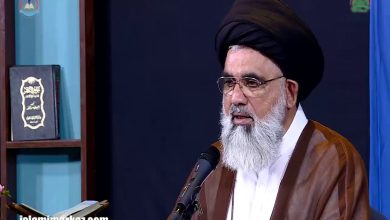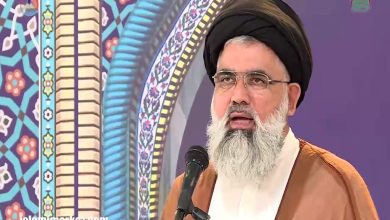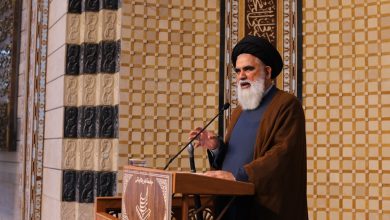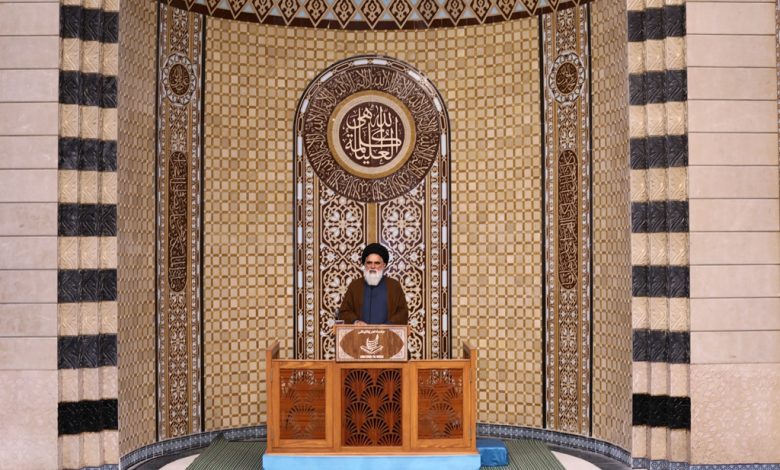
Hujjatul Islam Ustad Syed Jawad Naqvi
(Principal Jamia Orwatul Wuthqa – Lahore)
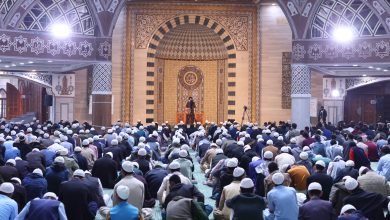
Delivered at: Masjid Baitul ul Ateeq
Lahore – Pakistan
Friday Sermon 30th Jan– 2026
Sermon 1: Taqwa in preserving the unity of Ummah from sectarianism
Sermon 2: The Red Line: America, Iran, and the Path to an All-Out Wa
SERMON 1
Taqwa is a form of protection that must correspond to the nature of the threats, which themselves change with time and era. It is similar to recognizing religion according to the needs of the current age, so that religion can address the problems of that era and does not remain confined only to spirituality and the hereafter. Guidance is completed through protection; therefore, the Qur’an has presented guidance and protection together.
The Qur’an presents a complete structure of an Islamic society of believers in which all principles of faith are established. Such a society is termed by the Qur’an as an Ummah, and the guidance and leadership of this society is termed Imamat. Thus, the system is Imamat and Ummah. Many scholars divert the verses of the Qur’an toward traditions (Hadith). The Qur’an is free from doubt and confusion, and everything in it is clear, whereas when it comes to traditions and narrations, their authenticity is often uncertain. As a historical reference, Mughaira ibn Saeed, during the era of Imam Sadiq (a), fabricated four thousand traditions in the name of Imam Sadiq (a). Such issues do not exist with the Qur’an. Unfortunately, it has become a principle to understand the Qur’an through traditions, whereas Imam Sadiq (a) clearly instructed that traditions should be understood and verified in the light of the Qur’an. If they comply with the Qur’an, accept them; if not, discard them. Sadly, instead of discarding such traditions, a complete religion has been derived from them that contradicts the Qur’an. One major loss resulting from this is that the social structure presented by the Qur’an for Muslim society was altered, and the religion of Ahlulbayt (a) lost its true course.
The same problem exists today, where fabricated news is received and treated as authentic. It can be said that around 90% of news today is false, and even the remaining 10% is mixed with distortion. The Qur’an sets a clear standard: when a corrupt person brings news, it must be verified. Failure to do so can cause great harm, as seen in the background of this verse where Waleed brought false news about a clan allegedly preparing to confront him, leading the companions to almost attack based on misinformation. Even today, institutions like Jamea have suffered losses due to false propaganda, in which even scholars have been involved. One must avoid spreading lies and false news, because whoever propagates lies is counted among liars and those who spread corruption on earth.
The system given by Allah was Imamat and Ummah, applicable to all nations even before the Prophet (s). In Surah Mominoon, which presents the engineering of Muslim society, verse 52 describes the system and structure of the Ummah:
وَإِنَّ هَـٰذِهِۦٓ أُمَّتُكُمْ أُمَّةً وَٰحِدَةً وَأَنَا۠ رَبُّكُمْ فَٱتَّقُونِ
And surely this your religion is one religion and I am your Lord, therefore be careful (of your duty) to Me.
Verse 52 declares that you are a unified nation and are commanded to acquire Taqwa to protect this system ordained by Allah. This verse concludes a discussion that begins earlier and becomes clearly marked again from verse 45 onward. These verses function as milestones to identify the path and the distance, and all prophets serve as milestones along this path. From verse 45, it is stated that Musa and Haroon continued this path:
ثُمَّ أَرْسَلْنَا مُوسَىٰ وَأَخَاهُ هَـٰرُونَ بِـَٔايَـٰتِنَا وَسُلْطَـٰنٍ مُّبِينٍ
Then We sent Musa and his brother Haroun, with Our communications and a clear authority,
إِلَىٰ فِرْعَوْنَ وَمَلَإِي۟هِۦ فَٱسْتَكْبَرُوا۟ وَكَانُوا۟ قَوْمًا عَالِينَ
To Firon and his chiefs, but they behaved haughtily and they were an insolent people.
فَقَالُوٓا۟ أَنُؤْمِنُ لِبَشَرَيْنِ مِثْلِنَا وَقَوْمُهُمَا لَنَا عَـٰبِدُونَ
And they said: What! shall we believe in two mortals like ourselves while their people serve us?
فَكَذَّبُوهُمَا فَكَانُوا۟ مِنَ ٱلْمُهْلَكِينَ
So they rejected them and became of those who were destroyed.
وَلَقَدْ ءَاتَيْنَا مُوسَى ٱلْكِتَـٰبَ لَعَلَّهُمْ يَهْتَدُونَ
And certainly We gave Musa the Book that they may follow the right direction.
وَجَعَلْنَا ٱبْنَ مَرْيَمَ وَأُمَّهُۥٓ ءَايَةً وَءَاوَيْنَـٰهُمَآ إِلَىٰ رَبْوَةٍ ذَاتِ قَرَارٍ وَمَعِينٍ
And We made the son of Maryam and his mother a sign, and We gave them shelter on a lofty ground with stability and flowing springs.
يَـٰٓأَيُّهَا ٱلرُّسُلُ كُلُوا۟ مِنَ ٱلطَّيِّبَـٰتِ وَٱعْمَلُوا۟ صَـٰلِحًا ۖ إِنِّى بِمَا تَعْمَلُونَ عَلِيمٌ
O messengers! Eat of the good things and do righteous deeds; surely I know what you do.
Allah sent Musa and Haroon with clear signs to Firon and his elites, but they arrogantly questioned how people they once enslaved could guide them. They rejected faith and were destroyed. Allah then states that He gave Musa the Book, meaning a constitution, to guide his people. Similarly, Isa (a) was given signs, and his mother and he were protected and given refuge. The Qur’an then addresses the messengers, emphasizing that those sent to guide humanity must themselves benefit from pure and lawful provisions.
The Qur’an distinguishes two aspects of provision: Halal and Tayyab. Believers must be extremely cautious that Haram does not mix with their income, as even a small amount of Haram can contaminate the whole. Believers should not be overly concerned if their wealth is usurped, as it can be recovered through legal means, but they should be deeply concerned about the nature of the wealth they receive. Whenever income is earned, Zakat becomes applicable, and it is not permissible to consume that portion. Yet people consume everything, including the 2.5% Zakat and the Khums on savings. This demands self-accountability.
Allah commands the messengers to consume pure things. The word Kuloo does not refer only to food, but to all means of provision, with food being highlighted because it constitutes the largest portion of income. Therefore, every source of provision must be pure and Halal. The outcome of such purity is righteous action. If believers adopt this principle individually, social reform will follow. Special attention must be given to Khums on saved wealth. Savings imply unused resources, which must be distributed according to the Qur’anic system.
Today’s systems are based on usurping rights, theft, and consuming forbidden wealth. When someone steals or takes bribes, they are labeled as consumers of Haram, yet individuals fail to examine how much Haram they themselves consume. Self-accountability is essential. Many believers go through their entire lives without paying even a single unit of Khums, justifying it by claiming poor circumstances, despite their businesses continuously growing.
Allah states: consume the pure, perform righteous deeds, and I am aware of what you do. Immediately after this, the Qur’an declares that you are one Ummah, with Allah as your Lord, and therefore you must acquire Taqwa to protect the unity of this Ummah. However, the very next verse states that people divided this Ummah that was meant to be one:
فَتَقَطَّعُوٓا۟ أَمْرَهُم بَيْنَهُمْ زُبُرًا ۖ كُلُّ حِزْبٍۭ بِمَا لَدَيْهِمْ فَرِحُونَ
But they divided their religion among themselves into sects, each group rejoicing in what it possesses.
They formed parties and groups, each claiming to be on the right path. By doing so, they shattered the unity of the Ummah. As a result, the Prophet is instructed to leave these people who have fragmented themselves into sects until the time of their punishment:
فَذَرْهُمْ فِى غَمْرَتِهِمْ حَتَّىٰ حِينٍ
Therefore, leave them in their overwhelming ignorance for a time.
Allah created a single Ummah, but it was divided into sects because social Taqwa was abandoned. When religion is not understood as a social system, sectarianism emerges from it. The greatest crime committed in history was the division of religion into sects, destroying the unity of the Ummah.
SECOND SERMON
O servants of God, I advise all of you and I advise my own self to adopt Taqwa. I give counsel for Taqwa, I invite toward Taqwa, and I emphasize that you should spend your lives according to Taqwa, live life under the means of Taqwa, and carry out the affairs of life on the basis of Taqwa. Taqwa is a protective measure from Allah, Blessed and Exalted, for human life. Taqwa keeps a person safe from dangers, from destructive circles, from deadly things, from calamities. A society without Taqwa is destroyed; it is burning—just as today the present human generation and the various classes of this generation are burning in the fire of fitnah, surrounded by dangers. Calamities have surrounded them from every side, have wrapped them in their grip, and yet they have no concern. That is, the godless generation has become so without Taqwa, so unaware, so careless, that dangers are before its eyes, fitnah are before its eyes, but it takes no measure to avoid them; rather, it becomes part of those fitnah.
Amir al-Mu’minin (peace be upon him) said in the wisdom of Nahj al-Balaghah, Wisdom 117, that “a lover who exaggerates and a hater who is harsh”—two kinds of people will be destroyed. What will be the cause of their destruction? The cause of the destruction of one group will be excessive love for Ali—ghuluw, intense love that goes beyond the limit and raises Amir al-Mu’minin beyond the limit of servitude and takes him to the limits of divinity and lordship. This love will destroy. One group will be destroyed due to love, and one group due to hatred—those who have hatred with Ali, have aversion, have malice, have enmity; this malice will destroy them. And these two fitnah are facing the Muslims at this time. In the fitnah of ghuluw, Shi‘ism is in its grip, and in the fitnah of hatred and malice and nasibiyyah and enmity, the Sunni society or Sunni group is in its grip and under its strike. And especially in Pakistan, these two fitnah are moving with greater intensity than other countries and other nations, and they are increasing.
If you keep taking a social review on any basis, you will see an increase in nasibiyyah and malice and hatred toward the Ahl al-Bayt. It is increasing day by day. Just look at the media: malice and hostility toward the Ahl al-Bayt, toward Amir al-Mu’minin, toward the family of the Messenger of Allah, and toward the followers of the Ahl al-Bayt is increasing. A sign of this increase is that praise of the enemies of the Ahl al-Bayt, the enemies of the Messenger of Allah, and the enemies of Amir al-Mu’minin is increasing. It is possible they do not insult or humiliate by taking the name of the Ahl al-Bayt, but if they praise the enemies of the Ahl al-Bayt, then this is counted as malice and hatred toward the Ahl al-Bayt. And this hatred is increasing in Pakistan; its intensity is increasing day by day. And opposite to this there is ghuluw, which is increasing with the same intensity as nasibiyyah, and it is as though there is competition in ghuluw, and both have the same effect. If someone becomes a victim of the fitnah of hatred and nasibiyyah, he is destroyed, and if someone becomes a victim of the fitnah of ghuluw, then he is also destroyed. These fitnah have arisen within the Ummah, as was stated in the earlier sermon, that Allah, Blessed and Exalted, has said that this is your Ummah, one Ummah, and I am your Lord, and you adopt Taqwa—meaning: keep the structure of this Ummah, the form of the Ummah, the spirit of the Ummah, the order of the Ummah established; do not let cracks fall within it; do not split it; do not cut it; do not make pieces of it.
Yet no one hesitates from this crime; no one fears it—especially scholars, and especially religious scholars—because at this time most scholars of sects and different groups have not completed their education. Very few people complete the prescribed curriculum of their sect and school. They study for a few years in order to introduce themselves as a scholar; they spend these months or these years—two years, two and a half years at most—then after that they begin speeches, begin gatherings, make some other media channel, make a media page, and then quickly become “graduates.” Religion cannot be learned in two and a half years. They only study Arabic, and that too deficient Arabic, because the Arabic syllabus in seminaries is very complex; it must be studied for many years, and even after studying, mastery of Arabic is not achieved. This is a weakness of the seminary systems in Arabic. They study that “hair-splitting” Arabic; in the end, even then they cannot speak Arabic, cannot understand Arabic, whereas the Arabic of ordinary schools and colleges makes a student capable of speaking Arabic—speaking fluent Arabic—in six months. They tell the child: Arabic in six months; it is a six-month course, the conversational language is a six-month course. Persian—in six months a person can speak Persian like fluent Persians. English—in six months one can speak spoken English. Conversational Arabic is completed in six months. But even six years of seminary Arabic is not enough because they have kept a very complex method; they remove the skin from a hair, they go very deep into the depth of Arabic; Arabic itself becomes troubled that why has he gone so deep, he has come down inside me. In the end, the result also comes out less.
Then because Arabic tires; Arabic is such a discipline that makes one exhausted, it is dry in nature, and by studying and studying, the student is further consumed in it; passion and enthusiasm stay there. He takes the degree, becomes free, passes the examinations or even without passing, he immediately comes forward. If he has some scholarly skill, he becomes a preacher; otherwise he becomes a prayer leader. This becomes his occupation in some way. Then recognition of him occurs in society; people’s trust develops; a little confidence comes within him. It is not there in the beginning. In the beginning, while stating a religious issue, he fears that he may not become wrong; he is stating correctly, yet he fears, a fear comes that it may not be wrong. People ask about rulings of the deceased, rulings of the funeral; he fires them off, but he is not satisfied whether I am stating the correct ruling or not. But when his confidence increases and he comes to know that people too do not have much awareness, then self-confidence comes into him. Then he, remaining, becomes a mufti and begins giving fatwas. In this way, he makes his business into a kind of religion and sect, and in religion he does not know boundaries—what to state, what causes harm, what to say that is according to the Qur’an, what to say that is against the Qur’an. He does not have mastery. Therefore, sometimes even with sincerity of intention, he is saying a very good thing from his side, but he is causing harm to the Ummah.
The greatest crime is sectarian division, as it was indicated that this Ummah is one, so do not split it, do not make it into pieces, do not cut it. Do not, by any excuse, make an organization and then make pieces of it. Like you cut a goat: you cut one part of the goat—if you want to make kebabs, you cut it; yes, you will make kebabs; kebabs are a good thing, but you cut it—the goat you cut. You say: you want to make its chops; chops are very good, they have taste, but you cut the goat. Whatever the intention was, whatever the purpose was, it was a very lofty purpose, but you cut the goat. Cut the goat and then make its stew, make its pilaf, make this and that—you are making good things, you are making good things by cutting, but you cut it. The same work is done with religion as well, with the Ummah as well. They cut the Ummah; cutting the Ummah they made an organization; cutting the Ummah they made a party; cutting the Ummah they made a sect; cutting the Ummah they made a group; cutting the Ummah they made a school; cutting the Ummah they established a separate identity. Now they are happy, thinking this is a very good work, and they present the performance of those pieces: tell what series you have made, then they present presentations. This is the same Qur’anic word: farḥūn—this rejoicing, expressing their prosperity, that since we cut the Ummah, and cutting the Ummah we made this group and faction, after that we did this work, these are our services, this is our series—farḥūn.
What was the result? The Ummah was cut into different factions. Some individuals made love a foundation and adopted the form of ghuluw, and some made hatred and malice and aversion a foundation and did this work. And it is evident that the scholars did it—cutting the Ummah, just as a butcher cuts a goat; the Ummah too is cut by scholars. For non-scholars it is very difficult to cut the Ummah; sometimes even in them energy comes to cut the Ummah, but this skill is more among scholars. Behind every fitnah, behind every religious fitnah, behind every group of the Ummah, some scholar is at work—either inadequately studied or not studied at all, or even studied, but there is no Taqwa in him. A godless person cut the Ummah. What harm did this splitting cause? Today the Ummah has been divided among extremists and nasibis, divided into schools and sects, and has become fragmented. The result is that today they are weak, just as the Qur’an had stopped: “do not dispute and you will become weak; do not dispute among yourselves that you will become weak, and your strength, dignity, status, and grandeur will end; it will be mixed with dust, it will fly in the air.” That has happened.
Right now, the situation facing the Muslims is perhaps an exceptional situation in human history and in Islamic history. History does not tell such a situation. Great crises have been mentioned, and history has mentioned them that occurred to the Islamic Ummah, but this situation has not been seen before—what today’s generation and today’s scholars and today’s other classes have carried out. At this time, the Islamic world is suffering a crisis, and especially in the Islamic world those countries and groups who, compared to others, are more loyal to Islam, more bound to Islam, respect Islam more, uphold values more, uphold the divine system more, and especially are more loyal to the system of Imamat and Ummah—every one of them at this time is suffering this crisis, and the rest of the world, the godless world, is all spectators, watching this crisis, and no one’s conscience reproaches it. Even if they call themselves Muslims, if not Muslims, they are human. The human conscience is also a creation of Allah, Blessed and Exalted. Allah created the conscience; He created a feeling within it, a discernment within it, a pain within it. Allah, Blessed and Exalted, placed within it the ability to raise a voice. They are human; even if you look at them as mere humans, those who call themselves Muslims do not meet even the standards of humanity, and especially as Muslims they do not meet the Islamic standards—rather, they are not seen even remotely near them. And because of this, day by day the enemy is becoming bolder. It should have been that before the power of Islam, before so many countries, before such powerful armies, before so many scholars, before so many religious people, no one would have had the daring even to look with an evil eye toward Muslims or toward any Muslim country, but this daring occurred, and they advanced in this daring, and how great a hand Muslims have in making them bold: that even now, the situation of the Middle East—to besiege Iran—this devil, Trump, with the help of Muslims has made this satanic plan that now the time has come to end the system of Wilayat, the Imamat, established in Iran. He has sent naval fleets, sent aircraft, sent forces, and Muslims, as always, kept doing rhetoric as they are doing and have been doing in Palestine and Gaza; similarly here too, but secretly they are formally in agreement with this devil. This is their long-held desire.
America exerts force to bind Iran so that Iran bows before America, but the Arab and Muslim countries are not satisfied with merely binding Iran; they are bent upon erasing Iran. I have said before that regarding Palestine, Hamas, and resistance: Israel wants them to bow before it, that resistance ends, Palestinians bow. But Bin Salman wants Palestine to be erased, Hamas to be finished, and resistance to be erased—not that resistance is suppressed and bows. Not bowing—erasing, finishing them. Because Israel’s objective is fulfilled by resistance bowing and accepting, America’s objective is fulfilled by Iran and resistance bowing, but Bin Salman’s objective and the objective of the remaining Arabs and their allies is not fulfilled by Iran bowing; rather, they want Iran to be erased so that their plans can succeed. Therefore, they have adopted an outward hypocrisy: apparently they condemn pressure on Iran or an attack on Iran. Our media also gives coverage to it, but secretly they are its supporters, its companions, because a very complex situation has arisen. It is not like Hamas or Hezbollah. Hezbollah and Hamas are two organizations.
Iran is not an organization; it is a country. It has a complete defense system and the strongest system in the Middle East. Others do not have such a strong system of their own. And the third characteristic of Iran is that its defense system is entirely its own.
It did not bring that defense system by purchasing it. It does not have equipment bought from China, Russia, America, and other markets; it has what it has made itself. And a country that is self-sufficient in defense equipment, producing its own defense needs—it is not easy to besiege it and pressurize it like Hamas or like Palestine.
All this environment they are creating is because they also know the response, and Iran has openly told them the response. That is, Iran had not adopted such a tone before, and such a tone against Iran had not taken shape as it has now. Now they have announced that we have to end this government, and for that, inside Iran, around Iran, and outside Iran, in Iran’s neighboring countries, efforts are accelerating, contacts are happening, and Pakistan has considerable importance in this matter, and Pakistan is also an ally of America in this topic.
Pakistan is Iran’s neighbor. Pakistan has no agreement with its neighbor—neither a defense agreement nor any other agreement. Even the trade agreement that happened is stuck. There is no agreement of any kind, but there is an agreement with America, there is an agreement with Saudi Arabia, and Pakistan is allied with them. When the time comes, they will act according to agreements, not according to friendships. But the rhetoric—just as at the beginning for Palestine it was deceptive rhetoric in Pakistan and outside Pakistan—that is still continuing. And Iran has also clearly said that if they go to that red line—as they say that they will attack the Supreme Leader—to change the government, Iran has also clarified that any kind of attack will be considered a full war, not a partial war. A partial war is like India-Pakistan: it was not a full war, it was a partial war; or earlier the Israel-Iran war was partial; it was not a full, comprehensive, all-dimensional war. Now they have announced that it will be an all-dimensional war. Second, this war will not be only on borders; it will be across the whole world, in every country and on every land, because when you are determined to erase us, we will take measures to save ourselves, and just as you are using every trick, we too will be free; we will not adhere to the laws of war; for our defense, we will do what we must do.
And Iran, obviously, has made its full arrangements: within its borders, within the country, in the sea, and around it. In all the countries around Iran, there are American bases, embassies, military bases. They have all been taken into their sights, fully, with their missiles, kept on target, that if they make such a mistake, such folly, then we will respond fully. And this is known to those who are mediating in between, like Oman, like Qatar, like the UAE—who have good relations with Iran and are also allies of America. Iran has also told them in clear terms that wherever our reach can go, we will respond to this attack. If they are thinking, then obviously a serious atmosphere has developed. It is not only to the extent of threats; now the analyses are that this must happen. We had also said earlier that the environment America has created, surrounding Iran from all sides—if it does not itself attack, at least it has created a field for those who will attack. It has encircled Iran from all sides—from air, from seas, and from land—so that within Iran, those prepared by them, spies, infiltrators, or those groups within Iran who are secretly aligned with America, or some other people they have sent—so that they can be given an environment, their confidence can be increased; they have made this environment. Even if America does not attack, it will surely commit mischief. Because they have come so far, they have brought the matter to this point; turning back from here and then returning things to normal and making such an environment again would take them much effort. They will not waste time and they will certainly commit mischief.
But on the other side too they have openly announced that we will not bow before any coercion, oppression, tyrant. Our school, our ideology, our system does not allow it—just as the Supreme Leader, in a sermon some years ago, said: let this world remove from its mind the idea that today they will push Iran, the revolution, and leadership into Shi‘b Abi Talib. The Leader had said: Karbala can happen, but we will not allow Shi‘b Abi Talib. Shi‘b Abi Talib means: imprisoning Muslims in a valley, cutting off their supplies, cutting off their speech, cutting off their coming and going, keeping them under pressure so that neither they can do anything from inside nor anyone from outside can help them. He said: this cannot happen. Now, since they have moved far beyond that stage, coming out of Shi‘b Abi Talib, it is possible that they make it Karbala—and Karbala will remain a topic repeated again and again, and Karbala is for such occasions; Karbala is the guiding field. The generation raised by Karbala exists—inside Iran and outside Iran—and they are fully ready. Like Hashd al-Sha‘bi, upon which there is great, back-breaking pressure. There is no time in this sermon; perhaps in the evening analysis program I will mention in discussion how pressure has been put on Iran’s arms—like pressure on Hezbollah in Lebanon, pressure on Hashd al-Sha‘bi, and similarly pressure on Yemen. These are strong, powerful arms of Iran. They have openly announced that if you go so far as to attempt an attack on the Supreme Leader, then do not think that Hezbollah will, like before, act according to the laws of war and do hit-and-run operations, or that Hashd al-Sha‘bi will do hit-and-run operations. Rather, whatever blow you strike, you will receive the same blow, and then you will have to lift جنازے across the whole world. It is not that only in the Gulf your soldiers will die from Iranian missiles; you will have to bear these blows in many places. And those people are ready and are expressing this.
And we tell Pakistan’s government also: surely you may do your diplomatic considerations, diplomatic problem-solving; surely you may keep friendship with whom you want and have established it, but do not come toward betrayal. Do not think that because America, Trump, praises you, he does not do it for free; in return he wants something. Until now he has asked Pakistan for support of Israel, which he has received to some extent, and he has asked for opposition to Palestine or Hamas, which they have provided to some extent. But beyond this, if he wants to benefit from you—wants to benefit from your land, wants to take airbases in Balochistan, or wants to use borders—then the Pakistani government should not make this mistake. It is better that if, as Muslims, you cannot support a Muslim country and you are compelled, then it is better that you never support the traitor and enemy and Trump. It is better now to remain a spectator as you were before, standing and watching. But if you become his companion, then these problems will increase, they will increase for everyone. One, if Trump carries out this action on Iran today and you support him, then know for sure that tomorrow Modi will do the same action on Pakistan and the world will support him. This will become a law, it will become a rule—just as in 9/11 America presented a model, India benefited from it again and again, causing its own harm and blaming Pakistan and attacking Pakistan. If even now Pakistan makes this mistake, then obviously tomorrow it will be your turn. Second, because Pakistan is already suffering many internal crises, after this mistake a major crisis will arise within Pakistan that will burn everything, will wrap everything in its grip.
Therefore, in principle, as Pakistan voted in favor of Iran in the UN vote, and this was an excellent act— the Iranian ambassador and others also expressed thanks—likewise, if you maintain your principled policy: support neither Iran nor America, but maintain a principled policy in Pakistan’s favor and Pakistan’s interest—if you remain firm on that, it is also acceptable. But as it is coming in the media, and as Trump is expressing expectation that in the siege he has made around Iran he has special reliance on Pakistan, then this will be a mistake. And the Pakistani nation—obviously the Pakistani nation is a nation of a particular temperament. Off-season emotions arise in them: when emotions are not needed, they become very emotional, but when emotions must be shown, then there is dew upon them, they become cold. But anything can provoke them. And especially for America, there is no sympathy found in Pakistan. Pakistanis have greed toward America, but no sympathy is found for America, no respect is found. So if any government makes such a policy that becomes a great challenge and great danger for the country, then it will be foolishness, and they should not do it.
But the ملت of Pakistan, obviously, has made no oath or agreement with Trump. It is not compelled like the Prime Minister. And the ملت of Pakistan, God willing, just as it has stood with Palestine—at least those whose conscience is alive have stood—they did not do expediency, and they will stand with every oppressed one, God willing. At this occasion too, they have stood with Iran, stood in support of Iran, stood with the Leader. And these youths of Pakistan who have been born have been born with love for the Leader, and are always ready to sacrifice their lives upon the Leader’s command. So these are not slogans; rather, they can do this. Now they will raise these slogans—will they not raise that “life is also sacrifice upon the Leader’s command,” because now the time of sacrifice has come? Why do you not raise it upon the Leader’s command? You chant like this: “Leader, sacrifice! Leader, sacrifice! Hadī, Hadī, sacrifice! All work—America down! Israel down! Hypocrites down! Hypocrites down!” God willing, the ملت of Pakistan—honor is not only in Lebanese, honor is not only in Palestinians. No, the source of honor is Imam Husayn (peace be upon him), and the mourners and followers of Imam Husayn are in the whole world, and in Pakistan they are more passionate than the rest of the world. And if they commit such folly, our desire and prayer is that Allah, Blessed and Exalted, protect the Supreme Leader, protect the Islamic Revolution, protect Iran, and may God fail these devils in their plans. But if these devils commit such folly, then God willing, the ملت of Pakistan—every child of Pakistan, every woman and man of Pakistan, all of them—will be in the میدان. And the Supreme Leader is not only an Iranian personality; rather, he is a personality belonging to the عالم of Islam. And the Supreme Leader at this time is the identity of Islam, the identity of Shi‘ism, and the honor of the Islamic Ummah, the sanctity of the Islamic Ummah. If they raise their gaze toward this sanctity, if they raise their hand, that hand will be cut, that eye will be gouged, and it will cost them very dearly—those who will be with them in this plan. God willing, we will announce when the time comes.
But for now, immediately, all Pakistanis everywhere—whether in villages, rural areas—February 11 is the Day of Revolution. The Day of Revolution, God willing, on that day the entire nation will come out. But if before that they make any mistake, as the atmosphere is being formed, then before that too a demonstration can happen. But for February 11, all keep your readiness, God willing. Children, elders, youth—all together must come out to the میدان and, God willing, stand with الحق, stand with your Leader, stand with your resistance, and stand against the devil, God willing. For this, full readiness— in the whole country, in every city, village to village, town to town, and home to home—God willing this readiness should begin. For this, from now, whatever arrangements must be made, all dear ones together should do them, God willing.
Our prayer is that Allah, God willing, as before—just as before Allah has failed every plan of the devil—Trump does not know that this is the first conspiracy and the first threat with which you have come to the میدان. Do you not know that in the past fifty years, every time you have faced humiliation? And at this time, the Supreme Leader—Pakistan’s Supreme Leader, the Supreme Leader of the whole world—is the only such personality in the whole world; I say this without exaggeration: in the whole world, this being is the only being whose skill is to humiliate America. This being is the one who has experience. Not once—again and again whatever plan you made, the Supreme Leader turned it into dust. And today the plan you have made, bringing your fleets—this is not the first time. You have brought fleets dozens of times before; with your local agents you carried out attacks, you got them done by Saddam, you did them yourself, and every time you faced humiliation. This time too you have come as Abraha; now you will face Ababil. And just as Abraha came and did not return, likewise now you have come—you will not be able to return. Your fleets will drown right there, and the fleet of your country will also sink, and the fleet of your ظلم will also sink—and it will be through those Ababil, through those pebbles, God willing. And although the Qur’an will not be revealed now, Surah al-Fil will be repeated once again:
أَلَمْ تَرَ كَيْفَ فَعَلَ رَبُّكَ بِأَصْحَابِ الْفِيلِ
Do you not see what Allah did with the أصحابِ الفیل? He produced Ababil upon it, and they rained pebbles, and they made it like chaff. Today, God willing, the day has come for America to become like chaff. When death comes to a jackal, it heads toward the city. Now death has come to Trump, and for death he has headed this way, so he will not return alive, God willing.
This is not an occasion like the Kufans. Do not remain Shi‘a like the Kufans; become Shi‘a of Karbala. Do not, like the Kufans, sit at home and then cry later: Imam Husayn will be martyred, then we will hold gatherings and cry. Do not become such Shi‘a; crying will not compensate afterward. Rather, at the occasion, come to the میدان. If you cannot save the Imam of your time, then be martyred with the Imam—this is honor. And the honor of the martyrs of Karbala was this: they did not save themselves in order to cry for the Imam later, that we will cry afterward; rather, they were martyred at the feet of the Imam and before the Imam.