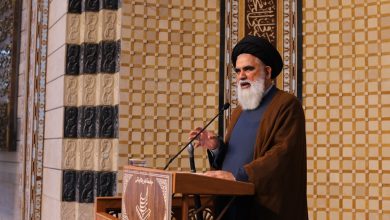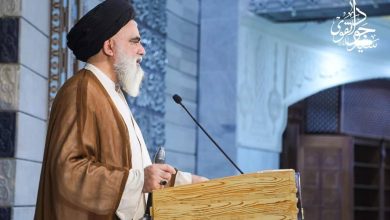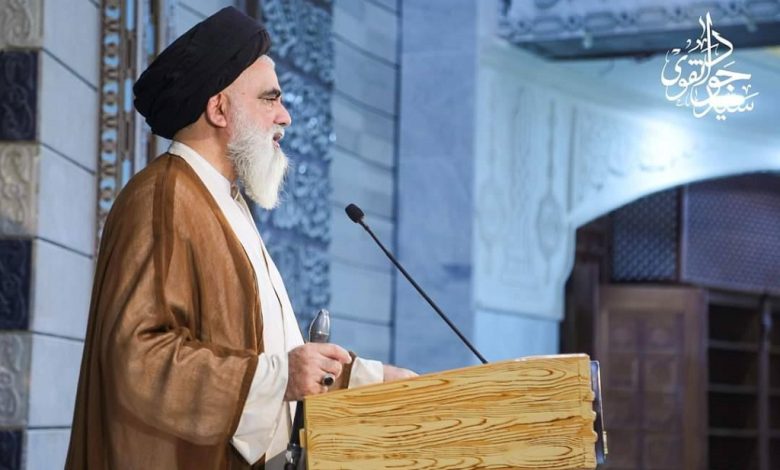
Hujjatul Islam Ustad Syed Jawad Naqvi
(Principal Jamia Orwatul Wuthqa – Lahore)
Delivered at: Masjid Baitul ul Ateeq
Lahore – Pakistan
Friday Sermon 18th July – 2025
Sermon 1: Quranic Criteria of “Saadiqeen”in Surah Ahzab
Sermon 2: Silence, Oppression, and Pakistan’s Turning Point
In Surah al-Tawbah, verse 119, the Quran states:
يَا أَيُّهَا الَّذِينَ آمَنُوا اتَّقُوا اللَّهَ وَكُونُوا مَعَ الصَّادِقِينَ
“O you who believe! Be conscious of Allah and be with the truthful.”
Taqwa and the Question of Companionship
The practical form of Taqwa is about determining with whom we should live our lives. It is a fundamental decision regarding the protection of life—choosing which people among friends, family, relatives, and society we should associate with in companionship and dealings. The Quran addresses this matter directly to the believers, not to those who simply decorate themselves with faith to make claims or gain benefits but do not wish to live according to the path of true believers. Such individuals do not adopt the “Saadiqeen” (truthful ones) as their standard for life. Instead, they operate based on personal interests.
Today, people label themselves as believers—especially within the Shia community—based solely on sectarian identity, not on Quranic criteria. The term “believer” has been assumed without verifying whether any element of true faith exists. Allah (swt) presents the teachings, social codes, and consequences of belief for those who meet the Quranic standards of faith, not those who merely affiliate themselves nominally.
Truthfulness as the Primary Standard
A true believer, as defined by the Quran, must first consider the most important principle of life: living in the company of the truthful. If a person is not among the truthful, even if they are close family, they cannot be chosen as life companions. This is a universal command valid in every era. If truthful people only existed in the past, there would be no reason for this Quranic command to exist permanently.
According to belief, the Ahlulbayt are the most truthful and serve as perfect references. However, truthfulness is not limited to them. Every era has both oppressors and truthful people. If Imam Hussain (a) was the truthful one in his time, then Yazid was the oppressor. This principle continues beyond their era.
Becoming Truthful Before Associating with the Truthful
It is also necessary that one cannot be a liar or a corrupt person and still try to associate with the truthful. The Quran instructs us to follow the path of the truthful in order to become one of them. It gives us the standards to identify the truthful in every time period. We are responsible for identifying them in our own era, not merely admiring those who came before us.
We must take the Quranic guidance relevant to our own time. But where do we look for the truthful? Within our community? That would be tribal prejudice. Within our nation? That would contradict the universal message of Islam. Since no Prophet or Imam originated from our land, setting a geographic standard excludes everyone. In the domain of monotheism, anyone who is truthful becomes your companion. Borders may be a consideration but not a standard. Thus, truthful individuals should be identified globally—based not on claims but on established Quranic criteria.
Quranic Criteria for Truthfulness — Surah Al-Baqarah
اللَّهُ يَـٰٓأَيُّهَا ٱلَّذِينَ ءَامَنُوا۟ ٱتَّقُوا۟ ٱللَّهَ وَكُونُوا۟ مَعَ ٱلصَّـٰدِقِينَ
Surah Al-Baqarah (2:177)
لَّيْسَ ٱلْبِرَّ أَن تُوَلُّوا۟ وُجُوهَكُمْ قِبَلَ ٱلْمَشْرِقِ وَٱلْمَغْرِبِ وَلَـٰكِنَّ ٱلْبِرَّ مَنْ ءَامَنَ بِٱللَّهِ وَٱلْيَوْمِ ٱلْـَٔاخِرِ وَٱلْمَلَـٰٓئِكَةِ وَٱلْكِتَـٰبِ وَٱلنَّبِيِّـۧنَۖ وَءَاتَى ٱلْمَالَ عَلَىٰ حُبِّهِۦ ذَوِى ٱلْقُرْبَىٰ وَٱلْيَتَـٰمَىٰ وَٱلْمَسَـٰكِينَ وَٱبْنَ ٱلسَّبِيلِ وَٱلسَّآئِلِينَ وَفِى ٱلرِّقَابِ وَأَقَامَ ٱلصَّلَوٰةَ وَءَاتَى ٱلزَّكَوٰةَۖ وَٱلْمُوفُونَ بِعَهْدِهِمْ إِذَا عَـٰهَدُوا۟ۖ وَٱلصَّـٰبِرِينَ فِى ٱلْبَأْسَآءِ وَٱلضَّرَّآءِ وَحِينَ ٱلْبَأْسِۗ أُو۟لَـٰٓئِكَ ٱلَّذِينَ صَدَقُوا۟ۖ وَأُو۟لَـٰٓئِكَ هُمُ ٱلْمُتَّقُونَ
“It is not righteousness that you turn your faces to the East or West, but righteousness is: one who believes in Allah, the Last Day, the Angels, the Book, and the Prophets, and gives wealth, in spite of love for it, to relatives, orphans, the needy, the traveler, beggars, and for freeing captives; who establishes prayer and gives zakat; who fulfills promises when made; and is patient in poverty, hardship, and during battle. Those are the ones who have been true, and it is they who are the righteous.”
(Surah Al-Baqarah 2:177)
This verse makes it clear that one cannot define Birr (goodness) based on personal ritual preferences. Birr begins with faith in five principles, followed by charity despite personal need, fulfilling duties, and patience in adversity and war. These are the signs of truthful people. Based on this divine standard, one can identify the truthful ones in all walks of life—whether in the marketplace, among family, or among scholars. Once identified, be with them.
Truthful Companions and Martyrdom — Surah Al-Ahzab
Surah Al-Ahzab (33:23)
مِّنَ ٱلْمُؤْمِنِينَ رِجَالٌ صَدَقُوا۟ مَا عَـٰهَدُوا۟ ٱللَّهَ عَلَيْهِۖ فَمِنْهُم مَّن قَضَىٰ نَحْبَهُۥ وَمِنْهُم مَّن يَنتَظِرُۖ وَمَا بَدَّلُوا۟ تَبْدِيلًۭا
“Among the believers are men who have been true to their covenant with Allah. Some of them have fulfilled their vow (unto death), and some are still waiting, but they have never changed in the least.”
(Surah Al-Ahzab 33:23)
This verse proves that among believers there are always truthful ones. Some have fulfilled their vow to the point of martyrdom (Nahba), and others are still on the path. But all of them have remained committed to their promise and did not waver.
Surah Al-Ahzab (33:24)
لِّيَجْزِىَ ٱللَّهُ ٱلصَّـٰدِقِينَ بِصِدْقِهِمْ وَيُعَذِّبَ ٱلْمُنَـٰفِقِينَ إِن شَآءَ أَوْ يَتُوبَ عَلَيْهِمْۗ إِنَّ ٱللَّهَ كَانَ غَفُورًۭا رَّحِيمًۭا
“That Allah may reward the truthful for their truth and punish the hypocrites if He wills or turn to them in mercy. Indeed, Allah is Most Forgiving, Most Merciful.”
(Surah Al-Ahzab 33:24)
This verse indicates that Allah distinguishes between the truthful and the hypocrites. Those who fail to fulfill their covenant are liars and cannot be our companions in life. While we may conduct transactions with anyone (except supporters of tyranny or enemies of Islam), we cannot form bonds of companionship, partnerships, or shared missions with them.
The Test of Separation and Taqwa in Action
This separation of truthful and hypocrites is tested in fields of hardship—especially in times when life is at risk. Today, we live in a society that is a mixture of both. If hypocrites repent, Allah may forgive them. But if they don’t, punishment awaits. The first stage is always the separation of believers from hypocrites. This command still stands for us today.
Although the Infallibles were the most perfect truthful ones, truthfulness did not end with them. We must identify the truthful ones in our era and align ourselves with them. This is the practical application of Taqwa. Do not assess them based on their ethnicity, sect, or nationality—only on their faith and truthfulness. If they meet these criteria, then stand with them.
May Allah purify our hearts from lies and hypocrisy, and protect us from the companionship of such people.
SERMON 2
Consequences of Abandoning Taqwa
Today, the global situation reflects the consequences of not adopting Taqwa. There is one category of transgressors who have completely abandoned religion, and another category who claim belief but remain practically outside the domain of religion. The end result is the same. Whether it is Netanyahu or Trump who are barbaric after leaving religion, or Bin Salman, Al Nahyan, and Khalifa—who claim faith but act similarly—the outcome remains identical. We must protect ourselves from this.
As Allama Iqbal says, the caravan of Hijaz is missing a Hussain. There is no shortage of Shimrs, Kholis, and Hurmilas; they are ready. But they cannot find a Hussain. When they spot a glimpse of the Hussaini character in Lebanon or Iran, these Shimrs and Kholis launch missiles at them.
Understanding Crime through Criminology and Sociology
We have two fields of knowledge—criminology and sociology—to understand this situation. Criminology identifies the causes and factors behind why someone commits a crime. Sociology examines this through a broader social lens. In Pakistan today, criminals are those who roam with guns, and the police are arresting them. But this alone is not enough to identify and eliminate crime.
Sociology eliminates crime by identifying its roots. It classifies those who support criminals or remain silent as social criminals. The Quran also does not approve of those who do not forbid evil. The silence of such people is the cause behind crimes in every segment of society.
The Expanding Circle of War and Silence
The battle of Gaza began in Palestine, extended to Lebanon and Syria, and now has reached inside Pakistan. Crime does not end if left unchecked—it spreads. We hear the news from Syria and think it does not concern us. But the storm clouds that bring devastating rains to Pakistan are not formed here; they originate over oceans and then strike Pakistan. Similarly, the clouds that will destroy Pakistan have formed and now hover over it.
Today, both India and Pakistan acknowledge that the war hasn’t truly ended—only a ceasefire was declared. There was no agreement. The pause came because India was unprepared and is now buying time. Pakistan, despite claiming victory, is now crying out for help. Bilawal Bhutto traveled to Europe with a large delegation, pleading everywhere: “Save us from India.” If victory was yours, why the desperation?
The one who supposedly saved Pakistan was nominated for a Nobel Prize—alongside only Israel. Trump and America will never save any nation. Wherever this group enters as “friends,” that land is engulfed in flames. It is foolish to think security can be achieved through them. Pakistani politicians have, for decades, pinned false hopes on these powers. They fought India and then turned to these very same sources. And by nominating Pakistan for the Nobel Prize, they destroyed its image.
Iran, Pakistan, and a Brewing Crisis
America has declared Iran’s Ambassador in Pakistan as a highly wanted person. Yet their own ambassadors sit comfortably in every country including America, Canada, and Europe. We mistakenly believe this is Iran’s issue—when in fact, it is Pakistan’s issue. Pakistan’s foreign ministry issued a responsible statement affirming that Iran’s ambassador is a most respected figure.
America is targeting the Iranian Ambassador in Pakistan to drag Pakistan into a major crisis. For Palestine and Syria, Pakistan remained silent. They offered only verbal support to Iran. Had Pakistan taken concrete steps in the beginning, the war in Gaza would have ended. Now, efforts are being made to prevent Pakistan from taking any step in support of Iran.
As stated earlier, it is every Pakistani’s duty to defend their nation—but we must understand where to defend. If our generals believe that we won’t fight India on the border, but will wait for them to enter and then respond, then this is a fatal mistake. In Syria, they are now attacking the very man they themselves installed. The next target will be Turkey. We must recognize this and avoid projecting weakness.
The Crime of Silence and the Need to Resist
Those who remain silent are worse than the tyrants committing oppression. If only some reaction had been shown, the current situation could have been avoided. Israel is killing children and claims it is intentional, and yet we remain silent. Their prison jailor proudly describes how he tortured Palestinians in prison.
This Muharram passed in silence—with no action taken against tyranny. This is not mourning for Imam Hussain—it is a trade. If you did not raise your voice during Azadari or Friday prayers, then what is the purpose of these events? Apart from Iran, which now faces its own crises, no one is actively supporting the Palestinians. The only nation now standing with them is Yemen.
Is Pakistan, or its people, weaker than Yemen? What relation does Yemen have with Palestine? Yemen itself is facing immense hardship, yet it feels the pain of the oppressed. Allah says He is with the oppressed—and whoever is with Allah, will ultimately succeed.