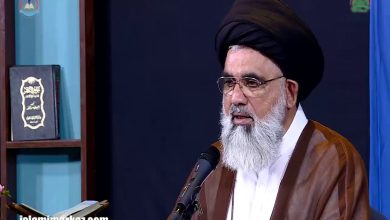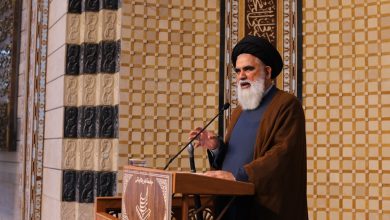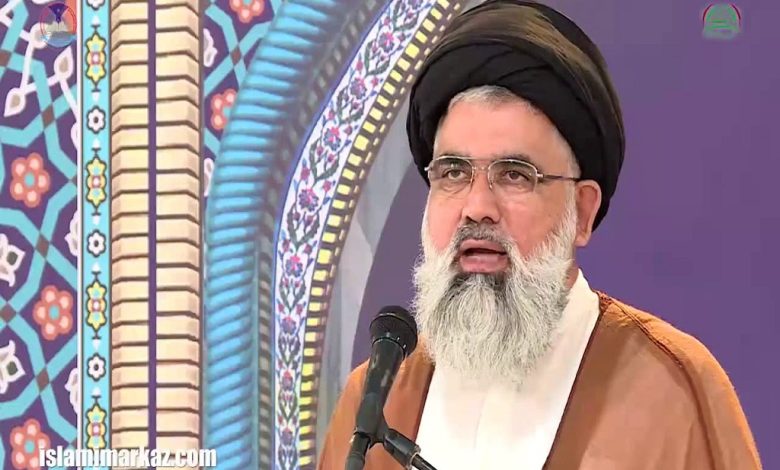
Hujjatul Islam Ustad Syed Jawad Naqvi
(Principal Jamia Orwatul Wuthqa – Lahore)
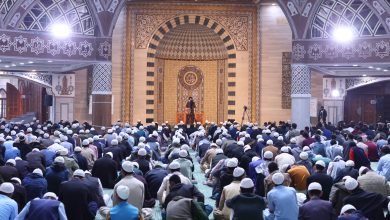
Delivered at: Masjid Baitul ul Ateeq
Lahore – Pakistan
Friday Sermon 20th Feb – 2026
Sermon 1: The Mission of the Prophets: Restoring Unity and Ending Division
Sermon 2: Ramadan as the Workshop of Taqwa: Silah al-Rahm, Infaq, and Self-Reform
I emphasize to you that you should live your life according to Taqwa, live your life under the shade of Taqwa, and establish the system of life on the basis of Taqwa. Taqwa is a measure from Allah Tabarak wa Ta‘ala for the protection of human life. Just as Allah Tabarak wa Ta‘ala arranged the measure of guidance for human life, in the same way He arranged the measure for its protection as well. However, both guidance and protection are, from Allah’s side, determined and laid down, but it is the human being who must implement it in his own life. Its explanation has been stated in the Qur’an al-Karim: human guidance and human protection—meaning Din and Taqwa—both have been stated in the Qur’an, openly and clearly, in a manifest and clarifying manner. And Rasul Allah ﷺ also implemented it, conveyed it, taught it and explained it. And likewise, Ahl al-Bayt (علیهم السلام) also clarified and taught both the system of guidance and the system of protection, and also stated the method of implementing it.
A very important, fundamental, central stream of human life is the collective life of the human being, which Allah Tabarak wa Ta‘ala has appointed for the human being. And even if a human is not living according to Allah’s guidance, he still adopts collective life by itself. This has been a long-standing discussion among scholars: whether sociality is within human nature, or whether a human adopts sociality under pressure of external factors. In both cases, the outcome does not differ. The outcome is that, in any case, whether the human inclines toward sociality inwardly according to natural demand, or is compelled, or whether due to external pressure he is compelled toward sociality—in both cases human life will be collective. Unlike the non-human—other creatures besides the human—neither is there within them any demand for sociality, nor is there any external pressure upon them to live a collective life.
By sociality, the meaning is not merely living together. It means forming a society, forming a community, forming a “society,” and establishing a connection and interconnection, and as a result living a mutual life. Like the human body: the human body consists of organs and limbs, but these organs and limbs have a particular composition with one another. And separately, each organ has its own life, its own survival, but in living and in growth it is dependent on the life of the body; and the life of the body, the life of the organism, is a collective life. Within it the life of the organ is also placed, and it is joined with the collective life. Rasul Allah ﷺ also gave this very example of collective life: that it is like the body and organism of the human being; and the composition of the collective is likewise as the composition of the human body.
This sociality has been made the foundation for life, for guidance, and for protection. Meaning: when the stage of forming life will come, collective life holds fundamental status; and when Din will descend, and Din will spread, Din will be implemented, the guidance of the human being—then collective guidance holds central status in the form of a system. And likewise protection also is possible through this central stream of human life: that if the human society, the human collective, is protected, then within it the individual will also be protected, and the other domains of this life will also be protected.
This too is called Taqwa, and Taqwa is Ummah. In Surah al-Mu’minun, in verse 52, there is the command of Allah Tabarak wa Ta‘ala; in verse 51 and 52:
يَا أَيُّهَا الرُّسُلُ كُلُوا مِنَ الطَّيِّبَاتِ وَاعْمَلُوا صَالِحًا إِنِّي بِمَا تَعْمَلُونَ عَلِيمٌ
O Messengers! Eat of the good things and do righteous deeds. Indeed, I am fully aware of what you do.
It is an address to the Prophets and Messengers. Before this, there is mention of the Prophets, and after this mention, Allah Tabarak wa Ta‘ala’s address is to the Prophets: يَا أَيُّهَا الرُّسُلُ كُلُوا مِنَ الطَّيِّبَاتِ وَاعْمَلُوا صَالِحًا—O those sent by Allah, appointed from Allah for the guidance of humanity—O Prophets and Messengers, you too, like other people, benefit from Tayyibat, and keep your action صالح (‘amal salih). إِنِّي بِمَا تَعْمَلُونَ عَلِيمٌ—whatever you do, Allah is aware of it.
Then:
وَإِنَّ هَٰذِهِ أُمَّتُكُمْ أُمَّةً وَاحِدَةً وَأَنَا رَبُّكُمْ فَاتَّقُونِ
And indeed this Ummah of yours is one Ummah, and I am your Lord, so adopt Taqwa of Me.
And this is your Ummah, and this Ummah is one Ummah. And I am your Rabb—Nurturer, Lord, Sustainer—so adopt Taqwa; adopt My Taqwa, or adopt Me as Taqwa; adopt protection as a measure—adopt My measure, Taqwa. But the people did not do so. They did not let it remain Ummah Wahidah; rather they cut it, divided it, and broke it into pieces. They made Hizb, they made groups, they made parties; and every party is pleased with whatever it has—whatever manifesto, constitution, goal it has—upon that they are pleased. And then the command is that you should leave them drowned in that mire, in misguidance, until the appointed time which Allah Ta‘ala has appointed for them.
In the Qur’an al-Karim, this passage has foundational status and foundational importance, because this is the most fundamental aspect of human life. Its protection is at the time when this becomes established—when the system of Ummah becomes established, comes into existence—and then this existence of Ummah must be safeguarded. The first stage is the formation of Ummah.
The Qur’an al-Karim has said that people were Ummah Wahidah, and then—like it is mentioned in Surah al-Mu’minun, verse 53:
فَتَقَطَّعُوا أَمْرَهُمْ بَيْنَهُمْ زُبُرًا
Then they cut up their affair among themselves into pieces.
This act among humans had not yet occurred—cutting and division had not happened. Humans were one Ummah Wahidah. But then the process of division began among them; the process of cutting began; groups were formed, Hizb were formed; they separated their own paths, and adopted hostility and enmity with one another. اختلاف (ikhtilaf) gradually increased and turned into Tafarruqah (division), and then their sects formed; they became separated.
In Surah al-Baqarah, Allah Tabarak wa Ta‘ala mentioned this human sociality and this foundation: that the form you see today—this was not the original human foundation. In Surah al-Baqarah, verse 213, Allah Tabarak wa Ta‘ala says:
كَانَ النَّاسُ أُمَّةً وَاحِدَةً فَبَعَثَ اللَّهُ النَّبِيِّينَ مُبَشِّرِينَ وَمُنذِرِينَ وَأَنزَلَ مَعَهُمُ الْكِتَابَ بِالْحَقِّ لِيَحْكُمَ بَيْنَ النَّاسِ فِيمَا اخْتَلَفُوا فِيهِ ۚ وَمَا اخْتَلَفَ فِيهِ إِلَّا الَّذِينَ أُوتُوهُ مِن بَعْدِ مَا جَاءَتْهُمُ الْبَيِّنَاتُ بَغْيًا بَيْنَهُمْ ۖ فَهَدَى اللَّهُ الَّذِينَ آمَنُوا لِمَا اخْتَلَفُوا فِيهِ مِنَ الْحَقِّ بِإِذْنِهِ ۗ وَاللَّهُ يَهْدِي مَن يَشَاءُ إِلَىٰ صِرَاطٍ مُّسْتَقِيمٍ
People were one Ummah; then Allah raised up the Prophets as bringers of good tidings and warners, and He sent down with them the Book with the truth, so that it might judge between people concerning that in which they differed. And none differed about it except those who were given it—after clear proofs had come to them—out of بغی (baghy) among themselves. Then Allah guided those who believed, by His permission, to the truth regarding that in which they differed. And Allah guides whom He wills to a straight path.
This verse is mentioning this foundation: that people were Ummah Wahidah in their foundation, in their اصل (asalah). What does Ummah mean? The word Ummah comes from Umm, and Umm means the base, the foundation, the centrality, to which all other things return, turn back, and gather around. That is called Umm. And Ummah is called that collectivity which gathers on one purpose, one path, and one goal—gathers on one Din, one Maktab, one theory, one ideology. That collectivity is called Ummah; that collectivity is an Ummah. And Imam is the leader of this collectivity, the center around which they must gather, and who must keep them gathered, keep them joined—he is the Imam.
Allah Tabarak wa Ta‘ala said that people were Ummah Wahidah—meaning people were gathered on one purpose and one path, gathered around one center. Then Allah Tabarak wa Ta‘ala raised the Prophets. Here, in between, one stage is not mentioned in this verse; without mentioning, it is clear, and it has been stated in the end of the verse: that people were gathered, they were Ummah Wahidah, and Allah Tabarak wa Ta‘ala raised the Prophets as bringers of good tidings and warners, so that in matters where اختلاف occurred among people, they would judge among them. The purpose of the Prophets’ mission was the unity of humanity and to make humanity an Ummah, and to keep the existence of Ummah established. Because people were an Ummah, then اختلاف happened; to end this اختلاف and to decide in اختلافات, Allah Tabarak wa Ta‘ala raised the Prophets.
This theme has been stated more openly—rather the same meaning—again in Surah Yunus. That part which, due to being clear, was not named in Surah al-Baqarah, Surah Yunus has stated it with explicitness. In Surah Yunus, verse 19, Allah Tabarak wa Ta‘ala says:
وَمَا كَانَ النَّاسُ إِلَّا أُمَّتًا وَاحِدَةً فَاخْتَلَفُوا ۚ وَلَوْلَا كَلِمَةٌ سَبَقَتْ مِن رَّبِّكَ لَقُضِيَ بَيْنَهُمْ فِيمَا فِيهِ يَخْتَلِفُونَ
And people were nothing but one Ummah, then they differed. And if not for a word that had already preceded from your Lord, it would have been decided between them regarding that in which they differ.
In Surah Yunus, verse 19: وَمَا كَانَ النَّاسُ إِلَّا أُمَّتًا وَاحِدَةً—according to the literal translation: people were nothing but one Ummah Wahidah. Meaning, in every era people were Ummah Wahidah; there did not pass any era such that people were not Ummah Wahidah. مَا كَانَ negates such an era in which people were not Ummah Wahidah. They were Ummah Wahidah, but in that Ummah Wahidah, فَاخْتَلَفُوا—differences arose among them. In Surah al-Baqarah, this point is also there, but the stage between the raising of the Prophets and Ummah Wahidah was not explicitly named there; by stating the purpose of the Prophets’ mission in the end, it clarified that the Prophets came because in Ummah Wahidah اختلاف had occurred; to judge and decide within that اختلاف, the Prophets came. And Surah Yunus stated it with explicitness: وَمَا كَانَ النَّاسُ إِلَّا أُمَّتًا وَاحِدَةً فَاخْتَلَفُوا—people were one Ummah Wahidah, but they differed. And then it says: وَلَوْلَا كَلِمَةٌ سَبَقَتْ مِن رَّبِّكَ لَقُضِيَ بَيْنَهُمْ فِيمَا فِيهِ يَخْتَلِفُونَ—if it were not for Allah’s word and decree, then judgment would have been passed among them in the matters in which they differ. But Allah’s decree is not that as soon as اختلاف occurs, judgment is issued immediately—meaning the end result, the consequence of the اختلاف-makers: that they be punished immediately. Allah’s law is that it has been deferred to another stage. Those who break the Ummah, who create اختلاف within the Ummah, their decision will come later.
Then:
وَيَقُولُونَ لَوْلَا أُنزِلَ عَلَيْهِ آيَةٌ مِّن رَّبِّهِ ۖ فَقُلْ إِنَّمَا الْغَيْبُ لِلَّهِ فَانتَظِرُوا إِنِّي مَعَكُم مِّنَ الْمُنتَظِرِينَ
And they say, “Why has a sign not been sent down upon him from his Lord?” So say, “The unseen is only for Allah; so wait—indeed I am with you among those who wait.”
These two verses—Surah al-Baqarah verse 213, and Surah Yunus verse 19—are stating this one reality: people were Ummah Wahidah; within them اختلاف arose; after this اختلاف, Allah raised the Prophets as bringers of good tidings and warners, so that in the matters and causes due to which اختلاف occurred among them, by removing that اختلاف they would again make them Ummah Wahidah. From the spirit of this verse, the purpose of the Prophets’ mission is the formation of Ummah. People existed, with their natural capacities; they had been created, were living; and in them اختلاف occurred. First they were Ummah Wahidah, then اختلاف occurred, and then Allah raised the Prophets.
From a historical perspective too, some scholars have stated—by the light of Qur’anic verses and references—history as well: that since the time human came upon the earth, from that time Allah Tabarak wa Ta‘ala’s guidance was for them; but an organized Shari‘ah and an organized written system began for them from Hazrat Nuh (علیه السلام). The first Shari‘ah descended upon Hazrat Nuh (علیه السلام). And this does not mean that the humans before that, or the Prophets before Hazrat Nuh, did not have any دستور from Allah. They too received revelation—like Hazrat Adam: Allah Tabarak wa Ta‘ala placed him on the earth and also said: you go to the earth, and then from Our side guidance will come down for you; you must live according to it. And so it happened. Hazrat Adam came to the earth in the form that—like the common well-known tafsir says—Adam and Hawwa were two individuals created first, and then from those two, the human نسل spread. And the second tafsir, which is not common, not famous, but scholars have mentioned it, and some researchers among scholars and mufassirin have mentioned it as a possibility: that perhaps this is the case—in the creation of Adam, in the خلافت of Adam, and likewise in the descent to earth—that here “Adam” does not mean an individual but the type of human, meaning the human being: that Allah created the human, sent the human to the earth, and stated all these commands for the human being. Both have evidences: that Adam was an individual, and that an individual was sent down to earth; or that first an individual’s creation happened, then the individual came to earth; or that the type was created and that type—humanity—was sent upon the earth, and these commands were stated for it.
In both cases, Allah Tabarak wa Ta‘ala raised the Prophets when humans were present on the earth in كثرت, and they were Ummah Wahidah. In Ummah Wahidah, اختلاف occurred; due to this اختلاف, Tafarruqah occurred; within them division occurred. To end this division and this اختلاف, Allah raised the Prophets so that the matters due to which they have اختلاف may be removed from them. But the Qur’an also states that Allah raised the Prophets and sent down the books in order to end اختلاف within the Ummah, within different people, but one group—whom the Qur’an calls Baghi—the Baghis not only did not allow that اختلاف to end, but they created اختلاف within those books too, which came with very clear teachings. The Baghis created اختلاف within the Book—the Book which was the manifesto of unity, the manifesto of Ummah—they created اختلاف within it. People were Ummah Wahidah, then اختلاف happened, and Allah raised the Prophets so that they remove اختلاف; and Allah sent down the Book along with the Prophets. So the Book’s purpose was to remove اختلاف and to form Ummah.
If we separate this meaning and make sentences from it—right now the verses in the Qur’an have the style of guidance, the style of hidayah. If we convert the style of guidance into an academic style—just as scholars do: the ahkam shar‘iyyah that exist in the Qur’an in the language of guidance, the fuqaha have converted them into the language of fiqh. In the Qur’an, rulings are not stated in that fiqhi language. For example, the command of fasting: يَا أَيُّهَا الَّذِينَ آمَنُوا كُتِبَ عَلَيْكُمُ السِّيَامُ—this كُتِبَ عَلَيْكُمُ السِّيَامُ has been converted into fiqhi sentences and fiqhi language. The fiqhi language is separate, and the Qur’an’s language of guidance is separate.
Likewise, in the Qur’an al-Karim, as the universe has been described—creation of the earth and the heavens, their details, and the laws within them—the philosophers have converted those Qur’anic sentences describing the universe into philosophical language: the creation of earth and heavens, and the stages of creation.
Similarly, the guidance of the Qur’an al-Karim—the language of guidance—has been converted by scholars of logic into sentences according to علم منطق, for clarification and explicitness. Because in the curriculum it is the case that we first study علوم and then come to the Qur’an; and the علوم have clarified and presented these sentences and propositions to us. علم منطق particularly teaches a person the method of everyday speech; naturally all humans know speech, but generally we make mistakes in speech: in conveying meanings, in forming sentences, and in deriving results from sentences—confusion, error. The work of logic is to state the correct arrangement: that in everyday speech—like there is a shopkeeper and a customer—so they are conversing; they are not doing a conversation of philosophy and logic, they are doing a conversation of exchange: one is selling ration, one is buying; one is selling cloth, one is buying; and this exchange conversation—one, economically, علم اقتصاد explains it: what the principles, rules, and regulations of trade are; and whenever one party speaks against that established trade and exchange regulation, the shopkeeper immediately catches him that you are speaking against the rules; and if the shopkeeper speaks against the established law of trade, the customer catches him, because both, in عرف, know the laws of exchange and trade.
But when they speak this trade conversation, sometimes within it, the proof a person presents or a stance he adopts, and for his stance he gives reasoning—the style is not determined by trade laws; that is another field. Like if both shopkeeper and customer are conversing in Urdu: though the conversation is trade, the language is Urdu; therefore the rules of Urdu also must be observed. And if somewhere in Urdu grammar in conversation there is wrong usage, the other party corrects it: you did not say this correctly according to the rules of the language. And if they are conversing in Punjabi, the same: Punjabi’s rules and regulations in conversation, idiom, dialogue are observed; if there is a mistake, it is caught: you are not delivering the sentence correctly. Likewise, if they are conversing in English and doing exchange, then because English is the medium of their conversation, its rules also enter in between. Thus in every conversation—whatever the language: Urdu, Punjabi, English—whether the conversation is commercial, household, educational, general social talk, cultural talk, academic talk, religious talk—within conversation there are rules and regulations of conversation, of inference, of the manner of speech; within that, the rules of logic are observed.
This very shopkeeper and customer are conversing according to logic, even though they have not studied logic. They may not have formally studied Urdu in an academy, yet they converse according to the rules of language. They have not acquired Punjabi education in a college or university, yet they converse according to Punjabi’s rules and regulations. Similarly, logic is a natural knowledge; every human possesses it. The well-known story that is taught to students—teachers of logic mention it—that the author of a famous logic book, Mir Sharif Jurjani, taught this book of logic that he wrote to his son. Then, to see whether he understood the book or not, he told his son: now go and see what people are doing; go into the streets, go into the market; observe people; then come and tell me what people are doing. The son went, wandered, and returned. The father asked: what did you see people doing? He said: they are doing ordinary work: coming and going, buying and selling. He said: he did not understand the book; he taught him again.
He taught him another round, months more, and then tested him—not by making a written paper, but again sent him: go see what people are doing. The son went again, returned, and again said: they are doing their usual work; farming, trading, buying, selling, coming, going. He said: he still did not understand the book. A third time he taught him, then sent him again for the test; the son had failed twice. The third time, after teaching, he sent him: go see what people are doing. The son returned very upset and angry and said to his father: you wasted so much of my time; what you taught me three times from the book, people in the market are acting according to it without having read it. What I read in the book, that same conversation is happening in the shop; and those coming and going—literate and illiterate—all are presenting logic, stating it, giving proofs, doing inference, doing sophistry, raising doubts, forming sentences. And this is the same work you made me do. At that time Mir Sharif said: now you have understood the science of logic; now it has become acquired for you. Meaning: logic is the daily knowledge of humans, according to which every human speaks; every person is operating under logic, but without conscious awareness that these are the rules of logic that I am using.
In the Qur’an al-Karim, Allah Ta‘ala used the language of guidance. The style of the Qur’an is not academic, not argumentative; it is the style of guidance. And the style of guidance is entirely different from academic principles. The books with which we are familiar are in another style, and the Qur’an was compiled with a different style. And because, through the compiled rules for sciences, we try to understand the Qur’an, we face difficulty. And if this work is done—that the logic of the Qur’an, which the Qur’an itself has clarified, is used to understand the Qur’an; and the logic of guidance is used—then this compiled logic is for everyday speech or for sciences; for guidance, the Qur’an has stated its own logic. According to that, it should be understood—something with which we are not yet familiar; we are not acquainted with the logic of guidance, but we are acquainted with the logic for sciences.
We analyze the Qur’anic sentences that Allah Ta‘ala stated in the noble verse. كَانَ النَّاسُ أُمَّةً وَاحِدَةً: this is one sentence—that people, humans, Nas, were Ummah Wahidah. فَبَعَثَ اللَّهُ النَّبِيِّينَ مُبَشِّرِينَ وَمُنذِرِينَ: Allah Ta‘ala raised the Prophets as Mubashshirin and Mundhirin. People were Ummah Wahidah, and fa according to Arabic grammar indicates consequence: because people were Ummah Wahidah, therefore Allah raised the Prophets. Meaning, what was the مقتضی, the reason, the cause that demanded the need for Prophets in human society? In this verse, up to here, if we look, it seems the demand was the unity of the Ummah: Allah raised the Prophets. Why did unity need Prophets? If people are Ummah Wahidah, then why did they need Mubashshirin and Mundhirin? Here, that sentence which is clarified in Surah Yunus is taken into account: it is also in this verse but in its end: that people were Ummah Wahidah and differences arose among them—فَاخْتَلَفُوا. People were Ummah Wahidah—this is one sentence—فَاخْتَلَفُوا—differences arose among them. To end this difference, Allah raised the Prophets. And the Prophets were raised as Mubashshir and Mundhir: because the unity of the Ummah ended due to اختلاف, and to end that اختلاف which had ended the unity of the Ummah, the Prophets were raised.
But these Prophets were raised with the title of Mubashshir and Mundhir. Mubashshir and Mundhir are the duties of the Prophets, their منصب—rather, in the correct expression, they are the responsibilities of the Prophets; this is an office in which the responsibility is also specified.
We generally translate Mubashshir as “one who gives glad tidings” and Mundhir as “one who warns,” which is not a precise translation; it is a superficial translation: “one who gives glad tidings and one who frightens.” Mubashshir is the one who gives to a despairing human, to a deadened human, to a wilted human, such news or shows such a path by which his despair, his depression, his deadness is removed, and happiness comes upon his face—prosperity comes, brightness comes. When hope is born in a hopeless person, an openness appears upon his face; a smile appears, cheerfulness appears upon his face. Bashar is the human skin, and the human is called Bashar due to Bashrah, because when the human face sees joy, its skin opens; and on the face appear signs. In both cases we see a person with a drooping face, a worried person. Many people exist: due to various reasons—no money, no employment, household needs not fulfilled, illness, no treatment—and such kinds of reasons become a cause that deadness enters them. When someone gives the hopeless person hope—that this difficulty of yours can be solved, the worry can be removed—then the color of his face, the features of his face, the expression of his face changes immediately. The tightened face, the drooping mouth, opens up. Because these effects appear on the human skin (Bashrah), for this reason the human is also called Bashar: the one with manifest skin; Bashrah is the facial skin, and the inner states of a human show their آثار on the face or on the skin. Look at animals: their skins are covered with hair; their distress and happiness do not appear manifest on the face. For example, if a buffalo, ox, calf is happy, you cannot know by looking at the face whether it is happy or distressed; but by looking at the human face, it becomes known what his inner condition is: whether he is happy, or in hardship, or in a helpless condition.
These paths of salvation—when a human is afflicted by misguidance, by despair, by failure—the Prophets tell him the paths of hope and salvation. When those paths become known to the human, hope is born within him, which becomes visible on his face; that is called Bisharah.
Bisharah does not mean to tell about Hur or about milk and rivers; our Bisharah is not limited to only these things: that the life you live in the world, in the hereafter Allah Tabarak wa Ta‘ala has set such reward for it. Bisharah in worldly matters, in earthly matters, is the paths of hope and salvation, the paths of success, the means of success, the causes of success, the removal of obstacles that block the path of success—these are Bisharah.
For example, if a person is searching for employment, and you say to him: when you die, after that so many Hur will be given to you; when you die, your home will be beside a river of milk; you will have a coastal plot; on one side a river of honey will flow and on one side a river of milk will flow—then this unemployed person, when he dies, such comforts will be available there—then look at his face: after giving these “glad tidings,” look at his face, what signs appeared upon it. He will become even more hopeless: I have nothing to eat, no employment, household needs are not fulfilled, and you are telling me about after death: that there will be Hur and palaces. But if you say to him: brother, you are unemployed, you are worried, you need employment—fine—come tomorrow to our office, come to our house, we will get you a job—then look at his face.
You can do both experiments: promise Hur to an unemployed person, and promise a job to an unemployed person; then see the facial signs. Then Bisharah will be that thing which made his skin open, which became the cause of cheerfulness. So when a human is living on earth and is trapped in earthly difficulties, he needs earthly Bisharah; earthly things are Bisharah for him, so that his difficulties here are solved, his despair is removed, his failures are removed, his deficiencies are removed.
Here, when the Prophets (علیهم السلام) came: people were Ummah Wahidah, but اختلاف occurred. To remove اختلاف, there is need for Mubashshir and Mundhir. When اختلاف occurs and the Ummah becomes divided, then who is needed in the fragmented Ummah, in the Ummah broken into pieces? There is need for Mubashshir and Mundhir. Mubashshir and Mundhir means: the one who tells the nation, the millat, that has fallen into اختلاف and division, the paths of hope and salvation, and again weaves it into the thread of unity. Mubashshir is not the one who, while the Ummah is in division, shows them paradise; who, as a result of division, shows them Hur; who, within اختلاف, shows them felicities. اختلاف on earth, quarrels on earth, division on earth, fights on earth, oppression, injustice, denial of rights—and if in this you further inflame اختلاف, then you will get Hur; break the Ummah more, then you will get Hur; increase division, increase hatred, increase enmities, then you will get Hur—this is not Bisharah. This is not Mubashshir: that in division he shows paradise. Mubashshir means: the one who removes division, who establishes unity, who preserves unity. The basic need of humanity is unity. كَانَ النَّاسُ أُمَّةً وَاحِدَةً—the Ummah and the unity of the Ummah—this is the original foundation and necessity. All worldly and otherworldly outcomes are tied with this knot—unity
In your daily matters, in your resources, difficulties arise; you refer to a certain person. If it is an electricity problem, you go to the electricity people; if it is an electronics problem, you go to someone like an IT specialist; for something else you go to a mechanic; if it is a technical problem, you go to an expert. He tells you its solution. When you are sick, you go to a doctor; you go to a hospital. For the sick person, medicine, the hospital, and the doctor are Bisharah. But if you tell the sick person other things—“you are sick, and we will give you plots in your name”—this is not any Bisharah for him. If someone is a cancer patient or is afflicted by some deadly illness, he will not be saved by plots; he will be saved by medicine. Whatever the difficulty is, accordingly he needs guidance. That is Bisharah.
Indhar: to make aware of those dangers in which you are drowned, those dangers by which you are surrounded, those dangers that have besieged you—making you aware of those dangers, and also giving the measure to come out of those dangers—this is Indhar.
The Prophets were sent by Allah for a very difficult time and for a very difficult work. And it is to guide the human being within اختلاف and تفرقہ, within despair and hopelessness; and to bring out and save the human beings surrounded by dangers by making them aware of dangers; and to make them Ummah Wahidah—this is the purpose of the Prophets (علیهم السلام). People were Ummah Wahidah; اختلاف occurred among people; to remove this اختلاف, Allah Tabarak wa Ta‘ala raised the Prophets. Allah assigned the Prophets to Ibshar and Indhar—meaning awareness and action—Allah assigned them to that. And then:
وَأَنزَلَ مَعَهُمُ الْكِتَابَ بِالْحَقِّ
And He sent down with them the Book with the truth.
Then the Book, the manifesto, was also given along with the Prophets. So the purpose of the Prophets is the unity of the Ummah; the purpose of Ibshar is the unity of the Ummah; the purpose of Indhar is the unity of the Ummah; the purpose of the نزولِ کتاب is the unity of the Ummah.
وَأَنزَلَ مَعَهُمُ الْكِتَابَ بِالْحَقِّ—the Book was sent down, and that too for the unity of the Ummah:
لِيَحْكُمَ بَيْنَ النَّاسِ فِيمَا اخْتَلَفُوا فِيهِ
So that it may judge between people regarding that in which they differed.
وَمَا اخْتَلَفَ فِيهِ إِلَّا الَّذِينَ أُوتُوهُ مِن بَعْدِ مَا جَاءَتْهُمُ الْبَيِّنَاتُ بَغْيًا بَيْنَهُمْ
And none differed about it except those who were given it—after clear proofs had come to them—out of Baghy among themselves.
But those who created hindrance in the work of the Prophets—Baghi arose—who did not allow the اختلاف to end; rather they created اختلاف within those very books too which came with very clear teachings. They created اختلاف within the Book; that Book which was the manifesto of unity, the manifesto of Ummah—within that too they created اختلاف. These are the Baghis. In reality, they are the rebellious against Allah, rebellious against the Prophets and Messengers, rebellious against the heavenly books, rebellious against humanity. بَغْيًا بَيْنَهُمْ—it is these Baghis who created اختلاف within the Book.
He said: بَغْيًا بَيْنَهُمْ—this is continuing; meaning, we should not, in haste, waste the verse; we leave the meaning of the verse for the next sermon.
If Allah grants توفیق, then Insha’Allah, according to this noble verse, with explicitness, Ummatsazi—the formation of Ummah—is the first stage. The purpose of the mission of the Prophets and the purpose of the descent of the heavenly books is this: that people become Ummah Wahidah.
May Allah Tabarak wa Ta‘ala, in this month of Siyam, in the month of worship and devotion, in the month of نزولِ قرآن, and in the month of understanding the Qur’an—may Allah Tabarak wa Ta‘ala grant all of us the توفیق of understanding the Qur’an. May Allah Tabarak wa Ta‘ala grant us the توفیق to fulfill the Book of Allah as its message is, as its right is: the right of tilawah, the right of qira’ah, and the right of understanding.
SECOND SERMON
Servants of Allah, I advise all of you and I advise my own soul toward Taqwa. I counsel you toward Taqwa. I invite you toward Taqwa. I emphasize that you live your lives according to Taqwa, live your lives under the shade of Taqwa, and conduct the affairs of life on the foundation of Taqwa.
Taqwa is a protective measure from Allah Tabarak wa Ta‘ala for human life. In order to protect the human being from worldly and otherworldly, individual and collective afflictions, dangers, and calamities, this shield and this measure has been appointed by Allah. For Taqwa, Allah Tabarak wa Ta‘ala has made arrangements; He has made special provision. In this provision, Allah Tabarak wa Ta‘ala has placed every means—every means—through which a human being can implement this protective measure, at the disposal of the human being.
These means are of different types. The heavenly Book is a means for Taqwa. The Prophets are means for Taqwa. The A’immah of guidance are means for Taqwa. Likewise, knowledge, teachers, scholars, books, admonition—and Allah has filled the universe for the human being with His signs. Allah has filled the universe with His signs for the human being, and within those signs Allah Tabarak wa Ta‘ala has placed the means for the human being to become acquainted with every type of measure—especially for Taqwa, because Taqwa is the greatest need of the human being, the first need of the human being, and the most important and fundamental need. Therefore, its arrangement has been made more than all other matters.
And for Taqwa, besides the other means, Allah has specially appointed a time: the month of Ramadan. It is a time which is repeated every year. It is declared every year that this one month in the year is the month of Taqwa. And within the etiquettes of this month, specifically, is Sawm, which we translate.
Previously also it was indicated that if only some terminologies had not been translated. Just as some were not translated—and we are grateful to those scholars throughout history who did not translate certain terms. They did not translate Zakat; they did not translate Hajj. They did a great favor to future generations by leaving Zakat as Zakat and Hajj as Hajj, and Jihad as Jihad. But they translated Salat, and they translated Siyam. They translated Sawm as “roza,” and Salat as “namaz.” Just as they left Zakat untranslated, they should have left these as well; they should not have touched them; they should not have called it “namaz,” because Salat and “namaz” are not synonymous. There is overlap in some aspects—meaning some part of namaz exists within Salat—but the comprehensive meaning of Salat does not exist within namaz. Salat is the name of a very comprehensive act, while namaz is the name of a limited act.
Similarly, Sawm and “roza”: what does roza originally mean? Roza is connected to “roz,” meaning day, daily, daily provision. “Rozi” is daily sustenance; if daily ration is present, it is rozi; if daily ration is not present, then what is it? It is roza. Roza means there is no ration, no food for the day. That becomes roza. But Sawm is not this. For Sawm, the wisdom which the Qur’an al-Karim has stated is Taqwa. For Taqwa, the nearest and most effective act is Sawm, and Sawm is within Ramadan.
Ramadan is a large program which Allah Tabarak wa Ta‘ala has made. Within it, one component is Sawm. Sawm and Ramadan are not equal; they are not identical. Ramadan is a vast arrangement which Allah Tabarak wa Ta‘ala has organized for you, a package filled with means of guidance. Within it, one component is Sawm, and the purpose of Sawm has been declared to be Taqwa.
The blessed month of Ramadan—if I state it in simple language so that everyone may understand—it is a workshop for you. Allah Ta‘ala has set up a workshop, an annual workshop, just as Hajj is a workshop. This is not metaphorical speech; we are not calling it a workshop figuratively; it is truly a workshop. Hajj is not a school of lectures; there are no lectures in Hajj. No speech, no sermon, no gathering. What has now become common—the Friday sermon, the Hajj sermon given by the Imam of the Ka‘bah—this they have inserted themselves; it is not part of Hajj. There is no sermon and nothing like that in Hajj. In Hajj there is work—work, then work, then work, then work. One task after another: standing, movement, sa‘i, tawaf—these are all actions. And in your language, you call action “work,” and where work takes place, that is called a workshop—a place of work, a place designated for work. Where cars are repaired, that is called a workshop; where mechanical work is happening, that is called a workshop.
The blessed month of Ramadan is in reality a workshop. But we do not treat it as a workshop. We do not consider Hajj a workshop, nor do we consider Ramadan a workshop. We are ritualistic people, and we are skilled in making rituals for every matter. Whatever occasion comes, we immediately compose poetry for it, decorate for it, prepare adornments, prepare speeches, prepare verses, prepare rituals. Then with these rituals we pass very important days, very important occasions, and we remain deprived. We gain no benefit from the opportunities.
Ritual (rasm) is an act adopted by devotees for the expression of devotion. A devotee—wherever he has devotion—goes there. In Lahore, for example, Ahl al-Sunnah have devotion to Data Sahib; Shi‘ah have devotion to Ghamshah. Both are neighbors. A devotee of Ghamshah goes there and expresses his devotion through acts he himself has determined for reward—lights a candle, offers something as nazr or niyaz, whatever he wishes to do there. Similarly, a Sunni goes to Data Sahib; there the shrine has certain ceremonies established; he also may do some on his own—wears a cap, stands in a corner, places a chadar, offers something, distributes nazr, takes some tabarruk and eats it. The devotee receives satisfaction. Devotion is a feeling; that feeling seeks comfort. Feelings seek soothing; they do not seek argument; they seek comfort.
Often people make this mistake and spoil matters. Many of you—some even on the very first night of marriage, on the wedding night—start giving lectures to the wife, telling her from the first day: my life has difficulties; you must support me. She has come with dreams that she has found a prince who will solve all her problems, and he starts telling her his problems from the first day. She came seeking comfort from you, and you open your book and sit before her. Likewise, afterwards, whenever something happens, you begin giving arguments. Women are emotional; especially the marital relationship is a relationship of feelings. It needs feeling; feeling needs comfort. Whatever gives comfort satisfies feeling. Give a gift, and feeling is satisfied. Give a ring, and feeling is satisfied. Speak a word, praise her—no matter how she is—tell her you are very beautiful; she receives comfort. Praise the food she made; say I have never eaten such food in my life—and perhaps indeed you have never eaten such tasteless food—but say I have never eaten such food in my life. Do not say “such tasteless food”; say “such food.” She receives comfort; now she is conquered before you. An emotional being can be conquered through emotions; you cannot conquer her through argument. It is foolishness to argue before an emotional being.
And some people are such that feelings are absent altogether. Before such a person, weeping or emotional display is useless. Many people keep crying and complaining before them, but they do not care; they are not moved.
We are generally emotional people; we receive satisfaction from rituals—not from teachings, not from worship, not from ma‘rifah. Satisfaction comes from rituals; therefore we are ritualistic people. In rituals we waste great opportunities. By Allah, the great loss we incur every year—Ramadan, in the way we pass it—we go into complete loss. The way Rasul Allah ﷺ gave us the program of Ramadan—this year let us all resolve that we will spend Ramadan according to the method taught by Rasul Allah ﷺ. We will spend it as a workshop.
It is a workshop, and it has thirty days—three ten-day segments. In these three segments, you do not need to divide; it is already divided. For the first ten days, set one subject; for the second ten days, another; for the third ten days, another.
May Allah Ta‘ala grant you long life and may you see a hundred springs of Ramadan, with health, safety, obedience, and tawfiq, insha’Allah. But for the Ramadan that is present before us, which we are passing through, make proper arrangements; think; pass it with planning. Do not pass it in rituals; do not pass it in routine—eating suhoor, then iftar, then whatever routine is fixed. Pass Ramadan consciously; pass Ramadan intentionally.
Rasul Allah ﷺ told us three important things. In the Khutbah Sha‘baniyah there is the complete program of the workshop of thirty days. From that we select three, because we may not be able to perform everything and may become tired.
One more point: in Ramadan, in worship, in Salat, in fasting, we usually focus on spiritual results. Certainly, they exist; worship has great effect in spiritual results, in the soul, in light in the heart. These are realities, because the Prophets stated them, Rasul Allah stated them, the A’immah of guidance stated them; therefore they are absolutely correct. There is no doubt that these spiritual results exist. But let us begin from tangible results—results we can see with our eyes.
From the program of Ramadan stated by Rasul Allah ﷺ, I select three headings for this workshop for the remaining days.
First: Silah al-Rahm. Maintain ties of kinship. Make a list of your relatives, those with whom you have blood relations or friendship. Within thirty days, reach thirty families. Those nearby—go to them; Ramadan provides time; go during the day or night. Those far—contact them by phone; congratulate them for Ramadan; ask about their condition. Make a list of thirty people.
If you can give them iftar, excellent; you do not need to invite them home; send it to their home. If they are in another city, send money for iftar. This is Silah al-Rahm through gifts. Even a piece of date, Rasul Allah ﷺ said, is a gift. If you have nothing, go yourself; it is not necessary to spend money.
Those with whom there is bitterness—apologize; reconcile. If they wronged you, you take the initiative. In Ramadan, prove that the generosity of Ramadan has entered your personality, that Ramadan has made you noble, removed rancor and hatred from your heart. Develop within yourself the courage to forgive. If someone wronged you, give them priority; Allah will grant them tawfiq through you.
Second: Infaq. Spend in Ramadan. Whatever Allah has given you—wealth, provision, time, capacity—spend it in the way of Allah. One act: make a list of surplus items in your home. Anything unused for a year—utensils, clothes, shoes, children’s toys—houses are filled with extra goods. Before Eid, collect them, repair what can be repaired, iron clothes, and distribute to the needy. This is Infaq. When companions asked:
يَسْأَلُونَكَ مَاذَا يُنفِقُونَ ۖ قُلِ الْعَفْوَ
They ask you what they should spend. Say: the surplus.Spend the surplus.
Third: identify three weaknesses—three major habits that cause your failure or diminish your personality. Work on one in each ten days. Habit removal is difficult; it does not happen in one day. Ten days for one weakness, ten for another, ten for the third. This is a beginning. Those with strong resolve may remove even more.
These three: Silah al-Rahm, Infaq, and removing weak habits. Ramadan is the month of strengthening resolve and weakening habits. Leave habits; strengthen resolve.
May Allah Tabarak wa Ta‘ala grant that this Ramadan becomes a cause of change in our personality, in our souls, in our hearts; a cause of purification and completion. May Eid truly be Eid—after you have reconciled, given iftar, given gifts, done infaq, removed weaknesses. Then Allah will grant its reward, and its tangible blessings will appear throughout the year.
May Allah accept your acts of obedience, your worship, and your Siyam. May Allah grant us understanding of the Qur’an in this month of نزولِ قرآن. May Allah grant us tawfiq for obedience in this month of Siyam.
We supplicate in the presence of our Lord:
O Lord, in this blessed month, in this month of the revelation of the Qur’an, in this month of الخير and برکات, Your servants, the believers, are oppressed around the world. O Lord, by the sanctity of this blessed month, grant relief to the oppressed from ظلم and ستم—especially the oppressed of Gaza and Palestine. O Lord, destroy the oppressors and annihilate them; bring an end to America and Israel. O Lord, for the sake of Muhammad and Aal Muhammad, for the sake of the Qur’an, for the sake of Ramadan, protect the Leader of the Islamic Revolution; protect the Islamic Revolution from the evil of enemies; connect the Islamic Revolution with the revolution of Imam al-Zaman. Protect the state of Pakistan; protect it from internal and external enemies; establish peace and security within it; disgrace those who betray the country. O Lord, hasten the reappearance of Your Wali al-Haqq, Wali Allah al-A‘zam (عجل الله تعالى فرجه الشريف); grant us tawfiq to be among his helpers and supporters; grant us tawfiq to be among his helpers and supporters.