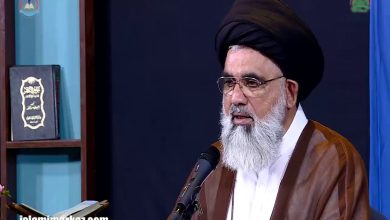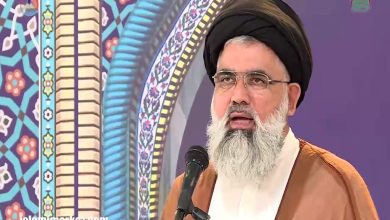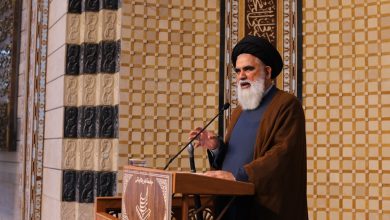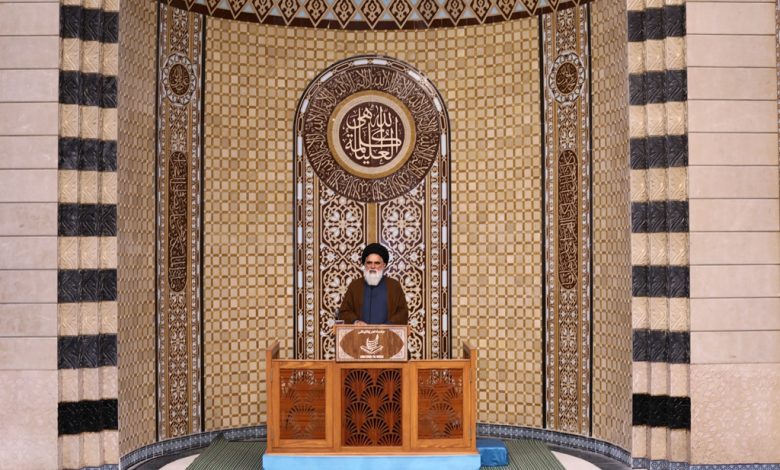
Hujjatul Islam Ustad Syed Jawad Naqvi
(Principal Jamia Orwatul Wuthqa – Lahore)
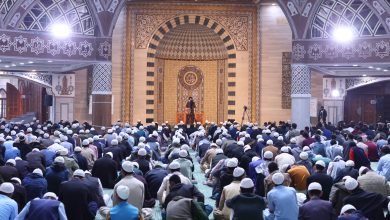
Delivered at: Masjid Baitul ul Ateeq
Lahore – Pakistan
Friday Sermon 19th December – 2025
Man should get married moment he reaches puberty and before deviation happens, whereby man should not come dominance of pressure created by sexual desire. Marriage (Nikah) should be done appropriate as per the personality and status of both partners.
One dimension of Nikah expressed by Quran is Tammatto which comes from Mata, that literally was used for means of travel that eliminates the hardship of travel. In the same context is Mata of life, that is means of life which gives comfort in life that so that life can reach its purpose. A person cannot deliver his responsibilities due to various problems, hardships in life. In forward nations people analyze the causes, reasons for issues and crimes, and specifically the try to find if the person had any mental disorders and if found the punishments are reduced and rehabilitation is also done. But in societies like Pakistan we do not see the background of a person. When a person is mentally disturbed he can do abnormal things. A DSP in Lahore last week killed his wife and daughter, disposed the bodies and recorded a case that his family is missing. Why he did was as per initial reports is due to family disputes. Police service in Lahore is very good financially as they earn well and also other sources of other income. People give preference to work for police. A DSP would be earning with four hands but still he did his crime because he was not comfortable in persona life, as he had two wives and one wife was disturbing him. Mental pressure is the biggest pressure as compared to hardest physical pressure. Person becomes useless due to this. Student cannot study, businessman fail, jobs are lost due to mental disturbances. The biggest element are family disputes. This is a social issue related to human pyschology. We cannot understand social issues through sciences but through witnessing society. Family issues are in majority cases are due to finance issues, but generally poor families have good relationships as compared to others.
The major reason for conflicts between husband and wife is due to disturbed sexual relationship between them. Husband remains good outside but at home he is disturbed because wife is not fulfilling his needs. It also happens the other way as well when husband gets illegitimately satisfied and does not cares about wife at home but she remains loyal and hence becomes mentally disturbed. Such women then go to sages who then misuse them. Sexual relationship is amognst rights of each other which they have to deliver. If they do not deliver these rights then they are considered as criminal. In traditions it is mentioned that a woman who does not fulfill the sexual rights of husband then till the time she does not fulfills it the angels curses that home. And same is other way around as well. Considering these facts Allah has ordained Tamatto for man so that the lives are comfortable. Even though physical means would be present but still there is no comfort. As comfort is beyond pyshical towards mind and heart as well. Comfort, tranquility comes in heart and then it gets dispersed and expressed throug organs. We can see in our society the blood relatives have worse relationship and this is because their minds are not at peace. If there is mental disturbance the social relationships are also disturbed.
If refer back to the case of Prophet Lut, I mentioned that three intellectuals have high impact on society are Sigmund Freud, Carl Marx and Charles Darwin. All these have expressed imaginary theologies and not based on facts but have impacted the world sciences. Freud has said that every action of man is influenced by sexual desires, which is not completley true but there is a major driver is sexual affairs. Hence Quran has preseved and made obligagotyr Tammatto in sexual life as well whereby man should be sexually satisfied. A person does how many evil things due to sexual desires like looking at Na Mahram woman, dance, singing, vulgar jokes, talks etc. You can see intentional or intentionally man has attractiong towards woman. Man likes company of woman. We can see nurses in hospitals when she treats man he finds even injections very pleasurable. If a man goes for shopping the bargaining will not be good as compared to man. In traditions it is mentioned that some poepel who have not done aduletary would be accounted as adulterators, because they have taken pleasure from eyes on woman. This pleasure should be gained through marriage and by husband wife. Then the atmosphere becomes good and respectable. There should be Tamatto in Nikah and Divorce both.
In a permanent marriage (Nikah e Dayemi) both should provide Tammatto (Tranquility) to each other. There are various methods provided. Like those who go for war, they are fighting there iwthout wives. So how they fulfill their needs? The American , NATO forces they have woman soldiers and above this they have law for permitting homosexuality. These forces have arrangement. In Islamic forces what can they do? In the past the forces were not salaried, people would be called from home. They would travel for thousands of kms and they could not return home very soon. Similarly when he is travellign for business on long distance, so what should he do? He should do homosexuality? Masturbation? He takes the food along with him, but what about gaing sexual comfort. For this Quran has provided an option, and Prophet has guided and emphasized to do a temporary marriage. In Fiqh the word Mutah has become common for this case, whereas Quran has used this once. To refrain from forbidden acts this is permitted. The companions were doing this during wars at the time of Prophet (s) and this was something public. Mutah is for a temporary period after which the marriage is over or can be renewed. This is a simple marriage and the normal conditions of marriage , rights are not there. If child is born then the responsibility is on man. There is a third option is for slave maids. The Quran says that the woman who are purchased as slaves or comes as slaves as war booty. They are considered under ownership of man and sexual relationship can be done with these slave maids without Nikah. The Ahle Sunnah scholars do not object on this permissibility but object on Mutah. If without Nikah you can have sexual realtionship with slave woman which is order of Quran so no one can deny. Quran has kept three possibilities, Nikah, Mutah and Slave woman. For the slave woman only if she is purchased , inherited by man or as a war booty. Mutah has been made permissible because it is pleasure, and it is a rights of both in permanent marriage. And when cannot do permanent marriage for reasons of travel, etc or cannot deliver the rights of woman then temporary marriage has been kept as solution. But there are people who misuse these. Like someone do permanent marriage with big dowry. They get married, take dowry (Mehr) and then seek divorce. There are many such woman who have even done fifty permanent marriages. If something can be misused then it does not mean that becomes prohibited (Haram). Like mosques can be misued, apostasy laws are misused so the restrcitions should be on misuse and on the subject. Temporary marriage is a soliution kept to preserve the purification of man and woman. People do not object on illegitmate relationship like dating, friendship and fornication. They consider this as need of today, they are children so let them do. Everyone considers this as legitimate but what Allah has kept as temporary marriage is prohibited. Today friendships, dating, chatting with Na Mahram is commonly accepted by all. People take pleasures from smart phone instead of marriage. Corruption, vulgarity is permitted everywhere.
The Pakistani actors, actresses proclaim that Lahore is the capital of sexual corruption. This Jail road is a busy road at night for this and there are mosques over there and Imams are present but they ignore all this. People take pleasures through forbidden ways, whereas Quran has presented permissible ways. If you cannot do a full package marriage then you can do this half package marriage. This should not be for play, lustful extravagance but it should be meant for preserving purity and satiation of sexual need. Quran wants a believers society to be pure and free from sexual corruption. To stop them from friendship Quran has kept this option of Mutah. There are people who have done Polygamy and it is acceptable if there is a need. If with one marriage man is not getting satisfied, he can marry second , third and fourth but the conditions are strict. That major condition is manage equality and justice between them. The same protocol should be with both. If one marriage is done under prescribed conditions, then the need can be fulfilled.
This discussion can go beyond on this subject, but we will conclude here, tht to protect man from sexual corruption, man should get married and not get indulged into the social evil of Community of Lut. In Pakistan homosexuality is very high both forced and intentional to the extent that even in religious Madrassah the scholars, mufti’s are doing this. This shows the threat which sexual ability poses to the extent the religious scholars are not secure. The way Ahle Sunna has objection on Mutah but they have no objection on homosexuality. The entire Madrassah, sytem, sect comes for the defence of this Mufti. Then they settle the issues. Homosexuality has no resolution, its direct punishment is death. All the objections are on Mutah, because Shia’s consider this as permissible. Rest all forbidden things are permissible and no objections are there. All these corrupt things which are spreading day by day in society should be happened. In Islamabad one complete group of students did homosexualty with a child and that child died. These are non permissible acts and you should do Nikah to acqurie Taqwa. It is the arrangement for protection.
SECOND SERMON
I advise you and I advise my own self toward Taqwa-e-Ilahi (God-consciousness). I counsel toward Taqwa (God-consciousness), I invite toward Taqwa, and I emphasize that one should spend one’s life according to Taqwa, live life under the shade of Taqwa, and establish the system of life on the foundation of Taqwa. Taqwa is a protective measure from Allah Tabarak wa Ta‘ala (Allah, the Blessed and Exalted), meant to safeguard human life from dangers, destruction, calamities, tribulations, and chaos. Allah Tabarak wa Ta‘ala has appointed certain sources and means for Taqwa: the Kitab-e-Asmani (Heavenly Book), the Anbiya-e-Kiram (noble Prophets, peace be upon them), the A’immah-e-Huda (Imams of guidance, peace be upon them), and especially the being, personality, conduct, and wisdom of Amir al-Mu’minin (Commander of the Faithful, peace be upon him), which is the highest example of Taqwa.
Amir al-Mu’minin (peace be upon him) states in Hikmah 117 (Saying 117): Two types of people will be destroyed because of me: one is the Muhibb Ghali (the extremist lover), and the other is the Mubghid Qali (the hostile hater). Concerning me, two types of people are doomed: one who loves me excessively and exaggerates, and the other who hates me with hostility and enmity. As for the extremist lover mentioned by Amir al-Mu’minin, he loves, yet he will be destroyed—his very love will destroy him—because he commits Ghuluw (exaggeration beyond limits) in love. Amir al-Mu’minin identified this danger, and during his own era this danger became very prominent. He controlled it and imposed severe punishments on the Ghulat (extremists) of his time.
In the periods of the later A’immah al-Athar (the Pure Imams), this danger continued to increase, because division had already occurred among Muslims, forming two groups: Shi‘a of Ali (supporters of Ali) and Shi‘a of Uthman (supporters of Uthman). As previously indicated, historically the term Shi‘a (followers/supporters) began to be used commonly from this period. Before that, the followers of Amir al-Mu’minin were not called Shi‘a; they were called ‘Alawi (followers of Ali) or Muhibb-e-Ali (lovers of Ali). Although the Rasul Allah ﷺ (Messenger of Allah) said, “You and your Shi‘a, O Ali”, this narration did not establish a widespread social usage of the term Shi‘a. Even the Qur’anic expression “Shi‘atu Ibrahim (the followers of Ibrahim)” did not become a social label at that time.
This usage became prevalent after the killing of the third caliph. When he was killed and Amir al-Mu’minin became caliph, people divided into two camps: supporters of Amir al-Mu’minin and supporters of the caliph. Banu Umayyah (the Umayyad clan) initiated opposition from Syria, and from that point onward, common people began using the term Shi‘a in streets and neighborhoods. Wherever a person traveled—Kufa, Medina, Basra—he was first asked about his allegiance: Whose Shi‘a are you? Ali’s or the caliph’s? Over time, the term became exclusively associated with the followers of Amir al-Mu’minin (peace be upon him).
From here, Ghuluw (exaggeration) began within the Shi‘a, forming internal factions, while among the opposing camp hatred (Bughd – animosity) was cultivated. Banu Umayyah promoted hatred toward the Ahl al-Bayt (the Household of the Prophet), while certain groups propagated excessive love and exaggeration. These two movements advanced simultaneously. The more Bughd was spread by Banu Umayyah, the more the Ghulat exaggerated; and the more the Ghulat exaggerated, the more Banu Umayyah retaliated. Thus, two counter-movements emerged: Bughd of Ahl al-Bayt and Ghuluw.
The objective of both movements was the same: weakening the Shi‘a. The movement of Bughd aimed to lower the status of Ahl al-Bayt, while Ghuluw aimed to distort Shi‘ism from within. As a result, Shi‘ism became severely weakened. Therefore, governments that were generally hostile to Ahl al-Bayt also supported Ghuluw, giving extremists protection and opportunity. This continued throughout history.
During the era of Imam Ja‘far al-Sadiq (peace be upon him), Ghuluw intensified greatly. Later, in the time of Imam Rida (peace be upon him), it reached its peak. Prominent Ghulat emerged who established sects opposing the Imams. When the Imams condemned Ghuluw, these individuals initiated propaganda against them. Among the most infamous was Abu al-Khattab, Muhammad ibn Muqlas. He advanced extreme Ghuluw, particularly regarding Imam Ja‘far al-Sadiq, elevating him to Uloohiyyah (divinity) and claiming Nubuwwah (prophethood) for himself. He claimed that Wahi (revelation) descended upon him and fabricated Karamat (miracles).
Imam Ja‘far al-Sadiq (peace be upon him) cursed Abu al-Khattab in numerous narrations, declaring him a Kafir (disbeliever), Fasiq (open sinner), and Mushrik (one who associates partners with Allah), and testified that he would be resurrected with Fir‘awn (Pharaoh) because he claimed divinity just as Fir‘awn did.
The foundation of Shi‘ism is Imamah (Divinely appointed leadership) and Wilayah (divinely sanctioned authority and allegiance). Denial of Imamah, whether through hatred or exaggerated love, is denial of Shi‘ism itself. Declaring an Imam to be divine is as much a rejection of Imamah as rejecting him outright.
Today, the Fitnah of Takfir (the practice of declaring others unbelievers) arises from Bughd of Ahl al-Bayt, while the Fitnah of Ghuluw arises from distorted love. Both are destructive.
May Allah Tabarak wa Ta‘ala protect all believers, Muslims, and Shi‘a from the Fitnah of Ghuluw and the Fitnah of Bughd of Ahl al-Bayt, grant them salvation, and keep them firm upon the true path.
May Allah grant relief to the oppressed of Gaza and Palestine, Lebanon, Iraq, Syria, and Yemen. May He destroy America and Israel and disgrace their supporters. May He protect the Islamic Revolution and its leadership, safeguard Pakistan from enemies and traitors, and hasten the appearance of Wali Allah al-A‘zam, Imam al-Mahdi (aj – may Allah hasten his reappearance), and grant us the honor of being among his helpers and supporters.