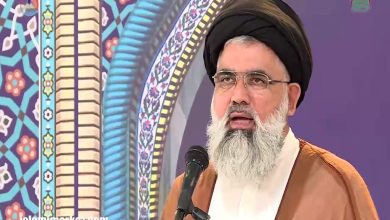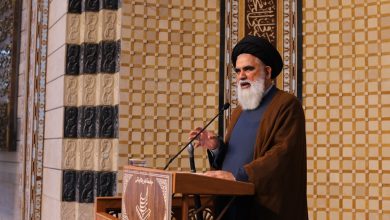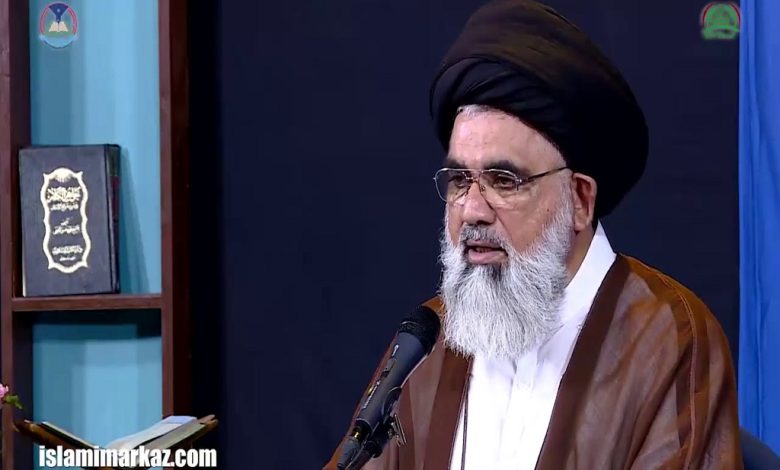
Hujjatul Islam Ustad Syed Jawad Naqvi
(Principal Jamia Orwatul Wuthqa – Lahore)
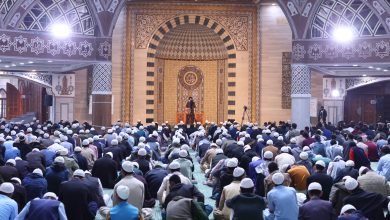
Delivered at: Masjid Baitul ul Ateeq
Lahore – Pakistan
Friday Sermon 27th Feb – 2026
SERMON 1
Taqwa is a protective measure (ḥifāẓatī tadbīr) from Allah, the Blessed and Exalted, for human life. Within the circle of this measure and under it, the human being’s world and the human being’s Hereafter are protected — from punishment, from destruction, from dangers, from calamities. Taqwa, in the various fields of human life, applies according to the proportion of each respective field and domain.
The most important and fundamental sphere and aspect of human life is the collective life (ijtimā‘ī zindagī) of the human being. For that, Allah, the Blessed and Exalted, has stated Taqwa — meaning He has mentioned its protective measure.
In Surah al-Mu’minun, verse 52, Allah, the Blessed and Exalted, says:
وَإِنَّ هَذِهِ أُمَّتُكُمْ أُمَّةً وَاحِدَةً
“This indeed is your Ummah, one single Ummah (Ummah wāḥidah).”
وَأَنَا رَبُّكُمْ
“And I am your Lord.”
فَاتَّقُونِ
“So adopt Taqwa.”
Adopt divine Taqwa. Protect this Ummah. Protect the unity (waḥdat) of this Ummah. Because all other results and fruits have been declared by Allah, the Blessed and Exalted, to be the outcome of this Ummah wāḥidah. Through it you are to attain all other stages — worldly and otherworldly.
If Ummah wāḥidah is not formed, and after being formed it is not protected, then the human being is deprived and in loss — loss of both this world and the Hereafter.
The first stage of Ummah wāḥidah and its protection is the formation of the Ummah — Ummah-sāzī (nation-building). For the formation of Ummah, Allah, the Blessed and Exalted, has declared that the fundamental purpose of the mission (bi‘that) of the Prophets and the revelation of the heavenly books was the formation of Ummah and the unity of Ummah. These two goals together fulfill one objective — building Ummah and ensuring its unity. Because without unity within the Ummah, it cannot stand or come into existence.
According to the arrangement of the Qur’an, in Surah al-Baqarah, verse 213, Allah, the Blessed and Exalted, says:
كَانَ النَّاسُ أُمَّةً وَاحِدَةً
Human beings were one Ummah.
فَبَعَثَ اللَّهُ النَّبِيِّينَ مُبَشِّرِينَ وَمُنذِرِينَ
Then Allah sent the Prophets as bringers of glad tidings and warners.
وَأَنزَلَ مَعَهُمُ الْكِتَابَ بِالْحَقِّ
And Allah sent down with them the Book with truth.
لِيَحْكُمَ بَيْنَ النَّاسِ فِيمَا اخْتَلَفُوا فِيهِ
So that they may judge between people concerning that in which they differed.
So that the Prophets may rule, decide, and govern among the people regarding those matters in which differences had arisen among them, and remove those differences by judging according to the Book and deciding according to the Book.
وَمَا اخْتَلَفَ فِيهِ إِلَّا الَّذِينَ أُوتُوهُ مِن بَعْدِ مَا جَاءَتْهُمُ الْبَيِّنَاتُ
And none differed in it except those who were given it after clear proofs had come to them. This Book was sent with the Prophets so that differences among people may be removed. But those who were given this Book themselves created difference within the Book and made it a document of difference.
There was no room for difference. Sometimes difference has a cause or justification. But those who differed in Allah’s Book differed without reason and without justification, because within the Book there was no room for difference; rather, the realities were clearly stated. Yet they differed in it — and this difference occurred due to rebellion (baghyan) among them. Out of rebelliousness they differed in the Book. When those who were given the Book themselves differed within it, Allah guided the believers concerning that over which they had differed. And Allah guides whom He wills to the straight path.
Key Arabic terms are translated and also given in Roman where necessary.And in other verses it is mentioned that Allah misguides whom He wills, and whom Allah misguides none can guide. In this noble verse it is mentioned at the beginning that humanity was in the form of a single Ummah (Ummah wāḥidah), and differences arose among them. Differences arose for various reasons. As scholars of history, scholars of geology, and particularly scholars of sociology have almost unanimously stated regarding the history of humanity — how did difference arise among humans when they were Ummah wāḥidah?
The Qur’an has presented a decisive example of this history: it mentioned the difference between the sons of Adam — Hābīl and Qābīl.
As mentioned earlier, regarding the creation of Adam and the children of Adam there are two interpretive views. The Qur’an presents one account: the creation of Adam, the vicegerency (khilāfah) of Adam, the descent (hubūṭ) of Adam, and then from Adam and his spouse the spread of the human race.
But there are two types of interpretation.One interpretation is that there were only two individuals — Adam and Hawwa — and as is commonly narrated in tafsīr, first one individual was created, then another, then from their union children were born, and those children began to grow.
According to this interpretation, thousands of questions arise — questions that require resolution and investigation — for which no satisfactory, convincing answers are given. The story is simply narrated, and objections and doubts are ignored.
In the world of knowledge, any theory or interpretation becomes complete only when the questions raised about it are answered. Until the questions are resolved, it cannot be considered complete research — even if its basic framework has been presented.
In the sciences, this is the established and correct practice. Religious circles, however, often avoid this method. But scholars of the sciences — whether natural sciences or social sciences — follow the same approach: any theory must pass through critique (tanqīd). This is a fundamental part of the scientific process.
Even in industry, when something is manufactured, it undergoes quality check. Those who manufacture are not the ones who certify its correctness. Specialists test it from different angles, examine its composition, and either validate it or reject it.
This is why industry progresses — because of critique. Without quality control, defective products would flood the market.
The same applies in the sciences. Any scientific theory must be examined according to principles and standards. If it meets the criteria, critics approve it. If not, they reject it.
But in religion, critique is often considered insult or disbelief. If someone presents a religious interpretation, no one is allowed to critically examine it; otherwise, accusations of disbelief arise. Religious circles often become rigid.
There are multiple interpretations of the Qur’an. These interpretations must be examined: have they passed through all stages of interpretive analysis?
For example, Darwin’s theory is taught as science — that humans evolved from apes. This theory has not passed through all stages of critique; it has been challenged and remains incomplete.
Similarly, the Big Bang theory — that the universe began with a massive explosion — is considered a scientific fact, yet it remains a hypothesis with unanswered questions.
Likewise, interpretations of the creation of Adam must answer their questions.
One interpretation says Adam was an individual created from clay, then Hawwa was created from his rib, and they married and produced children. Many scientific and logical questions arise: how did the second individual emerge from a rib? How did subsequent generations arise?
Some have said early siblings married each other because there was no Shari‘ah prohibition at that time. Others have narrated that marriages occurred with jinn or with ḥūr from Paradise.
These explanations raise further questions.
The second interpretation is that the story of Adam is symbolic (tamthīl) — representing humanity (naw‘ al-insān). Adam represents humanity. The narrative stages represent stages of human civilization. In this interpretation, the problem of early marriage does not arise, because it is not about two literal individuals but about human type.
Similarly, Hābīl and Qābīl may represent two individuals, or they may represent two social classes (ṭabaqāt).In either interpretation, the first difference mentioned in the Qur’an is between the sons of Adam.They were commanded to offer sacrifice. One sacrifice was accepted; the other was not. The one whose sacrifice was not accepted developed jealousy and hostility, and threatened to kill his brother. The righteous brother replied that he would not retaliate.If taken literally, questions of lineage arise. If taken symbolically, the questions shift.Human history, as studied archaeologically, shows that humanity has existed on earth for hundreds of thousands, even millions of years. This present generation is approximately ten thousand years old.
History was recorded much later. Therefore, human history is divided into pre-recorded and recorded history.
According to historians, difference began when humans began claiming ownership (mālikiyyat) over land. When land was common property — shāmilāt — there was no conflict. Land, forests, rivers were shared. People took what they needed but did not hoard.
Gradually, some individuals began claiming exclusive ownership. From this point, conflict began. Owners formed armies to protect their possessions; the deprived formed groups to reclaim.
The Qur’an supports that land belongs to Allah. Humans are not true owners; they are granted permission to benefit according to divine law (ḍābiṭah ilāhī).
But humanity preferred private ownership. Everyone desires maximum control — over land, wealth, even the shares of others.
From ownership emerged division, conflict, and fragmentation of Ummah wāḥidah.
To resolve this, Allah sent Prophets and Books.
But those given the Book did not resolve difference. Instead, they created difference within the Book itself.
This is what the verse describes:
كَانَ النَّاسُ أُمَّةً وَاحِدَةً
فَبَعَثَ اللَّهُ النَّبِيِّينَ مُبَشِّرِينَ وَمُنذِرِينَ
وَأَنزَلَ مَعَهُمُ الْكِتَابَ بِالْحَقِّ
لِيَحْكُمَ بَيْنَ النَّاسِ فِيمَا اخْتَلَفُوا فِيهِ
But:
وَمَا اخْتَلَفَ فِيهِ إِلَّا الَّذِينَ أُوتُوهُ
They differed within the Book after clear proofs had come — due to بَغْيًا بَيْنَهُمْ (baghyan baynahum — rebellious transgression among themselves).
The religious class made the Book itself the subject of difference. The present example is the Qur’an. The Prophet ﷺ formed Ummah wāḥidah. But after him, a religious class emerged and created divisions within the Qur’an itself. Today the Ummah is fragmented into sects, schools, organizations.
That which was sent to remove difference was made the source of difference.The cause is baghī (rebellious transgression).
Just as lāh (idle diversion) and la‘b (play) are misunderstood narrowly as mere games, baghī is misunderstood. When properly understood, one may discover oneself within that category.
May Allah grant us, in this month of revelation and understanding of the Qur’an, correct understanding of the Qur’an. May He grant us the ability to act upon it. May He grant us the ability to become Ummah wāḥidah under the guidance of the Prophet ﷺ. May He protect us from division, difference, and baghī.
SECOND SERMON
Taqwa is a protective measure (ḥifāẓatī tadbīr) from Allah, the Blessed and Exalted, for human life — for human existence. Allah has mentioned Taqwa in the Qur’an. Allah has sent the Prophets in order to establish the system of Taqwa. He appointed the Imams — the Imams of guidance (A’immah al-Hudā ‘alayhim al-salām) — and He commissioned the scholars for the establishment of Taqwa. And Allah has made arrangements for the establishment of Taqwa.
Among those arrangements, the Day of Friday (Yawm al-Jumu‘ah) has been especially designated for the emphasis of Taqwa, for the teaching of Taqwa, for the promotion of Taqwa, for the propagation of Taqwa, and for creating the effect of Taqwa. Friday is the Day of gathering (Yawm al-Jam‘iyyah), the Day of congregation (Yawm al-Ijtimā‘), so that collective Taqwa may come into existence, and so that the protective system of Taqwa may be established.
And the greatest arrangement for Taqwa that Allah, the Blessed and Exalted, has made is that Allah has established an annual workshop of Taqwa, whose name is the blessed month of Ramadan (Shahr Mubārak Ramaḍān), and the blessing of which has been granted to all of us, and we are benefiting from it.
You — the blessed month of Ramadan — and within it the Qur’an, and then within it fasting (Ṣiyām) — all of this is for Taqwa.
Regarding fasting and Ṣiyām, Allah, the Blessed and Exalted, has clearly stated in the Qur’an:
كُتِبَ عَلَيْكُمُ الصِّيَامُ كَمَا كُتِبَ عَلَى الَّذِينَ مِن قَبْلِكُمْ لَعَلَّكُمْ تَتَّقُونَ
Fasting has been prescribed upon you just as it was prescribed upon those before you, so that you may become people of Taqwa.
The first result of fasting — of Ṣawm — is Taqwa. And not only Ṣawm, rather Ramadan itself — because Ramadan, apart from fasting, is a twenty-four-hour workshop. Ṣawm is one action within it, and the remaining entire collection of actions, the remaining movements and stillnesses — all of these together form the blessed month of Ramadan.
This is a practical workshop, a working facility, which Allah, the Blessed and Exalted, has appointed.
The Messenger of Allah ﷺ, regarding the blessed month, gave us exactly this workshop-based program. The Messenger ﷺ made the task easy for us and divided it into structured segments, and specified it clearly. On a daily basis, he told us what this workshop activity is.
Because we are not such trained people that we observe Ramadan according to the Qur’anic method, according to the method of the Messenger ﷺ, according to the method of Ahl al-Bayt. We observe Ramadan in a Punjabi way, in a Pakistani way, in an Indian way, in a Lahori way.
Now if you suddenly bring Lahoris to the Qur’anic Ramadan, it may become difficult for them. Therefore, the schedule that the Messenger ﷺ made of the Qur’anic Ramadan — we begin it in stages so that we may gradually become familiar with it, so that by the end of Ramadan, God willing, it becomes complete; and so that this year’s workshop becomes established, and next year’s Ramadan, God willing, we may observe fully according to the method of the Messenger ﷺ, according to the method of Ahl al-Bayt, and according to the method of the Qur’an.
Continuing with the same strict, complete, line-by-line, fully elaborated translation, without shortening, without summarising, without stylistic alteration:Since Infaq has been specifically mentioned by Allah, by the Qur’an, and especially by the Messenger of Allah ﷺ in the month of Ramadan, therefore all of these matters must be carried out.
Up until now, since the first ten days are about to end — today is the ninth of Ramadan, and tomorrow is the tenth — tomorrow is the last day of the first ten days. And the last day is usually the day of accountability (muḥāsabah).
Tomorrow is the audit of the first ten days — that you review what you have done in this workshop during the first ten days. Among these three objectives — Infaq, Silah Rahmi, and Hifz al-Lisān — where have you reached?
Have you achieved complete success? You must assess yourself. In these objectives — Infaq, Silah Rahmi, Hifz al-Lisān — did you succeed? Or are you merely trying?
Some people say: “We are trying.” Trying means success has not yet been achieved — but neither has it been abandoned. The effort continues; the struggle continues.
Are you in the category of those who are trying? Or are you among the successful ones — among the Mufliḥūn (those who attain success) — who have achieved the objective of the first ten-day workshop?
Or was there laziness? Did we not even pay attention? Not only did we not succeed, we did not even attempt? Rather, there was no attention at all toward it?
And the last category: ritualistic Ramadan — the entire Ramadan passed in pakoras, samosas, sweets — and we never came toward the real, essential objective. We never even stepped onto the track. We never even entered the workshop.
Regarding such fasting, Ahl al-Bayt say: this is hunger. This is starvation. This is mere deprivation — not fasting.
If you guard your tongue, then observe what effect appears in society. First audit your home. Guard your tongue and then see what transformation occurs in the atmosphere of your home.
A story was mentioned: a woman went to a doctor and said that her husband is psychologically aggressive, he scolds her all day long — give me some medicine for him. The doctor said there is medicine, but you must make the effort. He gave her a tablet and said: when your husband comes home, place this tablet under your tongue and sit silently.
She did so. Each time the husband came home, she would place the tablet under her tongue and sit quietly. The husband would behave normally, lovingly.
After a week she returned and said: this is miraculous medicine. The tablet is in my mouth, but the treatment is happening to him.
The doctor said: yes, if all women take this tablet, all husbands will become well.
The real issue was that the woman was sharp-tongued. When the husband returned tired and exhausted, she would speak in a way that provoked him further. The doctor stopped her tongue — that was the treatment.
You also do this. Guard your tongue and see what effect it has in your home, among your friends, in your environment. It will be a miracle — a miracle of Ramadan.
Similarly, each action has effects. You must audit them. If the effects appear, then it means you succeeded in the first ten-day workshop.
Now regarding the first objective — Infaq — I will clarify something. Develop the habit of Infaq. Even students — even students should do this.
We have two seminaries — one for women and one for boys. The girls have placed charity boxes. When they open them — perhaps once or twice a year — at least one lakh rupees or more comes out from the charity boxes of the girls.
But the boys’ seminary either has no charity box, or if it does, they put trash in it and steal from it.
When these boys graduate and become scholars and guide the community, then people will say they were good — at least they did not eat the charity; they only consumed the budget.
Irreligious people mock religious people. A child once asked: what is a cleric? The father replied: have you heard the saying that charity consumes seventy diseases? He said yes. The father said: a cleric is one who consumes the charity itself.
Do not become consumers of charity. Become givers of charity.
Break the spell. Break the record of your ancestors. Start Infaq from this Ramadan.
If you possess wealth liable for Zakāt — give Zakāt. If Khums is due — give Khums. Certainly give Khums and purify your wealth.
Give Ṣadaqah. Give the obligatory charity of Fitr (Ṣadaqah al-Fiṭr).
Add another title: Radd al-Maẓālim — restitution of wrongfully held wealth. If someone’s right remains in your possession — due to accounting error, oversight, transaction mistake — even if you do not know whose right it is, estimate and give it in the form of Radd al-Maẓālim.
This too is part of Infaq.
Spend the surplus wealth — money or goods — in the path of Allah.
Infaq has miracles. Just as guarding the tongue has miracles, Infaq has miracles.
One miracle of Infaq is that it removes our social and religious poverty and desolation.
Look at Jamia Orwat-ul-Wuthqa — this blessed tree — look at its fruits. It exists through the Infaq of believers.
There are 355 staff members — teachers, administrators — receiving monthly salaries.
Monthly salaries: 8,440,836 rupees.
Kitchen expenses for Jamia and affiliated institutions: 12,042,698 rupees monthly.
Monthly bills: 2,735,536 rupees.
Construction completion expenses: approximately 15 million rupees monthly.
Annual programs: 34,348,968 rupees.
No government funds — not from Pakistan, not from Iran, not from India, not from Afghanistan. Never requested, never accepted.
This is the miracle of the believers’ Infaq.
Our income is only about thirty percent of monthly expenditure. The rest is sustained through loans and trust.
This year, even loans became difficult. Perhaps this too is a test from Allah.
Yet, through honesty (amānat-dārī), this system continues.
Your small Infaq is not insignificant. It transforms you. It purifies your wealth. It builds Allah’s system.
Now, regarding the final subject of this sermon:
You heard in the news that Afghanistan — the Taliban — attacked Pakistan last night. They captured some border posts. They martyred some of our border soldiers. In response, the Pakistan Army attacked their positions — ground response and air response.
A formal border war has been initiated by Afghanistan.
This response was delayed; it should have been done earlier. National security demands that the infrastructure being used against Pakistan from Afghan soil be destroyed completely.
We fully support Pakistan’s defensive action.
We may disagree with the government in many matters. But national security is a religious obligation (farīḍah shar‘ī).
We demand that the armed forces not fear pressure from Qatar, Turkey, UAE, Saudi Arabia. These countries support Taliban while claiming friendship.
Taliban’s confidence comes from support — including from Modi and Israel. Modi visited Israel and agreements were signed; immediately Afghanistan attacked Pakistan.
Pakistan must act decisively.
We pray:
O Allah, protect Pakistan from internal and external enemies.
Eliminate terrorism, sectarianism, extremism.
Grant awareness and consciousness to this nation.
Accept the fasting, feeding, standing in prayer of the believers.
Help the people of Palestine.
Help the people of Iran.
Protect the Leader of the Islamic Revolution.
Grant the early reappearance of Waliyy Allāh al-A‘ẓam (‘ajjalallāh farajahu).
Make us among his helpers and supporters.