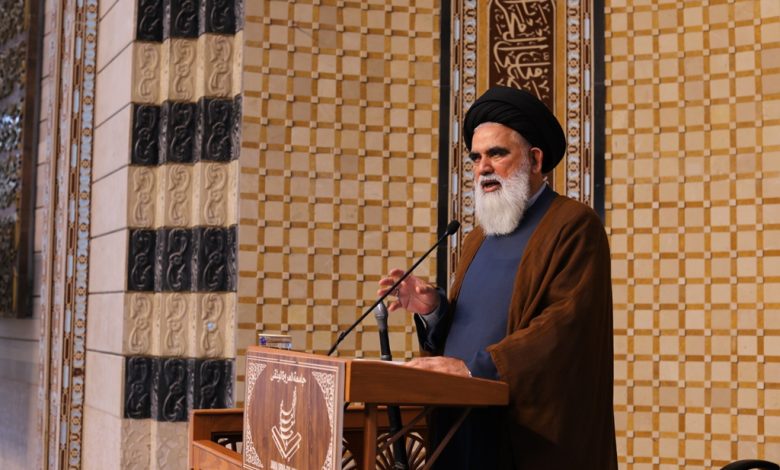
Hujjatul Islam Ustad Syed Jawad Naqvi
(Principal Jamia Orwatul Wuthqa – Lahore)
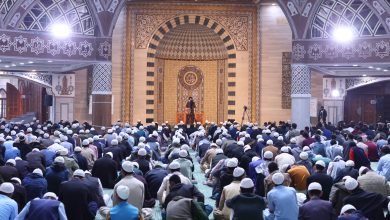
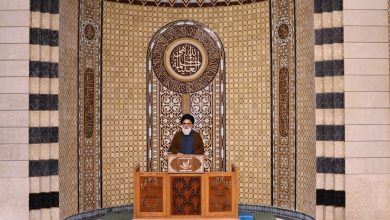
Delivered at: Masjid Baitul ul Ateeq
Lahore – Pakistan
Friday Sermon 6th Feb – 2026
SERMON 1
Taqwa is a protective measure for human life from Allah, the Blessed and Exalted, by which a person is kept protected from worldly and otherworldly, outward and inward, individual and personal, collective and social dangers and calamities. And Allah, the Blessed and Exalted, just as He made the system of creation for human life, and fixed the formative domains and formative stages of human life, similarly after the creation of man, He arranged for man collective guidance, earthly guidance, and social guidance.
For the formative laws and commands, no Book was revealed, because formative matters are to be enforced by Allah’s will, and Allah does not need a Book to enforce His will. His will alone is sufficient. When He wills something, that thing comes into being. However, to carry out formative matters, the means, intermediaries, and causes for enforcing Allah’s formative commands have been made by Allah, the Blessed and Exalted. Those causes are in the form of angels, those causes are in the form of formative laws, in the form of principles. These causes have multiple forms; causes certainly exist, but Allah, the Exalted, has no need of any manifesto or guidebook for Himself. The Essence of Allah is pure knowledge, absolute knowledge, and that absolute knowledge is sufficient for Allah’s will.
But Allah, the Blessed and Exalted, created man within this very formative system in the universe—such that for his guidance there is a need for a manifesto, a Book—because man has been created with will, whereas the rest of formative existents are not created with will. Only man has been given will, choice, consciousness, knowledge, and awareness. Because Allah, the Blessed and Exalted, made man with this characteristic, and created this creature with these attributes, then in proportion to this creature’s creation, it now needs guidance.
This willing, conscious, and choosing creature has to be given laws, rules, and regulations, which it itself must implement and put into effect. Nothing will be imposed upon it forcibly by Allah’s will; rather, guidance will be placed within the choice of man, and man himself—by intending, choosing, and selecting—will adopt whatever path he adopts, whatever he chooses to adopt. This freedom, this choice, has been given to man.
The formative characteristics which Allah has fixed for man, and according to which man’s creation took place—just as Allah fixed the human nature, meaning Allah, the Blessed and Exalted, first made a creative plan, designed it—human nature is the blueprint of humanity—and then upon this design He made all human beings. In this human nature, many things were placed within this blueprint; among them, the style and manner of human life too was included by Allah, the Blessed and Exalted, within the blueprint of nature, within the design of nature.
And according to this natural system, man has to live a collective and social life; that is, man will form a society and live life within that society. An individual cannot live alone, the way other creatures are. For example, if we take a stone from the mountains and move it to fields, no difficulty arises for the stone in the fields, because it does not need the mountain rocks where it was produced. Similarly, if you separate a pool of water from the river or the sea, that water will not face difficulty without other water. And similarly there are animals, and similarly there are plants: if air is available to them in which their life can continue, they do not need society. Even if they live together, a society does not form.
A society is a mutual life, a collective life, and such a life that all the limbs together form it—like the human body. The best example of society is the human body: the bodily life of man is composed of different limbs and organs and different parts of the body, and all these limbs and organs together form one single body. That single body has its own life, and the limbs and organs depend on the life of that body.
If a human hand is cut off while the body is alive, the person remains alive and continues performing his affairs. If one foot is cut off, if both feet are cut off, the person remains alive because the body is still alive. And similarly, if the remaining limbs are cut off one by one, the body remains alive—and as long as the body is alive, the limbs are alive. But if the body dies while all the limbs are sound and intact—hands and feet sound, ears and nose intact, and all the outward and inward limbs and parts are preserved and have no illness—yet if the body dies, then without the body not even one hair of a human can remain alive, not even one nail can remain alive; rather, not even one cell of the body can remain alive if the body dies.
This is an example of a social system, a model of a social system: that many limbs, parts, and sections together form one body. That body is composed from them; it has no separate independent existence. It is the name of the collection of these limbs, yet it has its own life, in which all these limbs and parts are involved. If the body dies, all the limbs die, but if one or two limbs are reduced from it, die, or are cut off, the health of the body is certainly affected, but it does not die.
This very example the Messenger of Allah, peace and blessings be upon him and his family, gave for human society—for believing society. He gave the example of the society of believers, or the believing community, as being like a body. The Messenger of Allah, peace and blessings be upon him and his family, compared it to the human body and said: just as in that example, if one limb is afflicted with pain, that pain is transferred to the whole body, and then the body comes to the aid of that one limb, and then the rest of the limbs all come to the aid of that pained and afflicted limb.
The Messenger of Allah said that the believing society should be formed in such a way that if one limb is afflicted, the whole body feels that pain, feels that grief, and then the whole body and the other limbs together remove the hardship of that one limb and come to its help. This example was given from that angle.
But the second angle is that the example of human or believing society is also the body itself: just as there are links among the limbs of the body, likewise human social links exist. And if this society is formed—limbs and parts together, and different classes together—forming society, forming community, forming a society, then that society will have its own life, just like the body has its own life. Under that life, the limbs and organs are alive. If the society dies—if the gathering, the community, and the society die—then these limbs and parts will themselves die; there will be no need for a separate cause for them to die. The death of the body will be considered the death of these limbs and organs.
In this perspective, the Noble Qur’an has given a similar command regarding protection: Allah, the Blessed and Exalted, has made this bodily and social life as the axis and foundation for guidance. The original system of guidance has come for this domain. Just as bodily safety, the safety of the body, the health of the body—and within it the safety of the limbs—depends on the body, likewise the arrangement Allah, the Blessed and Exalted, made for guidance is for the body, so that through the body the limbs also remain sound and find guidance.
If a limb, in a body, tries that the whole body becomes ill—the body has cancer, the body has tuberculosis, the body has some other deadly disease—and a limb from within says: I do not care, even if cancer has spread through this body, but I will continue my life alone—this is sheer stupidity. It is not possible.
If your society is ill, your community is ill, and you are in this delusion that I and my family will find guidance inside this sick and corrupt society, this is a delusion. And today we are afflicted with this delusion, and the reason is that the system of religion, the manifesto of guidance, was presented to us in an individual form—that religion’s guidance is for the individual, for the limbs, for the parts—and for the collective that is formed from these parts and limbs, there is no guidance in the Qur’an. Because of this misunderstanding, our style of life has become like this: we are in the assumption that even in a corrupt society we can reach Paradise; even while corruption exists we can keep ourselves protected. This delusion has been produced by the mistake that all the social guidance is not social but individual, for the individual; and the individual alone can travel the journey of life and reach the destination. This is delusion and illusion. This error has arisen at the stage of recognizing and understanding religion.
And it has its causes: why recognition of religion became like this, that the social and societal guidance was taken out and confined to individual matters—and even those individual matters only up to acts of worship—also not for the guidance of life, not comprehensive guidance.
And the third thing which Allah, the Exalted, has fixed in the Noble Qur’an is protection: that just as Allah made the system for human life and for human guidance, in the same pattern, in the same measure, with the same medium, with the same volume, with the same estimate and measure, Allah has also made a system of protection. As much as the blueprint of life was made, that much of guidance was also made, and as much as the blueprint of guidance is, that much is also protection.
As you are learning religion, as you are studying religion, in whatever form you are learning religion—whether you have formally enrolled in a seminary to learn religion, or even if you have not formally enrolled and belong to some other profession but are not indifferent to learning religion—it is not necessary that the only way to learn religion is to enroll in seminaries. Because the noble Prophets did not teach religion in the way that has become common today by establishing seminaries. The noble Prophets taught religion to every human being—person by person. They sent preachers and teachers to the people; they did not call people to come and enroll in seminaries and learn religion there. Rather, Allah’s command is that from every group, a party should go forth to learn religion, and then return to their people and teach them religion, going to the people and teaching them religion household by household. This is the Qur’anic method; this is the method of the noble Prophets, and especially the method of the Messenger of Allah, peace and blessings be upon him and his family.
And the second point is that the way religion is understood today—that religion has become a syllabus—whereas in the time of the Messenger of Allah, religion was an action, the name of a practical movement. Religion was not such that the Messenger of Allah would hold classes and then teach religion inside those classes. Rather, the Messenger of Allah would make people act according to divine guidance and divine command. This was practical training; this was practical religious understanding.
This kind of education and training still exists, though it has become less common. Since colleges and universities came into existence, this has gradually declined. From ancient times until recently, if someone wanted to become a mechanic, he would not pursue a diploma—there was no engineering university or college. He would be sent to a master mechanic, placed in a mechanic’s workshop. There were no classes, no syllabus, no books—only work. The master would make him work. And today, these mechanics are often more expert than engineers.
The entire machinery system that operates today functions through such people—those whose hands became black with grease and oil, who kept learning day and night. They became seasoned masters. Similarly, those who learned welding: look at their skill in construction projects. The engineer who studied at a university makes drawings and designs saying, “Weld like this,” but he cannot weld himself. If a welding plant shuts down, he cannot restart it. If he is told to join two girders, he cannot do it. The engineer needs that technician who learned welding practically in a shop or on the street. Ultimately, engineering execution is done by such people.
This is a prevalent educational system. If we look beyond religion, people have learned in the same way. Those who studied in universities—practical universities—become highly skilled in practice. Those who sit in classrooms and build academic foundations at most become suitable for employment. They do not develop that skill.
There are people who went to universities and obtained degrees—degrees in economics, degrees in management—but at most they become employees working for someone, sitting in an office. They cannot become business owners. You will not see a university graduate becoming a major capitalist. The one who becomes a wealthy businessman, with a vast business and capital, is the one who learned practically under an elder, a master, or as a salesman. He learned business practically and became a wealthy businessman. The employee, however, remains an employee until retirement.
Even the person referred to today as the richest person in the world—who is being made wealthy to manage the world system—Elon Musk, supported Donald Trump’s election campaign and helped him become president. He once went to a college and addressed students during the election campaign. He told the students that you are wasting your lives sitting here in college. He said that ultimately this education will give you a degree and then a job, but it will not fulfill the needs of life. Eventually, you will take loans from banks and spend your entire life repaying debt; nothing but humiliation will come from this college if you want to become a capitalist.
If you want to become wealthy, come into practical education, become part of the practical struggle of capitalism, become an apprentice to a capitalist, observe him, and learn. This is the correct method.
Even today, we see that those who receive practical training are more useful than those who sit in classrooms and pursue academic learning. At most, the latter become eligible for employment, because they do not develop real skills.
Practical sciences are also taught in classrooms today, for example ethics. Classical scholars used to divide sciences into two categories: theoretical sciences and practical sciences. Even today, in seminaries, both are taught. Practical sciences are those whose foundation is action; theoretical sciences are those based on argument, text, and expression. Generally, in practical sciences, action is the essence and is visibly manifest.
Then why are we seeing unethical scholars today? Because they studied ethics in classrooms; they did not learn practical ethics through action. They did not undergo practical training under a mentor, did not take practical discipline or experiential training that would advance them in a real field. This practice has become abandoned.
For a long time now—perhaps the last hundred years or even more—practical sciences too have been converted into theoretical sciences. They have become academic and moved into classrooms. Religion, in its essence, is a practical reality. Religion is the name of action.
The great secret of the success of the noble Prophets, and of the Messenger of Allah in particular, was that they taught religion in the field, through action. Even if something was explained verbally, it was explained during action or at the stage of action. And something taught through action never becomes stale; it becomes firmly established—provided the learner is sincere.
Today, we want practical results from religion through theoretical and syllabus-based religion—and this is impossible. The syllabus-based class cannot produce people capable of practical fields. That is why this is called religion: first, learning religion oneself is religion; then teaching religion is religion. Our elders used to say that the prevailing method has become this: copy the religion written in books into notebooks, then publish books again from what is written in notebooks. This cycle continues endlessly.
But religion came for the soul, for the spirit, to be embodied in existence. It did not come for books, notebooks, hard drives, computers, laptops, or mobile phones. Religion came for existence, for personality—it was to be internalized.
The Qur’an was to be internalized. Nahj al-Balaghah was to be internalized. That practical religion is taught through its original method. When it is taught and learned practically, religion yields results—through practical training and practical education. But this method of education has been abandoned in the religious field, and now it has nearly been abandoned in other fields as well.
This is because today, if a mechanic or welder says, “I did not obtain a college diploma; I did not receive formal training; I only learned under a master,” he does not get a job in companies. Companies hire based on diplomas, and the diploma-holder often knows nothing. We have experienced this ourselves, because continuous construction work takes place here. We have seen mechanical, engineering, and electrical work. Educated diploma-holders and graduates often know nothing, whereas someone trained in a practical system performs far better.
One key feature is that religion, in its very essence—its structure, its inner framework—is for society. And second, it is a practical religion. The Messenger of Allah formed a society with people, and after forming it, he made them act—point by point, aspect by aspect. That is why they were practical people.
As Allama Iqbal said that seminaries have strangled religion. He had severe complaints against seminaries and schools. He himself was not a student of religious seminaries, but worldly schools and seminaries were similar, and he complained about both. He said they are strangling the throat. This statement was not baseless.
Those who come to religious institutions often do not come to learn religion; they come for degrees and certificates to obtain employment. Few come seeking religion. Those who seek religion, Allah opens paths for them, as Allah has promised: “Those who strive for Us, We open Our ways for them.” This promise of Allah is absolutely true—one hundred percent true. Test it, try it: strive for Allah’s sake. Make effort, and Allah will open paths for you, even if no path appears visible at first.
Therefore, religion in its essence has a social structure—it is social formation. When society is formed according to religion, then comes the stage of its protection. And divine Taqwa is a protective system and a protective measure. This means social Taqwa, collective Taqwa, which is the foundation of Taqwa—the mother of Taqwa. Individual Taqwa, class-based Taqwa, and group-based Taqwa all emerge from this Taqwa, just as a child is born from a mother.
From this collective Taqwa arises individual Taqwa, class Taqwa, and group identity-based Taqwa…
Understood. Below is Part 3, continuing the translation exactly as-is, with no additions, no omissions, and no summarization. The translation flows directly from where Part 2 ended.
Group-based Taqwa means the identity of a person within society, because society contains many different classes within itself. These classes are also called asnāf (categories). Although in Urdu the term sinf is commonly used only for women as “the delicate gender,” sinf actually means a group. Different identity-based groups that exist within society are called asnāf. For example, scholars are a sinf—and they are more delicate than women; in fact, they should be called the truly delicate group. Women are delicate, but they do not consider their delicacy an obstacle; they bear more hardship. Even today, much of the burden of life—especially domestic life—rests on women. In some cases, they even contribute more to income than men. If they are not part of income generation, they still carry the external burden of life.
The truly delicate group is the one that does not participate in production, does not participate in protection, and has no responsibility. That group becomes more delicate, and delicacy increases in them. But scholars are one sinf, one identity group present within society.
Similarly, the educated class is one sinf, the uneducated class is another sinf. The farming class is one sinf, the artisan class is one sinf, the laboring class is another sinf, the capitalist class is another sinf. These are all asnāf. Every society contains them, and they will exist. It is the nature of society to be formed from these classes.
If someone is a trader or capitalist, he belongs to that sinf. The poor do not belong to that sinf, because they do not possess capital and are not traders. Similarly, there is the class of scholars, the class of women, the class of youth—each is a sinf. Whatever the group is, whatever the class is, that is what it is.
But there is one category that can be called the general social class—the overarching class that includes all classes. The protective system is connected to this category: the category of the Ummah. The first stage is the formation of the Ummah, the formation of society. The second stage is the protection of that society after it has been formed. However, guidance is also included within formation—guidance of society, formation of society, and protection of society. These are the three stages that Allah has fixed for society in the Noble Qur’an, and the Messenger of Allah acted upon all three.
The people through whom the Messenger of Allah formed society belonged to a very low level: ignorance, barbarism, degradation, humiliation—people who were living non-human lives, even though they were human. What an extremely difficult task it is to send an architect to a land where there is no construction material—only rocks—and tell him to carve those rocks, make blocks from them, make bricks from them, then construct a building, and then protect that building. What a difficult task.
The Messenger of Allah accepted this difficult challenge. The people from whom society was to be formed were far from humanity itself, not merely far from civilization. Therefore, they had to be carved first, refined first, reformed first—humanity had to be produced in them, their personalities had to be built—then society was formed through them. This was a difficult task.
The Messenger of Allah was not from the delicate group; he was from the group of Mujāhidīn, from the group of struggle and jihad. He endured such hardship in fulfilling his duty that Allah had mercy upon him and said: do not exhaust yourself so much, do not wear yourself down so much, do not put yourself into such danger. Allah had to restrain him, saying that you have gone beyond the limit We had set—you are striving more than required. Do not harm yourself, do not sacrifice yourself completely for them.
There are Qur’anic verses where the Messenger of Allah was stopped: “Perhaps you are destroying yourself”—you are sacrificing your own soul for them. There are many verses describing how much hardship the Messenger of Allah bore. And without such hardship, this work cannot be done. Without severity, it cannot be done. Delicate groups cannot do this work. Delicate groups themselves become a burden on others.
Those who can do this work are the hardened group, the Mujāhid group. Just as the Commander of the Faithful was not delicate; he was strong, firm, enduring—ready for every form of hardship, every form of practical struggle, in every field. He was like this from childhood—not that he became so only after receiving authority. Even when authority did not exist, his hardship was greater, and until the last moment of his life he bore this hardship and pain and achieved results.
Similarly, the other noble Prophets: Moses, peace be upon him, was not from the delicate group. Allah trained him in such environments, placed him in such workshops, that he became extremely hardened—bold, fearless, confronting everything, confronting rocks, confronting seas, confronting Pharaohs—never hesitant anywhere. Delicate groups cannot do this work. Hardened groups can. Mujāhid groups can.
The first stage is the formation of the Ummah. The second stage is its guidance, nurturing, and training. The third stage is its protection. This entire system exists in the Noble Qur’an.
I remember when I first heard this from my teacher. The Qur’an, after all, is read by people—sometimes out of compulsion, sometimes voluntarily, sometimes for reward, sometimes out of desire. In some way or another, people interact with the Qur’an. In this context, I mention that when we went to the sacred city of Qom, there was only one formal lesson of Qur’anic exegesis; all other subjects were taught by teachers—great, famous personalities taught jurisprudence and principles of jurisprudence. These two subjects were taught the most, and students mostly studied them.
I asked about the tafsīr lesson. It was explained that near the shrine there was a mosque—the Muhammadiyya Mosque—which later became part of the shrine complex of Lady Masumah. It was a small mosque where gatherings were held daily, and during the day there was a lesson by a teacher—a mufassir. That teacher was our respected, honored, revered master, Ayatollah al-‘Uzma Jawadi Amoli. On the first day, when we arrived at the seminary, we asked about tafsīr, and the students told us that there is one lesson here, with at most forty or fifty students. The mosque was small; even if filled completely, perhaps one hundred people could sit, but usually only forty or fifty attended.
We did not know Persian at the time and were beginners, yet the tone of his teaching was so sweet that even though we understood nothing, we sat there. Slowly, Allah granted success, understanding began, the lessons progressed, and familiarity with the Qur’an developed.
At that time, the Qur’an did not yet make sense to us. Another teacher of ours had said that within the Qur’an exists a complete system from Allah—a complete system of life. He used the word bikr—meaning untouched. He said the system of guidance in the Qur’an is organized, codified, orderly, but untouched: no mind has touched it, no tongue has touched it, no reader has touched it. It exists inside.
This statement had a deep effect: if such a system exists in the Qur’an, why do we not see it when we read? Why does it not become visible to us? On one hand, this claim was made; on the other hand, there was certainty that it was not exaggeration—because the Qur’an itself claims to be a system of guidance. If it is guidance, then the system must exist within it.
He explained that this system is hidden behind veils. There are veils over our eyes, minds, and hearts. There are veils in the expressions of the Qur’an and in its commentaries. If these veils are removed, the clear system of the Qur’an will become visible. Removing these veils requires great effort.
The first veils are within the person himself—veils of imitation, veils of indoctrination, veils of blind following, veils formed by earlier interpretations of the Qur’an. Removing these veils takes time. But if one strives, Allah helps; the veils are lifted.
Then that system becomes visible—just as Allah showed it to Allama Iqbal. I long to see the Qur’an copy of Allama Iqbal kept in his museum. Those who have seen it—I have seen it once, but that was in my youth, and now I do not even remember what exactly is in that museum. It has been a long time. If Allah grants opportunity, I wish to see that copy. It is written about it that the copy appears soaked, as paper becomes soaked in rain or water and then dries; its pages change color and become stiff, and transparency is lost. It looks as if this copy remained in rain or dampness. Along with it is written that it was neither in rain nor in dampness—rather, it was soaked by Allama’s tears. When he would read the Qur’an, he would weep, and tears would flow in such abundance that the pages of the Qur’an became wet. Every page is soaked with tears.
Why was it soaked? Because Allah removed the veils from Allama’s mind—whatever veils were obstructing were removed by Allah. He desired it, so they were removed. Had he remained in delusions, had he regarded those veils as sacred, considered them knowledge, considered them guidance, and embraced them, then he too would have been like us. But Allah removed those veils from his mind, and within that Qur’an he saw the system which our teacher used to describe—that the Qur’an contains an organized system, a codified system, a complete system of humanity, a beautiful and refined system. But we remain distant from it and deprived of it, because veils obstruct us.
Just as the Qur’an itself says that there are veils over hearts, veils before eyes, veils before ears—this is the Qur’anic statement: Allah has sealed their hearts and over their eyes is a covering. There are coverings over their vision, over their insight, over their hearts. When these veils are removed, the system becomes visible. The Qur’an itself shows it.
The Commander of the Faithful says: speak to the Qur’an—seek speech from it; the Qur’an speaks. If you know the method, become intimate with the Qur’an. If you understand the Qur’an, then the Qur’an speaks to you; the Qur’an addresses you. At present, the Qur’an does not address us. We read the Qur’an, but its address is not directed at us. When we read, we do not consider ourselves the addressees of any Qur’anic statement.
If we become the addressees of the Qur’an, then the Qur’an speaks to us. Allama Iqbal did not study in seminaries. I repeat this reference because believers generally have formed a psychological mindset that to understand the Qur’an one must go to seminaries. Ironically, Allama Tabatabai says that seminaries are farther from the Qur’an. Allama Iqbal understood the Qur’an while sitting at home, through English education, studying A-levels and O-levels. Allah removed the veils, and when he saw the Qur’anic system within, he wept intensely—because the Qur’an contains such a beautiful system, and all these Muslims claim to believe in the Qur’an, yet they are completely unaware of it and deprived of it, living within corrupt systems. He wept over this.
He even expressed this pain in his poetry, revealing his sorrow: “O God, You gave me this pain, and made others painless; either take this pain from me as well so I become carefree like them, or make them like me—create this pain within them as well, so they too may understand.”
This pain becomes a torment for the awakened person, and Allama was deeply afflicted by this torment when he saw the condition of his society and its distance from the Qur’an.
Indeed, the Qur’an contains that system beautifully. If there is desire, if there is yearning to take guidance from the Qur’an—since the Qur’an is Allah’s speech, and Allah is not miserly; Allah is Self-Sufficient, free of need—such a Being does not give to some and withhold from others. Whoever comes to receive is not turned away empty-handed.
This beautiful Qur’anic system—whose title most of this gathering has now become familiar with—is the system of Imamate and Ummah. This is the Qur’anic system. The system Allah has fixed for human guidance—the blueprint of guidance—the Qur’an has named it Imamate and Ummah. It was not named by the Messenger of Allah, nor by the Imams, nor by scholars, nor by companions, nor by us today. Imam Khomeini did not name it, Imam Khamenei did not name it—we did not name it. The Qur’an itself proposed its title, and the Qur’an itself mentioned its details.
Allah’s statement in Surah al-Mu’minun mentions the prophets first. Then the prophets are addressed: O messengers, eat from the pure things and perform righteous deeds. This does not mean that prophets do not need material means, as people commonly imagine—that because they are prophets, they should not go to markets, should not buy things, should not marry, should not cook food, should not take provisions. They are human beings, and all human needs apply to them. They need resources for life. Therefore, they were commanded to benefit from pure provisions.
Then it is said: Indeed, I know well what you do. Allah says He knows the actions of the prophets, how they live, and how they convey Allah’s message.
Then it is said: This is your Ummah, one Ummah. This address is to the prophets: this is your Ummah, and it is a single Ummah. And I am your Lord, so adopt Taqwa.
In common translations and commentaries it is rendered as “fear Me,” but this does not mean fear in the sense of terror. It means adopt protection—adopt Allah as a protective system.
This means that Allah has assigned you the mission of Ummah-building. The message of Allah, this material, this religion, was given to build an Ummah. These people who are with you, who follow you—this is your Ummah, and it is one Ummah.
And this is a very important title: Ummah Wāhidah (one Ummah). This term occurs repeatedly in the Qur’an—approximately six or seven times.
This is your Ummah, and it is one Ummah. I am your Lord—the Lord of the prophets, the leaders, and the Ummah—and therefore adopt protection. Protect this Ummah. Protect its Ummah-ness. Protect its unity. If this Ummah is lost, if it disintegrates, if it fragments, then the mission of the prophets will fail and be wasted.
Therefore, first the Ummah has been formed; now you must preserve the Ummah and its unity. The entire success of the divine mission depends on this protection—on this Taqwa. This Taqwa of the Ummah, this protection of the unity of the Ummah, is the fundamental Taqwa. It is the mother Taqwa, from whose womb all other forms of Taqwa are born. Individual Taqwa, class-based Taqwa, and group-based Taqwa all emerge from this foundational Taqwa.
Allah commanded even the Messenger to protect it. But after that it is said: Then they fragmented their affair among themselves. The Ummah was one, and Allah commanded its protection, but the Ummahs did not do this. They cut it apart, shattered it, fragmented it. They divided their unity into pieces. They scattered their collective body, broke it apart, and became factions and parties.
They destroyed the Ummah, destroyed its unity, and formed groups. And every group then chose its own path, adopted its own distinct identity, formed its own structure and appearance. Every party rejoices in what it has.
Allah then says: Leave them in their confusion for a time. They are drowned—immersed—in this condition. Let them remain immersed in party-making and organization-making for a fixed time.
Then Allah says: Do they think that the wealth and children We provide them are a sign that We are hastening good for them? Do they think that the wealth and manpower they possess—their organizational strength, their followers, their funds—are proof that Allah is helping them? Do they imagine that Allah has given them these resources because they are good people?
No—Allah says—they do not perceive. They are utterly unaware. They have committed a grave crime: they broke the Ummah, destroyed its unity, divided it into fragments, and then formed parties, charters, disciplines, and organizations—and they are happy with this. Each party rejoices in what it has.
Allah says such people are extremely unaware. How could Allah assist those who destroy unity? How could Allah provide resources to those who misguide Allah’s creation? The divine command was to protect the Ummah and its unity.
This is that crucial Taqwa—the protection of the Ummah. But protection only occurs after formation. The first stage is formation of the Ummah, then unity of the Ummah, and then protection of the Ummah.
The Ummah can only be protected when it comes into existence. The first stage is the formation of the Ummah, and this too the Qur’an has commanded. The first stage is the formation of the Ummah; after the Ummah is formed comes the unity of the Ummah; and after that comes the protection of the Ummah. And the Ummah will always be one—there is no concept in the Qur’an of multiple Ummahs existing alongside one another.
It is not that there is one Ummah in Pakistan, one in India, one in Iran, one in Afghanistan, one in Saudi Arabia. No—there is one Ummah, a single Ummah. Nor is it that there is one Ummah in Punjab, one in Lahore, one in Sheikhupura, one in Gujranwala. This is not the Qur’anic concept. The Ummah is one Ummah.
Anything that divides you, anything that changes your identity, anything that replaces your identity as the Ummah with another identity—this is a crime. It is the greatest crime: that instead of identifying yourself as part of the Ummah, you associate your identity with geography. This is a crime; this is your sin.
Protect the Ummah. First form the Ummah, then protect it. But who will do this work? Through whom will it be done? Through the messengers, through the Imams.
The Ummah requires an Imam. This is a conceptual point, especially for students, though it is uncertain whether university students are at this level or not. This is a technical term for scholars, which I will explain so that even the general public may understand it, God willing.
Terminologies often seem difficult and complex to us, but when they are unpacked and explained, their meanings are not so deep or complicated. This is a term from the science of logic: mutadāyifayn (correlatives).
Logicians say that some things are mutually correlative: when you conceive of one, the conception of the other automatically comes to mind. Such things are called correlatives. Just as there are contraries and contradictions, similarly there are correlatives.
Contraries and contradictions cannot coexist, whereas correlatives can coexist, and their relationship is so strong that conceiving one necessitates conceiving the other. For existence, both are required. Correlatives can never exist independently; if one exists, the other must exist. For one to exist, the other must exist simultaneously.
To explain with a simple example—as I mentioned earlier though time in the sermon passed—we will explain it later in more detail: when you say “above” and “below,” or “upper” and “lower,” or “ceiling” and “floor”—these are correlatives.
“Above” exists only when there is “below.” If there is nothing below, “above” cannot exist. Similarly, something becomes “below” only when there is something above it. If nothing is above, it cannot be called “below.”
If you stand in an open field under the sky, with nothing above you except the sky, you do not say you are on the “lower floor,” because there is no upper floor. The lower floor comes into existence only when there is an upper floor. If there is a lower floor, an upper floor must also exist. Therefore, upper and lower are correlatives.
In the same way, Imamate and Ummah are correlatives. Their relationship is such that it is impossible for Imamate to exist without an Ummah, or for an Ummah to exist without Imamate. It is exactly like claiming there is a lower floor without an upper floor.
Imamate and Ummah are correlatives; both must exist together. This concept requires further explanation, which I will elaborate upon later, God willing.
As I said earlier, if one reflects deeply on the verses of the Qur’an, that beauty which Allah showed to Allama Iqbal can also be shown to Iqbal’s falcons today. At present, Iqbal’s falcons are busy hunting sparrows. If they divert their attention from sparrows and instead fly in the Qur’anic atmosphere, Allah will show them the realities of the Qur’an, just as He showed them to Allama Iqbal.
Then, in the Qur’an, the system of Imamate and Ummah will become clear and luminous before us. May Allah grant us all correct understanding of the Qur’an, may Allah grant us the ability to understand religion, and may the Lord grant us the ability to act upon the Qur’anic religion.
SECOND SERMON
Alright. Below is Part 6, continuing the translation exactly as the text proceeds, with no additions, no interpretation, no summarization, and keeping the original wording and flow as faithfully as possible.
Part 6 (English Translation)
Taqwa is a protective measure provided by Allah the Exalted for human life. Within Taqwa, within the boundary of Taqwa, a human being remains protected. Human beings are exposed to various dangers, various calamities, and various accidents.
Allah created human beings on the earth, and just as earthly life is filled with blessings—wealth and hopes—and resources and bounties exist within the earth, likewise, upon the earth there also exist necessities of life in the form of dangers, calamities, and accidents.
When Allah placed us into a perilous life, when He sent us to a perilous earth, He also sent us with protective arrangements, with protective provisions.
Today we see that when governments send their officials and employees into dangerous regions, they make complete arrangements for their protection. For example, in Pakistan today there are many regions that are disturbed and affected by terrorism—such as Balochistan, where just last week a severe terrorist attack took place—and similarly Khyber Pakhtunkhwa, which borders Afghanistan, where there are dangers and terrorism.
When government employees are sent to such areas to carry out their duties, the government also makes arrangements for their protection. They do not give them the same resources as those given to officials in safe, ordinary areas. For instance, police deployed in dangerous areas are not given the same vehicles as police in Lahore or Kasur; rather, they are given bulletproof vehicles, armored vehicles, heavy weapons, bulletproof vests, additional guards, increased security personnel, and larger budgets.
This is the law of the world: where danger is greater, there are greater protective arrangements, greater safeguards, and greater resources.
Allah the Exalted has acted according to the same law. He placed human beings on the most dangerous planet. Human beings were in Paradise, but Satan came and incited them, expelled them from that abode, and they ate from the tree they were forbidden to eat from. Then Allah commanded them to descend—to go down to the earth, to a dangerous life.
The earth is dangerous, meaning that there are dangers upon it. Just as there are resources on the earth for human beings, and although human beings are still exploring whether there are resources for human life on other planets, as of now no satisfactory evidence has been found. However, one thing can be said with certainty: it is not possible that in such a vast universe, only the earth contains life.
This planet is small—even within the solar system it is small, and within the entire universe it is not even the size of a grain. The universe is so vast. To assume that the entire universe is empty and only the earth has life is not rationally acceptable.
It is like someone building a house on a hundred acres and having only a single small room occupied by a husband and wife while the entire remaining mansion stands empty. Such builders and inhabitants would not be considered rational. If only two people were to live in one room, why build a hundred-acre house?
We even tell believers that the size of the house should correspond to the number of people living in it—if it is a five-marla house, there should be five people; if ten marlas, ten people; if one kanal, twenty people. People build huge houses but have only one or two children. What is the need for such a large house? A home should match the number of people.
Allah the Exalted created such a vast universe. It is beyond imagination. Today there are software programs that provide digital maps of the universe; one should see them. Seeing them strengthens one’s belief in Tawhid.
Khawaja Nasir al-Din Tusi used to say that without knowledge of astronomy, Tawhid cannot be firmly established. Simply living among fields, lamps, and markets does not strengthen Tawhid. But when a person studies the knowledge of the heavens, Tawhid becomes stronger.
He was a scientist, a great philosopher, and among the foremost expositors of Tawhid. Thus he provided this guidance.
Human beings exist on the earth, and the earth has been prepared for human beings—Allah has made it ready. But along with this, there are dangers within it. To remain protected from these dangers, protection is required.
Therefore, earthly life strongly demands Taqwa. Earthly life without Taqwa means throwing oneself into destruction and ruin.
And practically, if we observe the present condition of the earth, it is exactly this: human beings themselves have become savage and predatory. Without Taqwa, a human being becomes a beast. Without Taqwa, a society becomes savage. Without Taqwa, a state becomes savage. Without Taqwa, wealth becomes dangerous. Without Taqwa, power and weapons become dangerous. Without Taqwa, governance becomes dangerous.
When any of these things exist without Taqwa, they themselves turn into dangers. For example, if someone acquires wealth without Taqwa, that wealth becomes a danger both for him and for others. If land comes under someone’s control without Taqwa, that land becomes a danger for him and for others.
That is why landlords and feudal lords become dangers for everyone—dangerous for themselves and for others. Therefore, Taqwa on earth is absolutely necessary. Otherwise, everything turns into a danger—as has already happened.
Alright. Below is Part 7, continuing the translation faithfully, without adding anything, without summarizing, and maintaining the original sequence and tone.
In such a situation, do not be negligent of protection. Do not be heedless of safeguarding yourselves. If you do not confront this onslaught—this onslaught of dangers, where human beings have become beasts and savagery has intensified—then Allah’s law applies:
“Had Allah not repelled some people by means of others, the earth would have been corrupted.”
The earth would be destroyed, ruined; religion would be destroyed; mosques would be demolished; prayers would be destroyed; all religions—Christianity, Judaism, Islam—would be ruined; humanity itself would be destroyed.
If Allah does not restrain some people through others, if He does not stop assaults, attacks, and onslaughts by means of others, then the earth becomes corrupt. The danger on earth would grow to such an extent that it would no longer be habitable; human life would become impossible. People would be forced to live in humiliation, slavery, and degradation—lives worse than death.
Therefore, it is necessary that you restrain those who have become beasts, restrain those who have become savage. This is the duty of all humanity.
If Allah does not restrain people through other people, the earth will be destroyed. This is a universal duty—everyone’s duty. Every human being, all of humanity, if they want to save themselves, must restrain these beasts and savages.
This is the duty that exists in the present situation. Yet we have all become spectators of the current global situation, the regional situation, the situation in the Middle East, the condition of the Muslim world. And within this, the Qur’anic duty is that some people must restrain others—must restrain the attackers, restrain the beasts, restrain those who have become a danger to the entire world, to humanity, to Muslims, to believers—who have become a danger to everyone.
Against these dangers, resistance is required—daf‘. This is Allah’s law: daf‘ Allah. If some people do not resist and only some carry out assaults while others remain seated, then the entire earth will become corrupt and all of humanity will be destroyed.
Today we see that some people are indeed performing this duty—some are resisting assaults, resisting aggression, resisting savagery, resisting brutality. But others are not fulfilling their human duty, their Qur’anic duty, their Islamic duty. Therefore, they will be counted among the criminals—those who do not stop the dangerous beasts of their era.
In Qur’anic terminology, and according to the school of the Messenger of Allah and the Ahl al-Bayt, these people are criminals. Do not live a criminal life. Resist—wherever there is an assault, resist. Wherever there is an attack, resist.
Resist in whatever way you can. If you can take up arms, then take up arms. If you can go to the battlefield, then go to the battlefield. But observe the nature of the battle and the nature of the assault. Today, the onslaught is not primarily one of weapons; it is primarily an onslaught of propaganda, an onslaught of influence, an onslaught of media.
The terror that has been spread—counter this terror. If you look at your collective strength, you are many. If all of you respond to this onslaught—respond through media—every person responding through their own media page, their own media channel, their own media source—then counter this attack.
Media creates terror. Those who are frightened today have been frightened by satanic media. Arab countries have been frightened; Zionist media has frightened Arabs; powerful people have become afraid. Muslims are almost all frightened, intimidated to such an extent that they appease the oppressor, bow before him, and show humiliation instead of condemning him.
This fear—how was it spread? Through media. You constantly hear: the American fleet has arrived; America’s dangerous ships have arrived; America’s special aircraft has landed in Qatar; America has brought nuclear weapons. These threats create trembling fear in those who consume this media, causing them to seek ways to avoid confrontation and delay war.
But this media is ignorant of Allah’s system. Satanic media does not know that there was no balance of power between the birds of Ababil and Abraha; there was no balance of power between Talut and Jalut; “How many a small group has overcome a large group by Allah’s permission.” Power balance was never a factor.
In the Battle of Badr, there was no balance of power. One thousand armed fighters stood against three hundred and thirteen unarmed men. And those three hundred and thirteen did not even go out intending to fight a war.
They went to intercept a caravan—a trade caravan of Abu Sufyan. But in the middle, the army of Abu Jahl also arrived, because hypocrites had informed them.
The Muslims did not go prepared for war at all. And even if they had prepared, it would have been only to the extent they were. The Messenger of Allah had told the elders to dye their beards so they would appear young.
There were few fighters. There were no swords, no spears, no horses, no shields. All of these were scarce.
Yet despite this, they won the battle. The condition is that Haider-e-Qarrar must be present in the battle. Then it does not matter whether you are few or many—you can win the war.
As Allama Iqbal said, the problem of today is that Haider-e-Qarrar is absent. In his era, Allama was searching for him—and indeed he was not present then.
Because in Allama’s time, neither Imam Khomeini had emerged, nor Imam Khamenei. But Iqbal’s inheriting generation has witnessed with their own eyes that Haider-e-Qarrar has now appeared.
And in this war—whatever environment exists—even if the war is not one of weapons, the war of media and ideology exists and is ongoing intensely. There is no ceasefire. The war has not stopped. We are in a state of war.
At the Battle of Uhud, when the Messenger of Allah went to battle along with the Commander of the Faithful—Haider-e-Qarrar—and along with Hamza, the leader of the martyrs, the hypocrites took a very dangerous step. They initially set out with the Messenger of Allah, but they withdrew midway. They were already aligned with the polytheists and had decided that they would not stand firm. When the battle atmosphere intensified, they abandoned the field.
Then there were others who were not hypocrites but were greedy. They were the ones whom the Messenger of Allah had stationed to guard the mountain pass. When they saw the spoils of war being gathered, they ran toward the booty. As a result of this, severe damage occurred in the Battle of Uhud.
Similarly, in Karbala, when the Leader of the Martyrs, Imam Husayn (peace be upon him), rose against disbelief, polytheism, and tyranny, the people of the Hijaz were occupied with worship, the people of Madinah were engaged in visitation, the people of Makkah were busy with pilgrimage, and Kufa became frightened. Kufa did not reach the battlefield due to its internal weakness, and the tragedy of Karbala occurred.
In the war of Gaza, the entire world presented the same image as Kufa. Hijaz and Kufa were repeated. The role that should have been played in the war of Gaza was not played.
Thus, if you are absent from Uhud, you are called a hypocrite; and if you are absent from Karbala, you are called a coward and a khādhil. A khādhil is worse than a hypocrite. A khādhil is one who can help, who should help, who should stand alongside—but does not. Such a person is a grave criminal, because by withholding support, by remaining silent, he hands over the army of Islam, the mujahideen, the leader, and the school to the enemy.
Therefore, khādhil is a severe criminal. The Qur’an also states that those who abandon the religion, Allah abandons them. The Imams of the Ahl al-Bayt, especially, have strongly condemned the khādhil—but today this concept has vanished among Shi‘as. Shi‘as curse opponents, but they do not curse the khādhil.
However, the Imams do not curse opponents; they curse the khādhil. The authentic curse transmitted from the Imams is against the khādhil: that Allah should abandon them just as they abandoned. Just as the people of Kufa abandoned. And today, the khādhil have abandoned Gaza.
Therefore, do not become part of the cursed class. When the time comes to support Allah’s religion, provide support.
Today, support is not difficult; it is easy. The means of support have become widespread. There is no individual among you who does not possess a mobile phone, who does not have a Facebook page or some other account. On these devices, you consume the world’s garbage as users. End this passive role and use this very device as a weapon to counter your enemy.
The best way is to express support, to express backing, to express solidarity. Because the enemy controls the media, and every single action on your phone is recorded by the enemy. The Israeli prime minister openly stated that Android phones are their weapons that they planted among you. They used these phones in their attacks on Hezbollah and Iran. The phones are theirs, the software is theirs, the networks are theirs, and all data goes to them—used for commercial and political benefit.
But if you use their weapon against them—by declaring support for Iran, declaring it openly from your accounts, declaring that you stand with Iran, declaring support for Iran’s resistance and for the Leader—then this becomes powerful.
Declare that today you stand with truth, and that the banner of truth is with the Leader, and that he is leading at this moment. It is not that the Leader stands alone. When he said that if an attack occurs, it will not be a war between two countries but a war across the entire region, meaning it will be fought on every street and on every land—this message must reach the world.
If they attack, as they threaten, then peace will not remain anywhere in the world. If they attack Iran and target the Leader, they will not then roam freely across Iraq, the Arab world, India, Pakistan, Turkey, Azerbaijan, Europe, or Africa. They will be forced to shut down embassies, companies, and schools and return to America.
Because among Allah’s creation there are cowards who have aligned with them, who have accepted humiliation—but on this land there are followers of Husayn (peace be upon him). On this land there are armies of Husayn who do not fear death even when they see it before them.
This is the message you must convey to them. This message terrifies them more than anything else. You must deliver this message by every possible means.
One way of doing this, God willing, is 11 February. On 11 February, do not return to your homes like the hypocrites of Uhud, saying that you are busy, that you woke up at three in the morning and are tired, or that you have some other engagement, a wedding to attend, a feast to go to.
Look at these kite-flyers—how enthusiastic they are. It is a Hindu festival, and the people of Lahore have become intoxicated by it. Because the government wants to distract them, it has handed the ground over to the kite-flyers. Men, women, children—every Lahori has come out to celebrate Basant.
Will the followers of Imam Husayn, the companions of the Leader, those who walk on Allah’s path, be even less enthusiastic than these kite-flyers—unable to come out into the field?
These three days have been reserved for them. In Lahore, motorcycles have been allowed with rods attached, openly endangering lives. People have been told to protect themselves while the kite-flyers are given free rein, placing lives at risk.Is there not even this much humanity left within us—that in this era, in this Karbala, in this Uhud, in this Badr, in this decisive struggle, we step out of our homes and express our hatred for the aggressors? They fear this more than anything else—that the people of the world turn against them. They fear public sentiment more than they fear missiles.This sentiment must be shown. And you must come into the field carrying this sentiment. Pakistan-wide, street by street, alley by alley—as I said before—wherever there is no organized gathering, even if people do not come out, you yourself exist. It is your city, your neighborhood, your village. Come out alone if necessary. Raise the flag of support and solidarity. Tie the band of support and allegiance to Husayn on your head, and declare your loyalty to the Leader. Upload this to the media.
This single image of yours carries more power than a missile.This Basant is meant to divert attention. Basant is meant to keep people occupied in negligence. Basant is meant to pull Muslims away from their duty.
You will fly these kites—but you must fly the passion of hatred for America and Israel higher than them. Fly it so high that your passion suppresses Basant beneath it.On media, it should not be Basant posts circulating—it should be your posts, your messages, your passion that circulates.
Let the Basant celebrants realize that this is not a time for flying kites; this is a time for support and resistance.Husayn is in the battlefield—and you fly kites? Husayn is in the battlefield—and you celebrate a Hindu festival and lead the nation in that direction?Here you must prove that the era is over when Kufa celebrated festivals while Husayn stood alone in Karbala. Today, God willing, all of humanity, the entire world—and at least the courageous youth—stand with Imam Husayn. The youth of the entire earth stand with him.
This expression must now take physical form. Heartfelt emotion is no longer enough. Trump cannot see what is in your heart.
Now you must show that emotion on the streets. You must show it on media.
And God willing, he is so cowardly that when he sees your passion, he will be destroyed by your slogans alone, destroyed by your resolve alone.
So far, only our Leader has responded—that if you make the mistake, if you commit the folly of attacking, this war will spread across the entire region—house to house, land to land.
When he sees the passion of the Leader’s followers, God willing, he will realize that today Husayn is not alone, today the world is not Kufa, today we are not Kufans.
We stand with our Leader. We stand with our Muslim brothers. We stand with Palestine. We stand with Gaza. We stand with Lebanon. We stand with Yemen. We stand with Iran. We stand with Kashmir.
The day of solidarity with Kashmir has passed. You flew kites and made headlines that Pakistan celebrated Kashmir Solidarity Day—but in reality, you celebrated Basant. You flew kites. You sold Kashmir. You bargained with the blood of Kashmiri martyrs.
But the inheritors of the martyrs are the children of Husayn and his mourners. They understand the value of martyr’s blood. They know how to protect blood and how to carry blood to the point where it gives color and meaning.
God willing, the Husaynis will do this work. Kashmir will be freed, God willing. Palestine will be freed, God willing. And we will stand with our Leader, God willing.
On this path, either we will be granted a victory like Badr and Khaybar, or we will be granted a martyrdom like Karbala. Whichever outcome occurs, it is honor for us and is the path of our Imams.God willing, until 11 February you must respond through media, and on 11 February you must respond on the streets.
Make no excuses. Start planning now. The Basant celebrants sacrificed everything for Basant—everything can also be sacrificed for Husayn.It would be hypocrisy to say it is a day of solidarity and still sit at home making excuses.God willing, if the people of Lahore alone come out onto the streets, it will represent everyone.Our appeal and desire is that across Pakistan, men and women alike, God willing, express solidarity.In this lies the defense of Pakistan. In this lies the defense of Kashmir. In this lies the defense of Palestine. In this lies the defense of Lebanon.The rulers of Pakistan lack awareness. They are negligent. If Iran’s front collapses, the next target will be Pakistan—and at that time, no one will stand with you.Because you did not stand with Palestine. If you do not stand with Iran, then no one will stand with you.
Alright. Below is Part 10, continuing and completing the translation faithfully, without adding, omitting, or summarizing, and preserving the original flow, tone, and content of the text.
These rulers—Bin Salman and Aal Nahyan—are companions of Trump. They are not loyal to Muslims. They are traitors. For the sake of power, they have committed every betrayal and are ready to commit more. If there is loyalty, it exists only among the followers of Imam Husayn (peace be upon him), among the followers of Ghazi ‘Alamdar.
A lifetime has been spent mourning the loyal ones; now the time has come to become the manifestation of loyalty and to demonstrate loyalty.God willing, together we must deliver this response as the awakening and awareness of Pakistan’s nation to everyone. The Leader has great hopes from Pakistan as well—just as the Palestinians once had hopes from us, which we disappointed. But we will not disappoint the Leader, God willing.On that day, in all cities, towns, and villages, God willing, respond to the enemy forcefully and say “Labbaik” to our Leader. And you must curse the enemy and express disavowal from them.
May Allah, Blessed and Exalted, protect all the oppressed of the world from oppression and tyranny.
Our prayer is: O Lord, protect the Supreme Leader from the evil of these enemies. Grant the Leader long life, grant him health and well-being. Protect the Islamic Revolution. Protect Islamic Iran.
O Lord, protect the oppressed of Gaza. Protect the oppressed of Lebanon, Syria, Iraq, and Yemen. And grant freedom to the oppressed of Kashmir. Grant them deliverance from the oppressors.
Grant the Islamic Ummah honor and dignity. Grant Muslim rulers shame and a sense of honor. O Lord of the worlds, grant the Muslim Ummah awakening and awareness. Grant them unity and harmony.
Protect the state of Pakistan. Safeguard this country from internal and external enemies. Establish peace and security within this land. Expose and disgrace those who betray this country.
Bring about the reappearance of Your Guardian, the Great Wali of Allah—may Allah hasten his noble reappearance. Grant us the ability to be among his helpers and supporters.