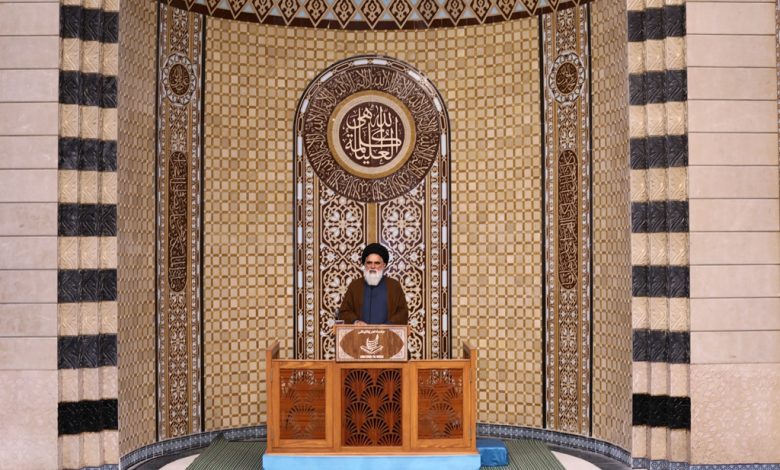
Hujjatul Islam Ustad Syed Jawad Naqvi
(Principal Jamia Orwatul Wuthqa – Lahore)
Delivered at: Masjid Baitul ul Ateeq
Lahore – Pakistan
Friday Sermon 28th November – 2025
Sermon 1: Taqwa in Sexual Affairs (16) – Tammattu and Halalah – Misinterpretations
Sermon 2: The Dangers of Ghuluw: Imam Sadiq (a) on False Spiritual Claims and Satanic Deceptions
1. Allah’s Complete System for Human Life and the Issue of Sexual Affairs
Allah has created a complete system for protecting the various affairs of our lives. But the trend among believers is that they only make claims, while practically they do not adopt the system that Allah has presented for organizing human life. Among the affairs of life, one of the most important is sexual affairs, which can be protected through the foremost institution of marriage. And if marriage is not possible, then through Iffah—thus acquiring Taqwa for protecting this segment of life.
Just like hunger and thirst require legitimate actions for satiation, sexual affairs also require legitimate means. Man should not take the route of Safah, which is an illegitimate way of satisfying the sexual urge. The other illegitimate means is Akhdan.
2. Quranic Guidance and the Verse on Marriage and Safeguarding Chastity
وَمَن لَّمْ يَسْتَطِعْ مِنكُمْ طَوْلًا أَن يَنكِحَ الْمُحْصَنَاتِ الْمُؤْمِنَاتِ فَمِن مَّا مَلَكَتْ أَيْمَانُكُم مِّن فَتَيَاتِكُمُ الْمُؤْمِنَاتِ ۚ وَاللَّهُ أَعْلَمُ بِإِيمَانِكُمْ ۚ بَعْضُكُم مِّنۢ بَعْضٍ ۚ فَانكِحُوهُنَّ بِإِذْنِ أَهْلِهِنَّ وَءَاتُوهُنَّ أُجُورَهُنَّ بِالْمَعْرُوفِ مُحْصَنَٰتٍ غَيْرَ مُسَافِحَٰتٍ وَلَا مُتَّخِذَٰتِ أَخْدَانٍ ۚ فَإِذَآ أُحْصِنَّ فَإِنْ أَتَيْنَ بِفَٰحِشَةٍ فَعَلَيْهِنَّ نِصْفُ مَا عَلَى الْمُحْصَنَٰتِ مِنَ الْعَذَابِ ۚ ذَٰلِكَ لِمَنْ خَشِىَ الْعَنَتَ مِنكُمْ ۚ وَأَن تَصْبِرُوا خَيْرٌ لَّكُمْ ۗ وَاللَّهُ غَفُورٌ رَّحِيمٌ
“As for those of you who cannot afford to marry faithful free women, then [let them marry] from those whom your right hands possess—from your faithful slave women. Allah knows best your faith; you are from one another. So marry them with the permission of their masters and give them their dowries in fairness—being chaste, neither fornicating nor taking secret lovers. But once they are married, should they commit an indecency, their punishment shall be half that of free women. This is for those of you who fear falling into sin; but it is better for you to be patient. And Allah is all-forgiving, all-merciful.”
3. No Religious Permission to Delay Marriage for Unjustified Reasons
Religion has not permitted delaying marriage for unjustified reasons, such as waiting for sisters to get married, not completing studies, or lacking extravagant amounts of money for marriage ceremonies. The verse says that anyone who reaches the age of maturity should get married. But if someone, for genuine reasons, cannot marry a believing woman, even then he cannot take illegitimate means; instead, the Quran advises marrying a slave girl—provided she is a believer.
If one marries a slave girl, it must be with the permission of her owner, and the compensation and rights owed to her are less compared to those owed to a free wife. The maids at home today are not slave girls—there are no slave girls anymore. But if slave girls existed, they would have to be chaste, not openly committing fornication, and not involved in Akhdan—secret illegitimate relationships.
How do you find out if someone is having an illegitimate relationship? It is very easy these days: you simply take the password of the candidate’s mobile phone, Facebook, Instagram, and social media accounts, and you will know what secret relationships they have. The Quran prohibits secret relationships with non-mahram individuals, and this applies to both men and women. You should not marry either a fornicator or someone involved in secret affairs.
If you consider these slave girls pure and later after marriage find that they are still involved in indecent acts, then their punishment is half of that of free women. This alternative method—marrying slave girls—is for those who fear falling into sin.
4. Neglect of Practical Fiqh and the Concept of ‘Anat’
This is the actual jurisprudence, but in our Fiqh we often emphasize hypothetical cases. For example, in Fiqh there is a ruling: if urine passes from some other part of the body, what should be done? Does urine come out of the nose or mouth? Medically, this never happens, but our Fiqh still discusses such cases regarding ablution.
The actual practical Fiqh is this issue of Anat (الْعَذَابِ ۚ ذَٰلِكَ لِمَنْ خَشِىَ الْعَنَتَ مِنكُمْ). Anat means someone coming under unbearable pressure. The Quran is saying that if you do not get married, you will come under pressure. In such a situation he will open the internet, find some non-mahram woman, and try to release pressure.
Parents think their son is pious (Muttaqee) because he does not mention marriage. They do not know how many times he commits Safah or Akhdan because he is under Anat. He has to find a solution. Sexual ability creates the maximum pressure inside a man compared to other abilities.
A person can tolerate hunger through practice. The great martyr Yahya Sanwar, after post-mortem, was found to have been hungry for seventy-two hours while still fighting. He had not eaten for three days, but because his willpower was strong, he could tolerate hunger. But sexual urge is very difficult even for the strongest individuals.
The Quran is referring to such a person—if he cannot marry a free woman, then he should marry a chaste slave girl only if he fears the pressure of Anat. But if the pressure is not severe, then he should act with Iffat (chastity). Anat is against Iffat.
5. The Meaning of Safah and the Misuse of Sexual Ability
Safah, according to scholars, is adultery, but technically it means to waste something. For example, if you pour water from a bucket into a gutter or onto the floor, that is Safah. Wasting something useful is Safah.
In legitimate sexual relationships, man utilizes the sexual ability—which carries many blessings—for extending the human race. This ability has been preserved for a noble purpose, as seen throughout human history. Everything personalities have done occurred after their birth, and their birth was due to this ability.
This ability is a divine bounty like other abilities, but we have not expressed it from the Quranic perspective; instead, we consider even mentioning it as evil.
Safah is any act outside the legitimate sexual relationship. As we discussed with the community of Lut, people came to his door asking for his guests, and Lut counselled them to get married. If a man has sex with another man, this is homosexuality (Lawat), for which there is a direct death penalty without any exemption. If a woman does this with another woman, it is termed Musahaqa, as present in traditions. This is very common these days.
6. Parental Injustice in Blocking Children’s Marriages
A girl once wrote a letter saying many proposals came for her, but her father refused all because he wanted her salary. In one case, the father was willing to accept a proposal on the condition that after marriage, the daughter would work and her salary would come to him for life.
For such a father, his Wilayat ends. The solution is that there is no permission required from a father who imposes illegitimate expectations on his children. Wilayat operates within the framework of religious obligations. In such cases, children can decide for themselves.
If you do not get your children married on time, they have no other option. The children will not wait due to your unjustified reasoning; instead, they will turn to illegitimate acts like Safah. They may end up in homosexuality, lesbianism, or masturbation.
If someone is under pressure, then he must get married; and if even that is not possible, then he should marry slave girls as the verse states. There are other methods as well, which I will present.
7. Personal Observations: Sexual Corruption and the Need for the Topic
In my youth, when I used to visit places for religious preaching, I would first study that society and discuss its contemporary issues. In one place, people told me that illegitimate sexual relationships were widespread. They told me that next to the mosque there was a video parlour where people watched porn movies and then came to pray.
Sexual corruption is happening at every level. It was the first time I began speaking on the topic “Philosophy of Sex in Islam.”
One elderly man told me that my topic was incorrect because this problem did not exist in their society. He invited me to his home, presented his two sons, and said in front of them that they were pious, performed Tahajjud, and were very pure.
Later, during a youth workshop at a tourist place, the same two boys came privately to me and said: “Our father said all that about us, but both of us are under pressure, and every day we commit these sins. We pray, we perform Tahajjud, but we also do these acts. Since you started this topic, we gathered courage to speak.”
I then told their father to become serious and look into their affairs and their age and to get them married. At the very least, he could perform the Nikah, even if they did not live together, so that they would not fall into Safah.
Safah occurs when Anat develops. Even married people commit Safah, because they are not getting satisfaction within marriage, and the pressure remains.
8. Purpose of Marriage: Tamattow and Istimtah
Due to various problems, couples forget that the first purpose of marriage is fulfilling this need. One purpose of marriage, which the Quran mentions, is Tamattow. Everyone remembers the word Mutah, but the Quran uses Tamattow and Istimtah more frequently. We are not familiar with Quranic terminology.
The word Mutah is commonly used among us. Ahl-e-Sunnah target Shias by distorting the meaning of Mutah, which is a crime since the word is used in the Quran. Shia orators similarly distort the term Halalah, which is also a Quranic term and command.
Halalah means that if a man divorces his wife three times—not by saying “talaq” three times or giving three notices, but by divorcing her, reconciling during Iddah, then divorcing again, reconciling again, and then divorcing the third time—after this third process, no reconciliation is possible. The only way to remarry is that the woman must marry another man, then that new husband divorces her, then after her Iddah, she may remarry the first husband. This is Halalah.
This issue is more common among Ahl-e-Sunnah because they accept instant triple talaq, except Ahl-e-Hadith whose fiqh is similar to Shia. Others require Halalah, for which some Muftis and Maulanas are eager and waiting to marry such women. Shia orators mock this Halalah. Similarly, Ahl-e-Sunnah mock Mutah.The term Mata and its derivatives appear seventy times in the Quran.
9. Quranic Use of the Term ‘Mutah’ and Misinterpretations
The Quran refers to Mutah in various contexts—during travel, marriage, and divorce. The Quran says that divorce should be given with Mutah. The Prophet (s), regarding some wives who troubled him, was commanded by Allah to tell them that he would give them divorce with Mutah.
The Quran says that wealth, property, horses, and women are your Matah. It says that life is meant to be lived with Tamattow. For Tamattow, Allah has created Matah. Tamattow is essential in every aspect of human life.
Yet because of sectarianism, we avoid expressing this word. Shias themselves understand the meaning of Mutah only in the sense presented by Ahl-e-Sunnah. Similarly, the concept of Wilayah—Ahl-e-Sunnah simplified it to friendship, and Shias practically built their belief on the same definition. For 1400 years, Shias have focused mainly on loving Ali (a) but have not gone beyond to the deeper concept of Imamat. The love of Ali has increased greatly, but the rights of Ali remain unfulfilled.In marriage—whether permanent, temporary, or ending—there is Istimtah.
SECOND SERMON
I advise all of you and I advise my own self towards the piety of Allah. I counsel you towards the piety of Allah. I invite you towards the piety of Allah. I emphasize that you should spend your life according to taqwā, live your life according to taqwā, and establish the system of life upon the foundation of taqwā. Taqwā is a protective measure from Allah, the Blessed and Exalted, in order to give protection to human life, to keep it secure, to safeguard it from calamities, from afflictions, from punishments, from losses.
For taqwā, the source which Allah has designated — from where taqwā springs forth — is the Noble Qur’an, the blessed personality of the Messenger of Allah صلی اللہ علیہ وآلہ وسلم, and the life and teachings of the Pure Imams علیہم السلام.
And the most prominent and comprehensive source of taqwā is the life, the character, the wisdom, and the governance of the Commander of the Faithful علیہ الصلاۃ والسلام. This is the comprehensive source of taqwā, the mine of taqwā.
And if we reflect upon Nahj al-Balāghah, then the greatest dominance is of two topics: one is tawhīd, and the second is taqwā. Everything else is subsidiary discussions of these two fundamental topics. The two fundamental topics present in Qur’an, taqwā, and Nahj al-Balāghah are: one is tawhīd — the Oneness of Allah, the Exalted — and the second is taqwā.
Amir al-Mu’mineen علیہ السلام says in Wisdom 117, “محب غال و مبغض قال”. Amir al-Mu’mineen says that two types of people will be destroyed regarding me and concerning me, and indeed they have been destroyed: one, those who love me excessively — the ghulāt (the exaggerators); and second, those who harbor hatred against me — the kālī.
In this regard, Amir al-Mu’mineen علیہ السلام has given guidance about how great the danger of the ghulāt is. And all the Pure Imams علیہم السلام, especially Imam Ridā علیہ السلام, have described the danger posed by the ghulāt as greater than the danger posed by others.
In this, there was a narration that Imam علیہ السلام mentioned, and I had promised that I would inform you about this personality, about Abū al-Khaṭṭāb and the companions of Abū al-Khaṭṭāb. But I did not get the opportunity. Let me look at this chapter completely.
Now we read the next narration, but since this person is being mentioned in the narrations, we will separately explain it, Inshallah, with the chain of transmission and historical references.
Narration number twenty-five is in this chapter, in which the late Allāmah Majlisī رحمت اللہ علیہ transmits the narration:
“عن حمد ابن عثمان، عن زرارہ” — this is from Zurarah ibn A’yun.
He narrates: Abu Abdillah علیہ السلام — Imam Ja’far al-Sadiq علیہ الصلاۃ والسلام — from whom this narration is reported. The narrator says:
“اخبرانی اخبرانی ان حمزہ ایز امو ان ابی آتی ہے”
He said: Tell me, tell me — this Hamzah thinks that Imam Baqir علیہ السلام or Mawlā Ali علیہ السلام comes to him, appears to him in a dream, or comes to him.
قلت نعم — I said yes, indeed he says they come to him in a dream.
He said: “کذبہ واللہ ما آتی ہے اللہ متقون” — He has lied, by Allah. No one comes to him except the pious ones.
“انہ ابلیسہ سلطہ شیطاناں یقال لہو المتقون” — Indeed Iblīs has appointed a devil over him, whose name is “al-Mutaqqūn”.
“یاتی ان ناساں فی ای سورت انشاء فی سورت کبیرہ وانشاء فی سورت سغیرہ ولا واللہ ما یستطیع ان یجیع فی سورت ابی”
He comes to people in whatever form he wishes — sometimes in a large form, sometimes in a small form — but, by Allah, he cannot come in the form of my father.
According to this narration, a ghālī person had probably claimed that Amir al-Mu’mineen appears to him in his dreams.
“اخبرانی ان حمزہ ایز امو ان ابی آتی ہے” — Tell me, does this Hamzah think that Imam Baqir or Mawlā Ali comes to him, in dream or physically?
قلت نعم — I said yes, he says they come.
Imam said: The form he sees is the form of Shayṭān.
“انہ ابلیس سلطہ شیطاناں” — Iblīs has appointed a devil over him who tells him this is the Imam.
Shayṭān can take any form, any appearance before a person — it is possible he may manifest physically in wakefulness, and it is possible that Shayṭān may come to someone in a dream.
“انشاء فی صورت سغیرہ” — Imam says he can take any form, but Shayṭān can never take the form of the Imam.
This means these people lie, fabricate stories, make up tales attributed to the Imams to influence people — the ghulāt create fictional claims of contact, relationship, visions.
Similarly, in the next narration, Ali ibn Āmir reports from Abu Abdillah علیہ السلام — Imam Ja’far al-Sadiq علیہ السلام — who said:
“قالا ترہ واللہ ابلیز لئے ابل خطاب علی سور المدینہ ابل مسجد فکانی انظروا علیہ وہوا یقول ایہا تظفر الانا ایہا تظفر الانا”
Abu al-Khaṭṭāb claimed that — by Allah — he saw Iblīs on the wall of Madinah or the mosque, as if I was looking at him, and he was saying: “ایہا تظفر الانا ایہا تظفر الانا”.
Iblīs claimed this and spread this idea in their minds that for Hamzah, Imam Ja’far al-Sadiq and Imam Baqir are standing on the walls of Madinah or Masjid an-Nabawi or the city walls, watching him and saying: “ایہا تظفر الانا”.
This ghālī attributed this to the Imams to create the impression that he had seen this with his own eyes. Imam said: This is Shayṭān who is creating these manifestations for him.
Allāmah Majlisī explains this narration, saying:
“اقول از ظاہر انہا ابلیسہ انہا مقال لہو ذالکہ…”
Meaning: When Abu al-Khaṭṭāb’s army came and he fought and was killed, he encouraged his companions in battle by showing this fabricated “miracle,” saying: I can see Imam Ja’far al-Sadiq on the wall of Madinah telling me: “You will be victorious now.”
He used this fiction to motivate his fighters.
And then the explanation continues:This is the same type of fabricated miracle-stories that today’s ghulāt invent on pulpits — tales, claims, dreams. This kind of storytelling existed even during the time of the Imams.
Similarly, narration 27 is from ‘Āmir ibn ‘Umar al-Nakha’ī:
He says: I was sitting with Abu Abdillah — Imam Ja’far al-Sadiq علیہ السلام — when a man came and said:
“جعلت فداک” — May I be sacrificed for you.
“انہا ابا منصور حدثنی انہو رفعالا ربیہی وتمسحالا راسہی”
Abu Mansur told me that he was raised to his Lord, lifted to the Throne, to the extent that his head struck the Throne, and Allah wiped His hand over his head, and spoke to him in Farsi, saying: “یا بصر”.
Imam Ja’far al-Sadiq علیہ السلام replied:
My father narrated to me from my grandfather that the Messenger of Allah صلی اللہ علیہ وسلم said:
“انہا ابلیس اتتخذ ارشاں فیما بین السماء والارض واتتخذ زبانیتاں بی عدد الملائکہ…”
Indeed Iblīs has made for himself a throne between the sky and the earth, and he has appointed his devils equal in number to the angels. When his followers approach and follow him, and their feet gather there, Iblīs lifts them up and raises them, and Abu Mansur is a messenger of Iblīs.
“لعن اللہ ابا منصور لعن اللہ ابا منصور لعن اللہ ابا منصور”
May Allah curse Abu Mansur, may Allah curse Abu Mansur, may Allah curse Abu Mansur.
When this man claimed that Allah lifted him to the Throne, Imam said: Iblīs has a throne between heaven and earth, and he brings his followers there and gives them illusions, making them think they have reached the Throne of Allah. Abu Mansur went to the throne of Iblīs, not the Throne of Allah.
This is a metaphor that some people are trapped in the snares of Shayṭān, who has made traps for them.
As you have seen in that recent article in The Economist, how Iblīs created “spirituality” — how Faiz Hameed created it. General Faiz Hameed wanted to establish political control. He found a fame-seeking, popularity-hungry individual and pulled him into his net. Then he created a spiritual circle for him, a spiritual “pīr”.
He (the general) would give the pīr advance information — because he himself was head of the ISI — about transfers and decisions that would occur the next week. The pīr would tell the pīrni, the pīrni would tell the Prime Minister, and the Prime Minister would be shocked when the exact event happened on that exact day.
So the Prime Minister, who was fame-seeking, became even more devoted to the pīrni.
Imam Sadiq علیہ السلام is saying the same thing: Shayṭān has built a throne, appointed carriers, and then catches someone from the earth, brings him onto that throne, shows him “miracles,” and that deluded person returns claiming spiritual vision.
This exact thing has happened in your country, and it has become exposed.
As ‘Allāmah said, every government is formed like this. As he told the Pakistani nation: “You are martyrs, dead, killed — who killed you? The ruler, the state, the clerics, and the pīrs. They killed you — they removed the soul from you.”
This is exactly what the ghulāt do — making up fabricated stories, setting traps.
Even today this is happening. Even today there is a figure in Lahore within the Shia community — within some groups of Shia — especially among the Sheikh community of Lahore. They have a common practice of holding a gathering on Thursday evenings in the name of Imam al-Zaman.
A chair is placed, fruits placed upon it, in a closed room. Women sit outside. Inside, “Imam al-Zaman” supposedly sits on that chair.
A man or woman goes inside, “consults” the Imam, asks the problem on behalf of the women outside, returns with the “answer.” This is a business, a livelihood, commonly practiced in the city.
Perhaps it happens every Thursday. It is happening in Faisalabad, in Multan, in Karachi. Many of you may even have attended such gatherings.
I am not telling you to attend — it is fraud. This is exactly the same as the Faiz Hameed case, the same as Abu Mansur, who claimed he reached the Throne of Allah. Imam said: Shayṭān makes such schemes, creates illusions for his followers.
Therefore Imam said: May Allah curse Abu Mansur. May Allah curse Abu Mansur. May Allah curse Abu Mansur — for misleading people and deceiving them.
Imam says: This man is sent by Shayṭān, not by Allah. He has no connection with the Imam — his connection is with Shayṭān. Shayṭān is his “Imam of the time.”
Today in Pakistan, a wave rises. In Iraq too such waves arise. In Iran also sometimes such people appear, claiming a connection with Imam al-Zaman. And they exploit the simplicity and lack of awareness of the Shia — as Imam Hasan al-Askari علیہ السلام said — exploiting the ignorance and simplicity of the Shias to present a satanic religion in opposition to true Imamate.
May Allah, the Blessed and Exalted, protect every believer from every fitna. May Allah give the Shias deliverance from these fitnas. May Allah give the Muslim Ummah deliverance from all corrupt fitnas. May Allah give Pakistan deliverance from fitnas.
Our prayer is in the court of the Lord:
O Lord, by the sake of Your Beautiful Names, by the sake of the Messenger of Allah — O Lord, grant deliverance to the oppressed among the Muslims from oppression and tyranny. Destroy the oppressors along with their oppression. End America and Israel. Grant deliverance to the oppressed of Palestine and Gaza.
Protect the oppressed of Lebanon, Iraq, Syria, and Yemen. Help the oppressed of Kashmir.
O Lord, by Muhammad and the family of Muhammad, grant long life to the Supreme Leader of the Islamic Revolution. Protect the Islamic Revolution from the evil of internal and external enemies. Connect the Islamic Revolution with the revolution of Imam al-Zaman.
Protect Pakistan. Protect it from the evil of internal and external enemies. Disgrace those who betray the country.
Bring the reappearance of Your Wali al-Haqq, Waliullah al-A‘zam, حجت اللہ تعالیٰ فرجہ الشریف, soon. Grant us the ability to be among his helpers and supporters.