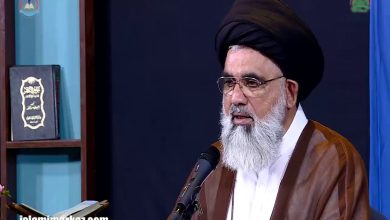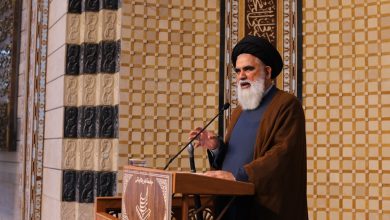
Hujjatul Islam Ustad Syed Jawad Naqvi
(Principal Jamia Orwatul Wuthqa – Lahore)
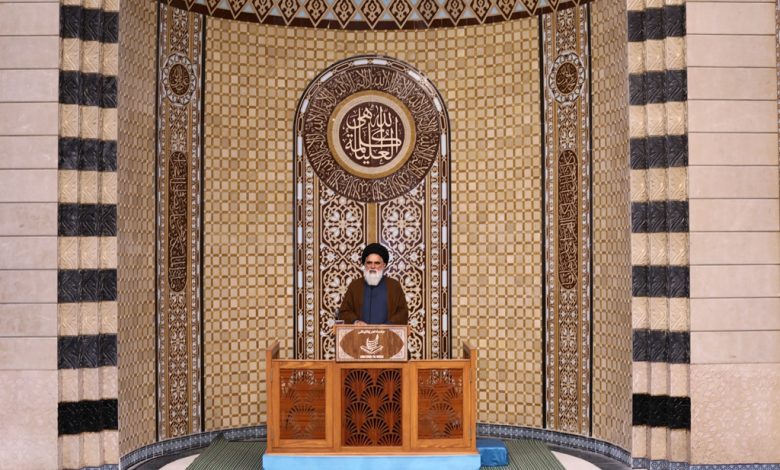
Delivered at: Masjid Baitul ul Ateeq
Lahore – Pakistan
Friday Sermon 19th September – 2025
Sermon 1: Taqwa in Sexual Affairs (7) – Guarding private parts
Sermon 2: Doha Conference – MRI of Muslim rulers
Taqwa: A Practical Mechanism of Protection
Taqwa is a practical mechanism of protecting human life, though an imaginary picture of it has often been presented. In practical life, man needs protection from two kinds of threats: those that arise from within and those that come from outside. The most dangerous internal threat is the sexual ability present inside man, which is the most powerful force within him. Other abilities develop gradually through fostering, but sexual ability is strong by birth and has the capacity to dominate every aspect of human life. Even if there were no academic evidence, the very existence of man is proof of this fact, as everyone can witness how strong this natural ability is. Because of its power, it requires more management and regulation. If left unchecked, it leads to great deviation and corruption within man, and what makes it even more striking is that this ability does not diminish even in old age.
Religious Approaches to Sexual Ability
In Hinduism, the approach to this ability is not regulation but complete destruction. Their spirituality seeks to kill this faculty altogether. Although this is possible, the practices required are extremely difficult, and Hindu sages spend years striving for it. We see such sages who remain completely naked, and people greatly respect them, testifying that their sexual ability has been annihilated. It is only then that they are given a high spiritual status. In Hinduism, a person whose sexual ability is alive cannot become a spiritual guide. Unfortunately, some Muslims also adopted this perspective under the banner of Sufism and Mysticism, referring to it as ‘killing the self.’ Thus, something naturally placed in human existence by Allah is attempted to be destroyed, even though it is extremely hard to kill. Other religions such as Buddhism also practice similar forms of self-killing. However, this is not the divine plan. Fostering does not mean suppressing or killing these natural abilities. Suppression can occur due to sickness or medication, but if one attempts to end these abilities without such causes, it can only be achieved through extreme hardships. At times, certain spiritual powers may increase through suppressing natural desires, but such individuals become imbalanced. Just as Allah has created balance in the very structure of human existence, so too should balance exist in the management of human abilities.
Islamic Regulation of Sexual Ability
Allah has established three elements of regulation for this ability. Taqwa is essential, and its mechanism is implemented through marriage. The Qur’an highlights the need for it and also provides the solution. At several points, the Qur’an mentions the protection of Furooj (private parts). In Surah al-Mu’minoon, Allah presents a complete roadmap for the society of believers.
Surah al-Mu’minoon: Roadmap of Believers’ Society
قَدْ أَفْلَحَ الْمُؤْمِنُونَ {1}
Prosperous indeed are the believers,
الَّذِينَ هُمْ فِي صَلَاتِهِمْ خَاشِعُونَ {2}
Who are humble in their prayers,
وَالَّذِينَ هُمْ عَنِ اللَّغْوِ مُعْرِضُونَ {3}
And who keep aloof from what is vain,
وَالَّذِينَ هُمْ لِلزَّكَاةِ فَاعِلُونَ {4}
And who are givers of poor-rate,
وَالَّذِينَ هُمْ لِفُرُوجِهِمْ حَافِظُونَ {5}
And who guard their private parts,
إِلَّا عَلَىٰ أَزْوَاجِهِمْ أَوْ مَا مَلَكَتْ أَيْمَانُهُمْ فَإِنَّهُمْ غَيْرُ مَلُومِينَ {6}
Except before their mates or those whom their right hands possess, for they surely are not blameable,
فَمَنِ ابْتَغَىٰ وَرَاءَ ذَٰلِكَ فَأُولَٰئِكَ هُمُ الْعَادُونَ {7}
But whoever seeks to go beyond that, these are they that exceed the limits,
وَالَّذِينَ هُمْ لِأَمَانَاتِهِمْ وَعَهْدِهِمْ رَاعُونَ {8}
And those who are keepers of their trusts and their covenant,
وَالَّذِينَ هُمْ عَلَىٰ صَلَوَاتِهِمْ يُحَافِظُونَ {9}
And those who keep a guard on their prayers,
أُولَٰئِكَ هُمُ الْوَارِثُونَ {10}
These are they who are the heirs,
الَّذِينَ يَرِثُونَ الْفِرْدَوْسَ هُمْ فِيهَا خَالِدُونَ {11}
Who shall inherit the Paradise; they shall abide therein.
These verses begin by declaring that only the believers are prosperous, described with the word Muflehoon. The term Falah is originally an agricultural term in Arabic, meaning to plant a seed, water it, take care of it, harvest the crop, and bring it home. This entire process is called Falah. The Qur’an uses Falahat as the ultimate objective of man. From the moment of creation, man begins the process of Falah—preparing the farm of society, planting the seed of guidance, and striving to achieve the ultimate objective. Until society reaches this purpose, people cannot be called Muflehoon. To achieve the purpose of creation is Falahat, and it requires man’s efforts accompanied by divine guidance.
The verses then describe the qualities of those who have achieved Falah: they are humble in their prayers, they avoid vain things, they are active in giving Zakaat (not just giving it, but actively engaged in it), and they protect their private parts except with their wives or those whom their right hands possess. If they do so within these bounds, they are not blameworthy. But those who go beyond these limits are called Aadoon, meaning they have strayed from the right path. Furthermore, these believers carry their trusts and commitments faithfully and guard their prayers. Such people are the inheritors of Paradise and thus are truly prosperous.
We claim to be believers, but even if we are believers, we are not necessarily Muflehoon. The roadmap Allah has created for a believer’s society includes the essential trait of protecting private parts. The Qur’an uses the word Furooj for sexual private parts out of etiquette, as such matters cannot be spoken of openly. Misbehaved people, however, use the explicit names of such parts, and even though these words exist in dictionaries, their open usage is considered abusive. Hence, more respectful words are used. For instance, instead of explicitly naming the act of urination, one might say ‘he went to the WC or toilet.’ Similarly, Farj is used as an indirect reference to private parts. The Qur’an’s emphasis is not simply on concealing these parts but on truly protecting them. A person may hide his private parts and yet still be engaged in indecent acts.
Surah an-Nur: Guidance for Believers
قُلْ لِلْمُؤْمِنِينَ يَغُضُّوا مِنْ أَبْصَارِهِمْ وَيَحْفَظُوا فُرُوجَهُمْ ۚ ذَٰلِكَ أَزْكَىٰ لَهُمْ ۗ إِنَّ اللَّهَ خَبِيرٌ بِمَا يَصْنَعُونَ {30}
Say to the believing men that they cast down their looks and guard their private parts; that is purer for them; surely Allah is Aware of what they do.
These verses lay down the practical design and management of the sexual dimension of human life, both for men and women. This is the real meaning of Taqwa: guarding. The Prophet (s) is commanded to instruct believing men, first, to cast down their gaze when confronted with anything that may excite their sexual instinct, and second, to guard their private parts. They must avoid looking at others’ private parts and must protect their own from exposure. Today, however, it has become fashionable for both men and women to reveal their private parts and to turn them into objects of ornamentation.
Satan had declared before Allah that he would beautify for mankind those things which Allah dislikes. One of Satan’s major tricks is to remove from people the sense of guarding and protecting their private parts. The verse declares that if man lowers his gaze and protects his private parts, this is ‘Azka,’ a term derived from Zakaat. In our minds, Zakaat is limited to a juristic concept of giving away a percentage of wealth. But the Qur’an does not interpret Zakaat merely as removing wealth. Instead, Zakaat means nurturing, fostering, and enabling growth. Similarly, the Qur’an says that the Prophet (s) performs Tazkiyah, which is to nurture and foster.
Therefore, Zakaat does not mean purification alone, nor does it mean subtraction from wealth. It means developing the potential of something to grow. For example, when a student enters school, if after five years there has been no change in him in terms of knowledge or character, the Qur’an describes him as ‘Madsoos’ (buried, wasted). In Surah ash-Shams, Allah declares that truly prosperous is the one who has performed Tazkiyah (growth and development), and in contrast, one who neglects development is called ‘Dasaha,’ meaning buried. Thus, the Qur’an here explains that those who lower their gaze and guard their private parts are engaging in the best form of development and grooming.
If this sexual ability is not managed properly, it becomes a swamp that drowns man. We witness this especially in places like Pakistan where, in colleges and universities, youth fall into two categories. Some students lower their gaze, remain focused on their studies, and succeed in life. Others indulge in illegitimate friendships and relationships. After five years, though both graduate, the latter emerge not as developed individuals but as buried ones, having grown only in lust and not in character or knowledge. Sadly, many such cases are also found among seminary students. They may spend years in religious institutions, even spending large sums of money, but come out without growth in knowledge or ability. Such people are also ‘Madsoos.’
The Qur’an therefore insists: if you want to achieve Tazkiyah, you must regulate and manage your sexual life, otherwise your personality cannot grow. Our society, however, operates contrary to this guidance. The Qur’an defines a believer as one who protects his private parts. But in our culture, marriages are often delayed for reasons like pursuing education, while the Qur’an insists that regulating sexual affairs must take priority.
Surah an-Nur: Guidance for Women
وَقُلْ لِلْمُؤْمِنَاتِ يَغْضُضْنَ مِنْ أَبْصَارِهِنَّ وَيَحْفَظْنَ فُرُوجَهُنَّ وَلَا يُبْدِينَ زِينَتَهُنَّ إِلَّا مَا ظَهَرَ مِنْهَا ۖ وَلْيَضْرِبْنَ بِخُمُرِهِنَّ عَلَىٰ جُيُوبِهِنَّ ۖ وَلَا يُبْدِينَ زِينَتَهُنَّ إِلَّا لِبُعُولَتِهِنَّ أَوْ آبَائِهِنَّ أَوْ آبَاءِ بُعُولَتِهِنَّ أَوْ أَبْنَائِهِنَّ أَوْ أَبْنَاءِ بُعُولَتِهِنَّ أَوْ إِخْوَانِهِنَّ أَوْ بَنِي إِخْوَانِهِنَّ أَوْ بَنِي أَخَوَاتِهِنَّ أَوْ نِسَائِهِنَّ أَوْ مَا مَلَكَتْ أَيْمَانُهُنَّ أَوِ التَّابِعِينَ غَيْرِ أُولِي الْإِرْبَةِ مِنَ الرِّجَالِ أَوِ الطِّفْلِ الَّذِينَ لَمْ يَظْهَرُوا عَلَىٰ عَوْرَاتِ النِّسَاءِ ۖ وَلَا يَضْرِبْنَ بِأَرْجُلِهِنَّ لِيُعْلَمَ مَا يُخْفِينَ مِنْ زِينَتِهِنَّ ۚ وَتُوبُوا إِلَى اللَّهِ جَمِيعًا أَيُّهَ الْمُؤْمِنُونَ لَعَلَّكُمْ تُفْلِحُونَ {31}
And say to the believing women that they cast down their looks and guard their private parts and do not display their ornaments except what appears thereof, and let them wear their head-coverings over their bosoms, and not display their ornaments except to their husbands or their fathers, or the fathers of their husbands, or their sons, or the sons of their husbands, or their brothers, or their brothers’ sons, or their sisters’ sons, or their women, or those whom their right hands possess, or the male servants not having need (of women), or the children who have not attained knowledge of what is hidden of women; and let them not strike their feet so that what they hide of their ornaments may be known; and turn to Allah all of you, O believers! so that you may be successful.
Here, the same plan is outlined for women, though with stricter conditions because the stimulus for men arises through women. Women are commanded to lower their gaze and protect their private parts. In Arabic, the word ‘Awrah refers to everything requiring protection. In traditions, the entire existence of a woman is described as ‘Awrah. Women are also instructed not to display their ornaments except before their husbands and certain close relatives listed in the verse. This does not mean exposing private parts but refers to ornaments such as clothing and makeup.
A woman must remain attractive for her husband, as the first purpose of marriage is to regulate sexual needs. When this is neglected, men may be drawn toward others, as seen in cases where husbands become interested in films or other women. Many wives treat their husbands merely as partners bound to fulfill their rights, while ignoring their responsibility to remain attractive for them. The Qur’an insists that a woman’s adornment belongs exclusively to her husband, while private parts remain strictly exclusive to him alone. All others mentioned in the verse are mahram relatives with whom marriage is forbidden, but cousins, for instance, remain na-mahram.
The verse also prohibits women from making their presence known through unnecessary sounds, such as striking their feet to reveal hidden ornaments. At the end, both men and women are reminded: ‘Turn to Allah, all of you, O believers, so that you may be successful.’ This planning, ordained by Allah, is necessary for true prosperity.
Islamic Supremacy in Regulating Sexual Ability
Thus, the Qur’an presents a complete and balanced plan for both men and women. If one chooses not to believe, then one is free to adopt cultural models of fashion, films, and drama. But the divine method is different: Allah has commanded Taqwa, which is guarding and protecting, and the greatest area requiring this protection is the sexual ability. Since this ability is the most dangerous, the Qur’an lays out mechanisms of regulation, with marriage as its foundation. Every religion and culture has attempted to address sexual conduct, but the methodology presented by Islam is the most complete and supreme. Sadly, most people ignore this divine guidance, choosing instead to live culturally. Marriages are delayed or not conducted in accordance with the principles of Taqwa, while the Qur’an stresses that managing sexual affairs through marriage is essential for human prosperity.
SERMON 2
Gaza and Palestine as a Test
Today Gaza and Palestine are a test, and it is the divine custom that those who claim to be believers will be tried so that it becomes clear how many truly fulfill the demands of faith. The Gaza incident has exposed and unveiled everyone. The most disgraceful among all groups are the Muslim rulers. Zionists, America, Trump — they are behaving exactly as expected — but the Muslims are not what they present themselves to be. Their public identity is different: they are Muslims in name, yet they have become a disgrace to their past and to their religion.
Doha Conference: A Disgraceful Display
The most recent disgrace demonstrated by Muslim rulers was last week’s conference in Doha, attended by leaders from around sixty countries. The event was framed as a response to the Zionist attack on Hamas leadership in Doha, in which sixteen people were martyred, giving the impression that the gathering would plan to stop Israel’s tyranny; this was a deception. I said at the time that Qatar was involved in that attack. The operation was not against Qatar but against Hamas, aimed at putting pressure on the resistance everywhere. That attack achieved many ends: it enabled a grand conference that served the conveners’ interests. It was not genuinely for the Palestinians or against Israel. On the same day the American Secretary of State was in Israel, and in a press conference openly declared that the US would act against Qatar or any country hosting Hamas representatives. That Doha gathering was, in my view, the most disgraceful conference in history.
Historical Parallel and the Conference’s Real Message
At the time of Imam Khomeini (r.a.) there was the Taif conference, and Imam forbade zealous people from attending; nevertheless many Shia community leaders went. The Doha gathering, however, did not plan any real action against Israel; rather it signaled to America that it could operate in the Middle East freely provided the rulers’ sovereignty remained intact. The message was clear: do whatever you like to Muslims anywhere in the world, so long as these rulers remain in power. They could issue rhetoric and statements but take no practical steps. No resolution was passed to halt Israel’s tyranny, and they did not even name the attack on Iran. Of the three points issued as a statement from the conference, the third endorsed the peace efforts being advanced by America, Egypt, and Qatar — a stance collectively accepted on that platform. Iran’s foreign minister, upon return to Tehran, stated disagreement with certain elements of the conference; elsewhere, Turkey and Egypt offered only token words as if acting in a filmed scene.
An MRI of Muslim Rulers
The Doha meeting was effectively an examination — an MRI and X-ray — to gauge whether any dignified ruler would stand up in the name of religion or community. The assessment returned a negative result: dignity was entirely absent. On the same day, Israel issued statements of aggression. The whole affair looked like a business of issuing supportive statements. Rather than aiding Palestine, this Doha conference was the largest oppression of Palestine and resembled a societal funeral for the Palestinian cause — exactly the outcome Trump and Netanyahu would desire. If anyone holds even one percent of positive hope for that conference, they are being unrealistic. These rulers rule because of the people’s gullibility; the conference was a profound disgrace. Iran should not have attended. The current Iranian president favors negotiation and is criticized at home for that stance; he has even said that if Iran rebuilds its nuclear program it will be destroyed again, which many regard as a shameful remark.
Hope in the Leader and the Divine Plan
The hopeful point is that resistance is not in the hands of the Iranian president but rests with the Leader, who continues to guide the resistance across the Middle East and remains steadfast. The Qur’an says that when you are hurt your enemy is also hurt; Imam Ali (a) noted that some days favor you and others do not; Hafiz advised not to fear if the sky does not move in your favor. This year may be marked by Trump’s deception, and when change comes the stratagem of Allah will commence. Allah’s plan includes exposing the masks of Muslim rulers. He grants respite to tyrants so their crimes increase and the hidden are revealed. The purpose behind this conference, and the designs of Israel, America, and cooperating rulers, is to end resistance everywhere in the region and to undermine Iran’s leadership. Where resistance exists, severe pressure has been applied; the conference’s central objective appears to have been to assign tasks to Muslim rulers to eliminate resistance so Israel and America would be satisfied and the rulers could be guaranteed their thrones for a few years. When Allah’s strategem unfolds, all these people will see their disgrace.