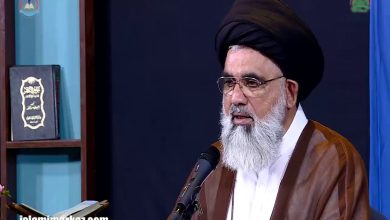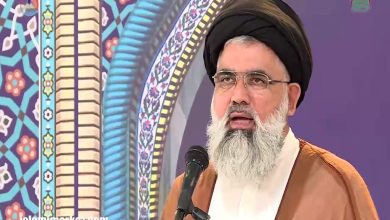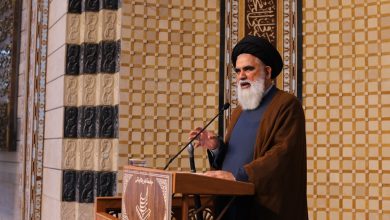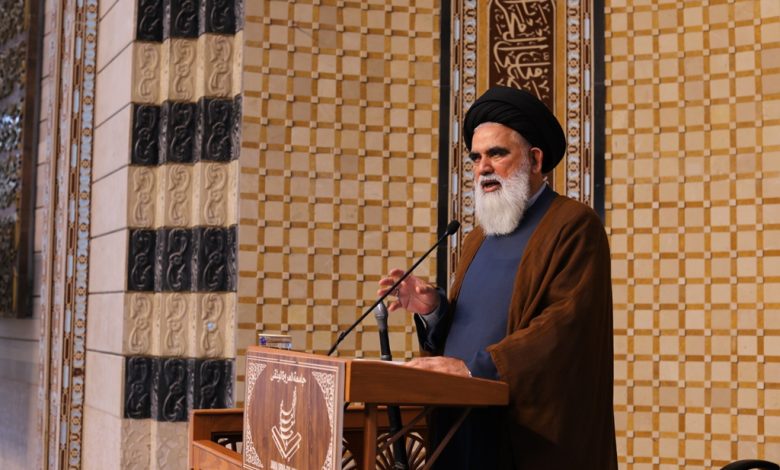
Hujjatul Islam Ustad Syed Jawad Naqvi
(Principal Jamia Orwatul Wuthqa – Lahore)
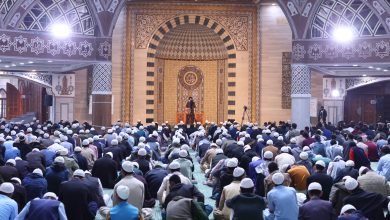
Delivered at: Masjid Baitul ul Ateeq
Lahore – Pakistan
Friday Sermon 5th September – 2025
Sermon 1: Taqwa in Sexual Affairs (5) – Iffat (Chastity)
Sermon 2: Two gifts for Prophet (s) on this birth day
Man and Animals: Difference in Creation
Animals live an organized life, free from miseries and corruption, because they do not possess will, intention, sense, or intellect. They are like automatic machines with a control chip that makes them act accordingly. Man, however, is different in creation because he lives by his own will and intention. Hence, difficulties arise in his life.
The greatest disturbance in human life is caused by sexual power. Because of will and intention, the reins of life, decisions, and actions are in the hands of man, unlike animals whose lives are directly planned and organized by Allah (سُبْحَانَهُ وَتَعَالَى). Man has been given abilities, potentials, and powers by Allah (س), but due to intention and will, the control of his actions has been handed over to man himself.
Human Abilities and Sexual Power
Man has many abilities and potentials such as thinking, grasping, and reasoning. Among these, there is the sexual ability, which is placed in both man and woman. This is a constructive ability, necessary for survival, wellness, growth, and prosperity of human life. Since its management is in the hands of man, if it is mismanaged by not following the principles and policies set by Allah, then this ability creates severe disturbance in life. Such disturbances have been seen in every generation.
The Qur’an presents the example of Prophet Lūṭ’s community, who became disturbed and corrupted due to mismanagement of this power, and eventually became victims of divine wrath and were destroyed. This pattern can be seen in every era, even in our own generation. If the present generation assesses society globally, without discrimination, it will be evident that without proper management of sexual affairs, every dimension of human life becomes disorganized.
Marriage as the Divine Plan
Since Allah has placed this ability in man, He has also ordained a plan to manage it: marriage. When man and woman reach puberty, the first arrangement should be marriage. The contract of marriage can even be performed before puberty, but its practical implementation begins after puberty. Puberty is the stage when sexual ability awakens, and its signs are seen physically as well as intellectually.
Taqwa is the second name for marriage in sexual affairs. Man cannot acquire protection in this area through worship, pilgrimage, or rituals. Only marriage is the means of protection, with no alternatives. The conditions for marriage are mentioned by Allah, and He has also stated that in specific genuine cases someone might not get married. In that case, the second plan is ʿIffah (عِفَّة – chastity). Man should remain chaste until he marries. This does not mean that he should live his entire life with ʿIffah, but until the steps toward marriage are completed, he must adopt it.
Iffah in Qur’an and Other Sciences
ʿIffah is also a Qur’anic subject. Like many other Qur’anic subjects, it has been picked up by other sciences such as Fiqh and Theology. Certain aspects of ʿIffah were taken by Akhlaq (Ethics), which played a role in nurturing Qur’anic ethics. Scholars developed long curriculums on a single verse of ethics from the Qur’an.
The loss in this approach was that only one dimension was emphasized, while the social dimension was largely ignored. Yet Qur’anic guidance is inherently social. In Islamic studies there is little recognition of sociology as an independent science. Although sociology was originally discovered by a Muslim scholar, later Muslims neglected it, while the West developed it further. Eventually Muslims translated it back, but now under a Western framework.
The Qur’an discusses various affairs of life, but all of them are meant to provide social direction—to guide society to its purpose and keep it balanced and well-managed. In contrast, Islamic ethical sciences (ʿIlm al-Akhlaq) became individualized rather than social. They were treated as sciences of personal development rather than social reform. Religions like Hinduism and Buddhism focused heavily on individual ethics and worship, and even today they lead in such practices. But religious ethics in Islam was never meant to be only individual; it is primarily social guidance.
Iffah in Ethical Philosophy
In philosophy, ʿIffah (chastity) became the foundation of ethics, just as philosophy became the foundation for other sciences like theology and ethics. Philosophical traditions identified three foundational pillars of ethics: ʿIffah (chastity), Shujāʿat (valor), and Ḥikmah (wisdom).
These were based on the three human powers: intellect, desire, and anger. Ethical science describes the states of imbalance in these three powers:
• If intellect is weak, a person is called ghabī (dull); if too strong, he is called jurbuza; if balanced, it produces ḥikmah (wisdom).
• If anger is weak, cowardice develops; if extreme, it becomes ferocity; if balanced, it becomes shujāʿat (valor).
• If desire is weak, abasement arises; if extreme, it becomes lust; if balanced, it becomes ʿiffah (chastity).
Thus, the “ideal ethical person” in these sciences is one who has wisdom, valor, and chastity. But this framework is philosophical, not Qur’anic. Although philosophy is not rejected, the Qur’anic foundation of ethics was lost.
Qur’anic Perspective of Iffah
In the Qur’an, ʿIffah is presented not as an individual virtue only, but as an essential pillar of society. Since sexual ability is present in every human—young or old, even immature though latent—its awakening impacts society most powerfully. It influences every dimension of human life.
This ability was given for a purpose, just like intellect and other powers. Along with every ability, Allah has also provided a management plan. For sexual power, that plan is marriage, within the divine system of marriage. Unfortunately, Muslims hardly practice even five percent of the Qur’anic marriage system.
If marriage is delayed for genuine reasons, then ʿIffah must be adopted until marriage. Unlike Christian celibacy, ʿIffah in Islam is temporary, not lifelong. In fact, in Islam an unmarried man cannot even lead prayers. Marriage completes one’s religion, faith, and personality, and only then is one fit to lead. Even a mujtahid cannot be followed if he is unmarried.
Qur’anic Reference to Iffah
Sūrah al-Nūr 24:33
وَلْيَسْتَعْفِفِ ٱلَّذِينَ لَا يَجِدُونَ نِكَاحًۭا حَتَّىٰ يُغْنِيَهُمُ ٱللَّهُ مِن فَضْلِهِ
“And let those who do not find the means to marry keep themselves chaste (ʿiffah) until Allah enriches them from His bounty.”
Here ʿiffah means self-restraint until marriage is possible.
The Qur’an also uses ʿiffah in economic and other social affairs, though in sexual affairs it is more specific. Many translators render it simply as “purity,” but its Qur’anic meaning is deeper: restraining an inner ability until its rightful outlet is available.
Arabic Origin of the Word Iffah
ʿIffah (عِفَّة) comes from the root ʿa-f-f (ع ف ف), meaning to restrain or hold back. Arabs used this in routine life, not only for ethics. For example, they used it for sheep, camels, fruits, water, and especially the milk of a she-camel.
The Arabs were dependent on camel milk. When milking the camel, or when a calf drank, sometimes the she-camel would hold back some of its milk. If her calf nursed, she would give fully, but if the owner milked her, she would restrain some. This held-back milk was called ʿafafa, and the camel was described as ʿafīfa. Later, the same term was applied to humans: if someone restrained themselves from giving or expressing something, that was also called ʿafafa, and the person was ʿafīf.
Thus, ʿiffah means to restrain something inside and not express it until its rightful time or place. For example, restraining speech, restraining anger, or restraining passion until the correct outlet appears.
Purpose of Iffah in Human Life
If a person cannot marry despite possessing sexual ability, he must adopt ʿiffah: self-restraint over an internal power. Sexual weakness in discussion today is not weakness of ability itself, but only weakness in its performance. The ability itself remains alive until the last breath.
Marriage is the actual cure and management for this ability. If Allah has placed this ability in man, it is because He wants man to endure a challenge and manage it properly. Using it outside marriage is wasting it, and that is a major sin because its consequences spread through society.
If marriage is delayed, restraining this ability through ʿiffah is required. An ʿafīf person is one who has not wasted this ability unlawfully. ʿIffah means to preserve and control it until it is used in the proper way: through marriage.
Iffah as Part of Taqwa
Through ʿiffah man restrains desires that are valid in themselves, but whose conditions of fulfillment are not yet met. This is a form of taqwa, a shield of self-protection. Once conditions allow, marriage should be pursued. Even after marriage, ʿiffah remains essential—perhaps even more so—because now responsibility extends to one’s wife and family.
Today, Muslims often reduce marriage to only the recitation of the nikāḥ verse, neglecting the larger Qur’anic system of marriage. But in reality, marriage is the complete management plan for sexual power.
SERMON 2
The Mission of the Prophet (s) and Taqwa
The beth’at (commissioning) of the Prophet (s) was meant for safeguarding society through taqwa. The Qur’an describes this as a great favor (mann) of Allah — taking people out from disgrace and leading them into guidance. This month of Rabiʿ al-Awwal, and especially the 12th, is marked as the birth anniversary of the Prophet (s). This bounty is the source of all blessings for Muslims and for the entire society.
Celebration of the Birth Anniversary
In Pakistan this day is celebrated passionately and at its peak. Programs are held throughout the month: ceremonies, rallies, and gatherings are organized, and Muslims find peace and comfort in these commemorations. This year, according to the lunar calendar, 1500 years have passed since the birth of the Prophet (s). This is a great bounty — that we are the Ummah of the Seal of the Prophets (s).
Yet, the fundamental practice of religion in Pakistan has been reduced mostly to beliefs rather than practices. We must move beyond mere expression of belief towards obedience and towards following the Prophet (s) as a role model. Our journey should be to walk the same path that the Prophet (s) himself walked.
The Muslims of today are full of outward expressions of belief, but the Prophet (s), the Imams, and their companions never celebrated birthdays in the way we do — with cakes, sweets, and functions. Among Sunnis, the 12th of Rabiʿ al-Awwal is celebrated; among Shias, the 17th. There are many narrations, and even Shia scholars such as Shaykh Kulayni and Shaykh Tusi considered the 12th as the day of birth. This is not a religious but a historical matter, so it does not matter which day it is.
The Real Priority of the Prophet (s)
We must ask ourselves: if the Prophet (s) were present today, what would be his priority? Without doubt, it would be Gaza and Palestine. The Prophet (s) would never have remained silent on this issue, while we have silenced ourselves, tranquilizing our passions by mere expressions of belief without walking on his path. The Prophet (s) is surely displeased with this behavior of ours.
In the Qur’an, those who refused to follow the Prophet (s) in battles and encounters were condemned as hypocrites and opponents. Another thing the Prophet (s) strongly disliked was discord (tafarraqa) among Muslims.
If we adopt unity among Muslims and act sincerely for Gaza, then I guarantee you, on this Friday from this holy place, that the Prophet (s) would be pleased with us. The best gift we can offer the Prophet (s) on his birthday is unity, and the second is support for the oppressed of Gaza and Palestine.
It is shameful that at present, non-Muslims are supporting Palestine. The Flotilla of seventy ships is heading towards Gaza to break the siege. These non-Muslims have developed so much passion that they know Israel may bomb them, yet they are still going. Compare this to where we Muslims stand today.
The Crisis of Flood in Pakistan
At the same time, our own country faces disaster. Floods have caused severe destruction, and India has released water that has worsened the situation. The deceased and affected people of Pakistan also need help. Villagers have lost their animals, and the remaining livestock is dying of starvation.
Whatever is possible, everyone should help these victims of the flood. But remain alert to traders who exploit this crisis for personal gain. Your help must reach the victims themselves.
On these sacred days of the birth anniversary of the Prophet (s), we must remember our duties:
• Unity among Muslims
• Support for Gaza and Palestine
• Helping the victims of the floods in Pakistan
May Allah (سُبْحَانَهُ وَتَعَالَى) help them, support the oppressed of Gaza and Palestine, and shower His mercy upon all in these blessed days.